Showing posts with label Quotations. Show all posts

Monday, June 20, 2011

"Only one life." Harvey Milk

I seem to have hit a biographical patch for some reason. Biographies are popular. For the famous and infamous, our heroes and villains, we want to penetrate their mystery. Where do artists and politicians and scientists get their inspiration, their ideas? (More than one artist, when asked this question, has responded “If I knew that, I’d go there.”) What makes one person become Abraham Lincoln, another Adolf Hitler? And then there are the people of whom we have heard something or come from a world we are only vaguely familiar with, if at all. Their biographies offer a way into their world and their work. In the end, the biography is yet another attempt to understand the puzzle of human nature, of existence. And so they will never entirely succeed. But the best of them make the journey worthwhile, even if we end up a little short of the destination.

Two biographies I’ve recently undertaken are Randy Shilt’s The Mayor of Castro Street: the life and times of Harvey Milk, and Anthony Reynolds’ Leonard Cohen: a remarkable life. On my to-read pile is Barney Hoskyn’s Lowside of the road: A life of Tom Waits, and the other day I bought Blood Kindred: W B Yeats; the life, the death, the politics by W J McCormack. I’ve finished the first two in this list and was going to write about them both but the entry was getting well above my self-imposed maximum of 1000 words. So here is my response to Shilt’s book, Reynold’s will be next and I’ll get to the others later.
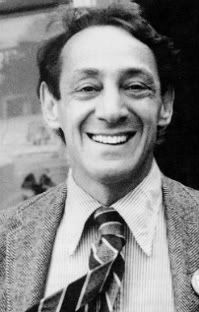
I first came across Harvey Milk by watching a film about Dan White, the man who shot him and San Francisco Mayor George Moscone. Milk in this case was played by Peter Coyote, a good actor who has never become a star. My interest was piqued. I had never heard of Milk (in fact I remember thinking I was mishearing his name) and the manner of the murders and the trial that followed kept his name in mind.

Despite my interest, I have yet to see Sean Penn’s take on the character, but I found this biography on the shelf in my library, so decided to pick it up. And I’m glad I did. What an eye-opener it was for me, coming from a conservative Australian family in a nice suburban middle-class upbringing. I’m not complaining about my life, just observing it meant I did not knowingly encounter a gay man until I was about 21. Working in the theatre, as I do, I have since met a lot more. And in other places obviously. Indeed, dare I say it, some of my best friends are gay.

That said, while I had the occasional glimpse of what homosexuals have to put up with, I had no idea of the struggle they have undergone, or the distance they have come in social and legal acceptance within my lifetime. Obviously that struggle is far from over, but I had no idea of the life that the vast majority of homosexuals were forced to leave, if they could, before what was called the Gay Liberation Movement – repressed, secretive, dangerous, often fatal. If it is not easy to be gay now in our liberal society, being gay in the 50s or before was impossible. The idea that someone would choose that life is laughable.

But it is an idea Harvey Milk and many others had to fight, as well as others equally strange. (Sadly, you still hear it.)  Milk was a leading figure against a law trying to make it illegal for homosexuals to be teachers, on the basis that they would use that platform to recruit youngsters. Again this is not some medieval prejudice but within my lifetime! (41 years and about six months as of time of writing.) He lost that battle but the war went on. His chief message, the theme of his speeches, and one of his favourite words was hope. He saw himself as trying to give hope to those men and women who had none.

Milk achieved much in his short lifetime. If his only achievement was to be the first openly-gay politician elected to office he would be worth remembering, but he did much more. Most of his achievements came from community activism, working with gay and straight alike to achieve civil rights for homosexuals, long before he came to office. He is an inspiration for anyone who wants to change the world.

Milk was murdered and his murderer got away with manslaughter. It’s a depressing end to his story but almost inevitable. He was loud, confrontational and bold. He was always convinced he would be killed by the assassin’s bullet.  Indeed he spoke of it so often you can’t help wondering if it was he who inadvertently gave Dan White the appalling idea. And the trial was a travesty as if to prove how far gay liberation had to go, even in San Francisco. One witness remembers one cop patting ex-cop White as if for a job well done. The Prosecution didn’t present a strong case and White was free in a few years. But he killed himself a few years after his release. But injustices like this can give impetuous to the causes they are designed to repress, and this was no exception.

If as an eight-year-old, this whole story passed me by, it was not just because I was an eight-year-old in Australia. The big story the week of Milk’s death was the Jonestown Massacre, which also had its roots in San Francisco politics. It was an extraordinary time indeed.
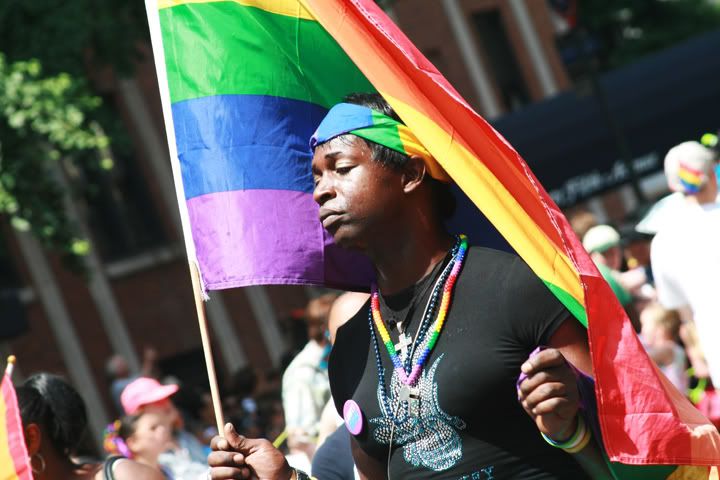
Not long before Milk’s death he recorded a political will, which included the memorable line, “If a bullet should enter my brain, let that bullet destroy every closet door.” Closet doors and violence sadly still have their place in our world but we are progressing, thanks to people like Milk and the many others who followed. He was not alone in the struggle, and has his critics as well as admirers but they all have their voices heard in Shilt’s book. Definitely worth a read, if only to remind us of our recent past.

Wednesday, May 4, 2011

"(attr.)" Convenient quotations

Perhaps you haven’t heard but Osama bin Laden was killed the other day. I can only assume you were living under a rock – or possibly in a cave in Pakistan which was the wrong neighbourhood as it turned out. The day after his death was announced, this quote did the rounds on Facebook, and I assume other social media:

I mourn the loss of thousands of precious lives but I will not rejoice in the death of one, not even an enemy.

Which was attributed to Martin Luther King Jr. Soon enough it was pointed out that King had said no such thing, but people kept posting it. The fauxtation then morphed and enveloped an authentic quotation from King. Once you get past the first sentence, you are reading the authentic King:

I mourn the loss of thousands of precious lives, but I will not rejoice in the death of one, not even an enemy. Returning hate for hate multiplies hate, adding deeper darkness to a night already devoid of stars. Darkness cannot drive out darkness: only light can do that. Hate cannot drive out hate: only love can do that.

I don’t suppose anyone created the original line maliciously, and the attribution was made because it sounded like something he might have said. Voltaire never said, “I disagree with what you say, but I will defend to the death your right to say it” but many agree it’s consistent with his worldview. Perhaps King would say the same of this line, I don’t know. Certainly many agreed with the sentiment and posted it with good will and good hearts.

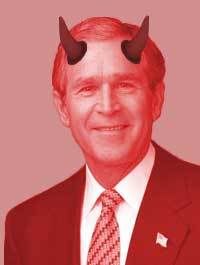
But I did wonder if George W Bush had died that day, or John Howard or Tony Blair, if so many people would have rushed to post this fauxtation. Would their compassion for their fellow human beings have extended to these men who have online been compared quite happily to Hitler, monsters, Satan and cunts? Or would they have posted it if it didn’t contain an implicit rebuke to those Americans who did celebrate? I can’t say I felt like celebrating, but I thought I could understand those that did.

It also made me remember another popular fauxtation from early in the Second Gulf War. This one was attributed to Thomas Jefferson:

Dissent is the highest form of patriotism.

This was quoted by those who opposed the war and were accused of being unpatriotic. Of course, one may object to the decisions of one’s government and still love their country, and I don’t suggest otherwise. It’s called democracy, people. But people used this line as a badge of pride. And even when it was exposed as unauthentic, Barbra Steisand and others said something along the lines of “It may not be true, but it speaks to a higher truth.”

Now, I could not say whether Jefferson would agree with the sentiment or not. But I doubt it. To me, the fauxtation seems to strongly suggest that the dissenter’s patriotism is always greater than those who agree with their government. Really? So those who thought FDR’s programs in the Depression were wrong were more patriotic than those who thought they were right? Those who thought he should have maintained US neutrality rather than join the Allies were the more patriotic? Those who oppose Obama’s Health Plan love their country more than those who support him?

And then to admit, ok I’ve told a lie but it speaks to a higher truth? I love my country so much I can tell lies. My interpretation of truth is on a higher level than yours. I can make up things because I am on the side of right. Such an attitude is not so much opening a can of worms as uncovering the nest of vipers.

No. A lie is a lie is a lie. You want to make the argument that dissent is the highest form of patriotism? Fine, go ahead and make it. Don’t use false appeals to authority to back up what is a very tendentious proposition.  Likewise with the King quote.  You think your reaction to bin Laden’s death is a better one than those who celebrated? We can have that discussion but don’t use a false quotation as your only evidence.

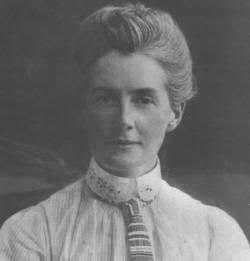
In any case, I much prefer this quotation (quite authentic) from Edith Cavell. Cavell was a British nurse in Belgium during World War One who saved the lives of casualties from both sides. She also helped Allied combatants to escape back to England. When the Germans found her out, she was arrested, tried and shot. Just before she faced the firing squad,  she said, 

Patriotism is not enough. I must have no hatred or bitterness towards anyone.

There you are, a similar sentiment, an authentic quote and a challenge to us all. It sure aint easy but, ideally, I believe we should not feel hatred or bitterness to anyone – not bin Laden, nor the crowds who cheered his death, nor George W Bush, John Howard or Tony Blair. Or the people whose postings bug me on Facebook.