Showing posts with label USSR. Show all posts

Sunday, July 28, 2013

"To the ends of the earth" Hunting Evil


I just finished watching an episode of the new BBC series of Father Brown. (Spoiler alert). The victim it turns out was a Nazi killer and the criminal one whose family he killed. Both spend time dressed as a Catholic priest. Escaped Nazis in England? The Catholic Church as a haven for killers? Both are true, as detailed by Guy Webster in his excellent Hunting Evil: How the Nazi war criminals escaped and the hunt to bring them to justice.

I am fascinated with Nazi Germany. A cultured highly educated nation, whose leaders appreciated art, poetry and classical music were between them responsible for one of the greatest horrors ever perpetrated upon by one set of human beings upon another. World War Two was bad enough, but the Holocaust, the systematic and deliberate attempt to wipe a group of people to the last individual off the earth was unprecedented and so far unreplicated. There have been other genocides but none so deliberate and priortised. It has been argued if the Nazis were not so anti-Semitic, the released resources could have seen them win the war. In other words, the top priority of Nazi Germany, as they ran a country and a war, was to kill every Jew on the planet. To do this, they sacrificed both the country and the war.

The full extent of the crimes against humanity took a long time, years, decades in some cases, to become apparent, in part due to their extent. Even so, during the war, the Allies declared that they would hunt the criminals to the ends of the earth. In practice, once Germany was defeated, priorities changed. No-one will be surprised to find that counties such as Argentina, Syria and Paraguay were happy to forget about Nazi atrocities as it suited them. It is a little more startling to find Britain, the United States, France and Soviet Russia, doing the same.

In his introduction, Webster says he considered changing his title to ‘Hunting Evil  - or not.’ Once the Second World War was over, priorities changed. The Allies were now split, the Communists trying to overthrow the West and vice versa. This was their top priority, and if it meant using Nazi war criminals for their expertise in espionage and knowledge of the other counties, they would do so.  Which is not to say there were not other parts of the same governments trying to bring Nazi criminals, often the same individuals, to justice. But the necessary resources of personnel and money were never made available. People driven by a sense of justice were left dangling.

Speak of Nazi hunting and Simon Wiesenthal comes to mind.  For decades he was the face of trying tobring justice to those who had escaped. Sadly, as Walters shows, many of his achievments, the dramatic incidents in his life, were the stuff of exaggeration, even fantasy. His organisation claimed to have captured over a 1000 Nazis. In truth, they captured ten, and the information they provided to other organisations was often little more than rumour. They did give some support to the capture of Eichmann, more to the capture of Stangl, but even then Wiestenthal exaggerated, eventually putting himself in a wrestle with Eichmann in Argentina. But for all his faults he did keep the issue in the world’s eye, and made sure that time would not erase the memory of the crimes.
Nor was he alone in his misinformation about Nazi escapees. In the 80s, the US and Israelis finally put some real effort and money into hunting down Josef Mengele. Wiesenthal gave them information Mengele was here, now here, now here. But Mengele was already dead and buried. The money and effort that they put in went to finding a four-foot deep grave in a Paraguayan jungle.

Other myths get busted here too, notably ODESSA, the organisation that ran Nazis out of Europe and into safe havens. It probably never existed, certainly not as the professional rich organisation in Frederic Forsyth’s book. Escape groups did exist but were small, ad hoc, and more in the nature of mates helping mates. The notorious Bishop Hudal, the priest who hid and aided many Nazis as they went through Rome was oddly motivated by what sounds like Marxists ideals: the war was a conflict between two economic systems and the actions of individual soldiers should not be cause for their punishment. Among the people helped to escape was Franz Stangl, later convicted for co-reponsibility for 800 000 deaths. It is entirely possible that Hudal did not know who Stangl was, or what he had done. Not many people did. By the time Stangl was publicly identified as the commandant of Treblinka and Sobibor, he was already in Brazil.
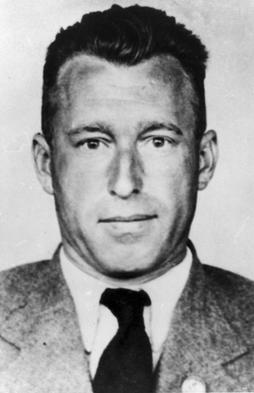
Stangl never changed his name. His wife sent mail back home to Austria, telling their friends where they were. They registered with the Austrian embassy. Yet even when his crimes became apparent, his friends did not betray them and the government, it seems, did not even run a check through their files. He was arrested finally in 1967. Even Mengele registered at a West German embassy, giving his real name and address. This is the most disturbing aspect of this book, the widespread lack of will from governments, churches and individuals, to do anything. And such will as existed is fading. We have had other wars, other attrocities. Do we try and bring justice? Or do we try to use moral relativism to reduce our responsibility to do something, as was attemped by Klaus Barbie’s defence lawyer? Or do we wait till the criminals are old or dead, and say, no matter how monstrous their crime, ‘it was all so long ago, it’s just not worth it’?

I have a theory why we are so ready to call someone like George Bush Jr or John Howard a Hitler, though the comparison is ludicrous. It comforts us to think that if someone like Hitler were to come along again, we would be among those who would resist him. But the truth is, most people in Germany, even if they did not agree with the Nazis (they never won an election outright) went along. It took extraordinary people to resist.  We are the 99%, or so we’ve been told lately. 99% went along. And given the chance to punish the Nazis, after a brief outburst of justice, most people slung it into the ‘too hard’ basket. The Nazis fascinate because they are humanity at its worst.  And the reactions of the non-Nazis, German, Austrian, and from every other country, could have been ours. I don’t know I would have resisted. And that thought terrifies me.

SaveSave

Saturday, October 13, 2012

"Quis custodiet ipsos custodes?" John Le Carre's world


John le Carre’s name is always associated with a specific genre, the spy novel. But this has not stopped him from writing some of the great novels of the twentieth century. Given he was writing about one of the great facts of the twentieth century, the cold War, the clash between civilisations, the West, the Communists, the Terrorists, his books give an insight and ponder they way we were living in that era – and indeed, still live.

His greatest creation is undoubtedly George Smiley. Fat, short, old, academic, intellectual, and cuckolded he is indeed the anti-Bond. But as a Bond novel or a movie is an entertainment for a few hours, time spent with Smiley is time spent considering the nature of our society, its flaws, its strengths and what we will do to defend it, or what we will not do. Which are not ideas that evaporate quickly.

While le Carre’s plots are byzantine, the power of his novels come from what Graham Greene, in one of his spy novels, called the human factor. Who are these people who put themselves on a shadowy front line, commit themselves to a life which means that they can never be truly secure even in their own home, or competely honest with anyone? Which is why a story like Tinker Tailor Soldier Spy can be re-read even when you know already who that spy is. Le Carre loves watching the watchers, and he shares that fascination with us.

I have recently re-read what is known as the Karla trilogy (aka The Quest for Karla or in its latest incarnation Smiley versus Karla): Tinker Tailor Soldier Spy, The Honourable Schoolboy and Smiley’s People. The first is easy found in bookstores and libraries due to the recent, very good film. The latter two it seems are either found in second-hand bookstores or in bulky volumes carrying all three novels.
I borrowed one of these from my local library, and it has two disadvantages. One, its bulk makes it uncomfortable to read on the couch or in bed, and too large to sit in your backpack all day if you want to make it your commute read. Secondly, one feels compelled to read them through one after the other which may become like having too much of anything, slightly sickening and leaves one, as Basil Fawly remarked, wanting less. This compulsion is exacerbated when you have access to the book for only three weeks.

Luckily, I was only reading two novels, and the tone changes between both. The Honourable Schoolboy ranges from London to Hong Kong and is mainly concerned with Jerry Westerby who is a part-time agent chosen by Smiley to follow a lead of Karla’s money being funnelled to a Hong Kong bank.  (Le Carre has said it would have been a better story if he had not made it a Smiley novel. Perhaps he is right.) Smiley’s People is a more intimate story, Smiley following up on the murder of an old agent, which leads to his second direct confrontation with his nemesis Karla. It does form a satisfying trilogy, all the more so because Karla remains unknowable, even to Smiley, and so the strongest conflicts remain those between friends and colleagues.

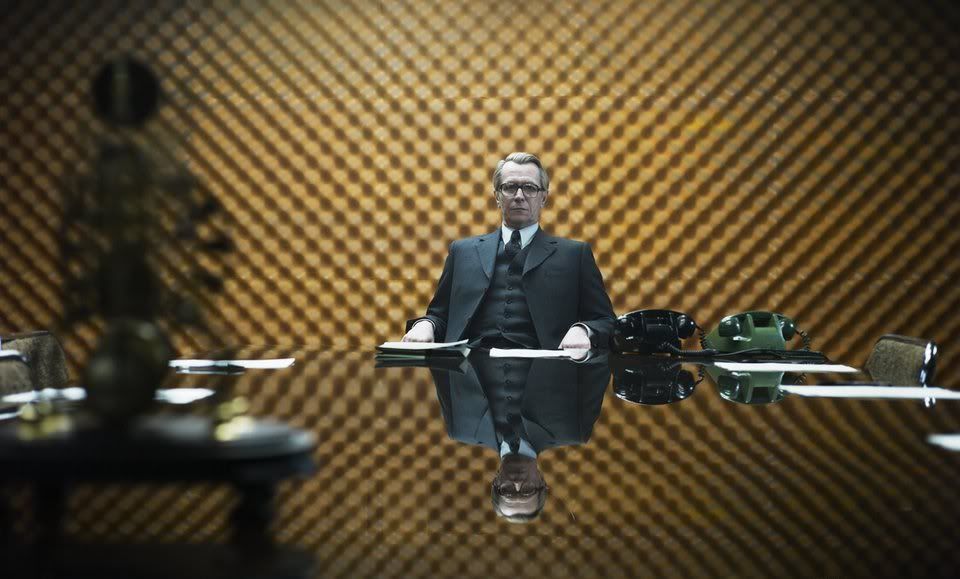
In the 70s, the BBC televised Tinker Tailor and Smiley’s People, but The Honourable Schoolboy was too expensive to film, and though important was not essential to the duel between Smiley and Karla. The producers of 2011’s Tinker Tailor look like going down the same route. And I have to say, Alec Guiness is still the essential Smiley to me. While Gary Oldman gave a great performance, physically he is all wrong. Still I don’t suppose this keeps him or his producers up at night.

Le Carre’s novels revel in the moral murkiness of espionage, where the good man may have to do bad things for a noble purpose. And ultimately that man’s soul is a casualty of the conflict. In The Honourable Schoolboy, Smiley states his faith:

          To be inhuman in defence of our humanity he had said, harsh in our defense 
          of compassion. To be single-minded in defense of our disparity.  
  
His political masters find this distasteful, and it contributes to his precarious position within the Secret Service. But if we can conjure with the idea of a just war, we may have to accept this as part of the price we pay for our freedom. And hope that there is always someone else who is prepared to pay it.

Tuesday, July 19, 2011

"All my games are real." Chess and politics

War, said Claus von Clausewitz, is politics by other means. The Cold War was war by other means. The USA and the USSR tried to defeat each other by any means short of actively fighting a war against each other. The means ranged from machinations in the UN to wars by proxy to assassinations through to, perhaps oddest of all, chess.

Daniel Johnson is an English journalist and chess amateur. His 2007 book, White King and Red Queen: How the Cold War was fought on the chessboard, traces the history of chess as it was used as a tool of politics. For the Soviets, this was a deliberate step. The intellectual nature of the game attracted them to the idea of using it as a way of demonstrating Soviet superiority over the west. (Star Trek uses three-dimensional chess to show Vulcan superiority over human intellect. But I digress.) They threw millions at it, both of money and of hours. Like everything else, it was entirely government controlled from the Grandmasters' championships to local clubs.

And for a long time it worked. The USSR dominated world chess throughout the Cold War. To do this, they relied heavily on non- Russians and Jews, which in the racist, insular, anti-Semitic system that was the USSR rankled with many. But they could overlook that as long as the USSR produced the world champion. And with the exception of Bobby Fischer (himself a Jew, albeit an anti-Semitic one) they did. They rigged competitions, and dominated and bullied the World Chess organisation FIDE to get their way. They lost their dominance for the same reason they lost the Cold War, a ruined economy, a country that was moribund in terms of technology and an oppressed people who finally had enough. Their last champion, and one of the strongest players in history, Gary Kasparov, became a dissident and is currently one of the opposition leaders against the increasingly despotic Putin regime, facing imprisonment or worse. The present world champion is Indian Viswanathan Anand.

Johnson puts this extraordinary campaign in the context of both the history of chess and of the world, with the main focus on 1945-1993. I have little idea of chess beyond the idea of how the pieces move, but I found it fascinating, and easy to follow, even for the chess patzer such as I. It’s a dramatic story with extraordinary characters. Bobby Fischer is not the only madman in the book. Johnson makes a good argument that for Fischer and others like him, it was not chess that made them insane. It was chess that kept them from going insane, and when they abandoned playing, their powerful minds turned on themselves. And certainly the paranoia and neuroses of Fischer was shared by many of the Grandmasters, increasing as the championships become more and more seen as the clash of civilisations.

Like a good non-fiction book should, it made me want to learn more about the subject.  And I’m now thinking of trying to learn to play chess properly. And it leads to the broader subject as well. Natan Sharansky was a great player who never become world champion. He did become a cause celebre in the USSR, enduring imprisonment, exile and a decade long separation from his wife because of his religious and political views. After finally being allowed to emigrate to Israel, he pursued a poltical career. He has now written two books (as well as his autobiography) that I feel I must read. One book, The Case for Democracy argues that Western democracy has core values that are strong enough to overcome radical Islam. Another book, Defending Identity, makes the case that strong identity, whether it be religious or nationalistic, can be forces for good and are essential against totalitarian movements. Given the history of the Jews in general, and the Jews and the small countries in the USSR, one begins to see his point.

Emmerson said in every work of genius we recognise our own rejected thoughts. In good writing, we can also recognise the thoughts we have, but have not been quite able to articulate. I have been thinking that in our attempt to be tolerant, pluralistic, non-judgemental, all good qualities, we present a picture to the world that we stand for nothing and care about nothing. And it is this vacuum that fundamentalism and other fanaticisms rush to fill. The other way is to drift into a nihilistic world of the next sensation, the next way to avoid boredom and ennui.

Or to try and put it another way, a functioning society tells a story of where it has come from and where it is going. And members of the society should be in broad agreement with that story. In a healthy society, we will argue, discuss, and try to shift that story one way or the other, but the broad outline must exist. I don’t think we have a story anymore. We must rediscover it.

Wow, how did I get here? From 32 lumps of wood on 64 squares to the future of Western Civilisation as we know it. In a pale safe shadow of the journey of Sharansky and Kasparov I seem to have found a move from chess to politics.