Showing posts with label Great Britain. Show all posts

Tuesday, October 14, 2014

Born to Rule: Edward VIII


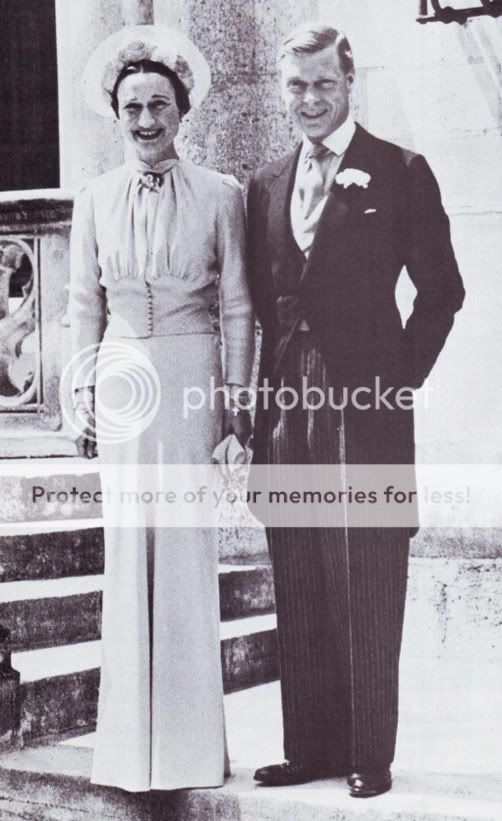
Nice photo-op
There is an air of romance about Great Britain's Edward VIII and fair enough; he did give up the throne for love. Beyond that, my only impressions of him have been garnered from popular culture - a selfish man (perhaps) a womaniser (true, although his marriage was a long and successful one) and nasty to his brother (not true, at least not before or during the abdication crisis: later perhaps) whose life after the abdication did not amount to much (well..) After reading Philip Ziegler's Edward VIII, while I feel more informed, I cannot say I feel much better towards the subject. I do think this is as sympathetic a biography as you're going to get, without lapsing into hagiography. It's a very effective retelling of the Abdication Crisis, which in the end is the most interesting thing about Edward.

 The marriage which was not expected to last - Simpson was not Edward's first great love affair, and the others had petered out -  did so until Edward's death in 1976. Given our next king will be a divorcee married to another divorcee, we can see that time has changed (although whether she will be Queen is still a matter of speculation.) It was Noel Coward who suggested that there should be a statue of Wallis Simpson in every town in Britain, as a tribute to the woman who stopped Edward becoming king. It was a typically waspish Coward thing to say, but contains more than a kernel of truth. A lot of the anger directed towards Simpson derived from her nationality and her marriage status, not to mention her commoner status. But she did seem to bring out the worst in Edward, through her love of money, jewellery, and attention. Not to mention her friends in Germany. But Ziegler dismissed the more lurid rumours about her life and sexuality, simply from lack of evidence.

The other use that Edward gets put to in literature is as King of England in the alternative universe where Germany won WWII. Edward, like many of his time, was an appeaser of the Germans and an admirer of the order that the Nazis brought to what had been a country in some chaos. He visited Germany in the late 30s, met the top Nazis, and has been accused of being pro-Nazi.
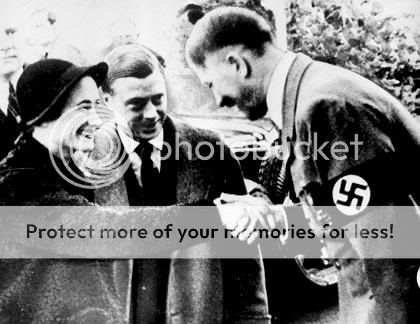
Ill-advised photo-op
Ziegler seems satisfied that Edward  would not have been a puppet king for the Nazis, should the opportunity present itself. But I cannot help thinking he might have been; not a puppet as such, but he would have seen himself as a mediator between the Germans and the British people. In any case, the point is moot. (In case you're wondering, WE WON!)

This book does spend what seems a lot of time on Edward's youth but I think Ziegler is trying hard to find the boy who became the man who renounced the throne. He felt constrained by his role as a prince, hated the ceremony and dressing up. During WW1, despite being in uniform and asking otherwise, he was kept from the  fighting and spent most of it at one headquarters or another which he resented. (He went on record several times saying how much he hated the Germans; indeed he seemed to share most of the common prejudices of his age.)  He was also aware of the working class and their life and often commented on a need to do something for them. But in the end he lacked the application, and to be fair, the means to do much at all. If he had kept his throne, he may have kicked against the traces but one suspects he would have stayed a conservative course.

 Edward's post-adbication life was about half of his life and yet it takes up perhaps a third of this book, even less, which gives you a fair indication of its action-packed nature. He does well as Governor of the Bahamas during the Second World War, working hard to improve the local economy and the position of the majority black population. But apart from that, most of his energy seemed to be spent on making the Royal Family keep him the style he had become accustomed and trying to get his wife made a Royal Highness. As neither of them were in the line of succession, it seems a fruitless argument. He never seemed to put his energy or his name to anything of use to anyone but himself and his wife.

Possibly from
the Abdication
Crisis
In the end, I kept thinking of what was the point of Edward VIII? If you are born to the royal family, supported by the resources of the people of Britain, and then opt out of what you were born to do, what is the point of you?  Perhaps once he had stopped being king, he should have gone out, got a job, and got on with things as Mr Windsor (or Saxe-Coburg or whatever. Actually, just change his name to Sax Coburg and become a jazz man. Ok, that's a bit silly.) Such a path would be unthinkable then, and perhaps now. But we fetishise self-fulfilment these days to the detriment of everything else - responsibility to others, for example. Responsibility to your society. Edward may have been the harbinger to the modern liberal fallacy that your happiness is the only thing that matters and damn everybody and anything else. Duty, sacrifice, selflessness are all qualities we disparage so we can all be the best you you can be, and I don't see society improving as a result. I don't suggest one should ignore personal fulfilment but I'm not convinced it should be the driver of society that it is. In The Madness of George III, the king's last line (in the film at least) is that the Royal Family is there to be an example. Maybe we all looked to the wrong King.

Sunday, July 28, 2013

"To the ends of the earth" Hunting Evil


I just finished watching an episode of the new BBC series of Father Brown. (Spoiler alert). The victim it turns out was a Nazi killer and the criminal one whose family he killed. Both spend time dressed as a Catholic priest. Escaped Nazis in England? The Catholic Church as a haven for killers? Both are true, as detailed by Guy Webster in his excellent Hunting Evil: How the Nazi war criminals escaped and the hunt to bring them to justice.

I am fascinated with Nazi Germany. A cultured highly educated nation, whose leaders appreciated art, poetry and classical music were between them responsible for one of the greatest horrors ever perpetrated upon by one set of human beings upon another. World War Two was bad enough, but the Holocaust, the systematic and deliberate attempt to wipe a group of people to the last individual off the earth was unprecedented and so far unreplicated. There have been other genocides but none so deliberate and priortised. It has been argued if the Nazis were not so anti-Semitic, the released resources could have seen them win the war. In other words, the top priority of Nazi Germany, as they ran a country and a war, was to kill every Jew on the planet. To do this, they sacrificed both the country and the war.

The full extent of the crimes against humanity took a long time, years, decades in some cases, to become apparent, in part due to their extent. Even so, during the war, the Allies declared that they would hunt the criminals to the ends of the earth. In practice, once Germany was defeated, priorities changed. No-one will be surprised to find that counties such as Argentina, Syria and Paraguay were happy to forget about Nazi atrocities as it suited them. It is a little more startling to find Britain, the United States, France and Soviet Russia, doing the same.

In his introduction, Webster says he considered changing his title to ‘Hunting Evil  - or not.’ Once the Second World War was over, priorities changed. The Allies were now split, the Communists trying to overthrow the West and vice versa. This was their top priority, and if it meant using Nazi war criminals for their expertise in espionage and knowledge of the other counties, they would do so.  Which is not to say there were not other parts of the same governments trying to bring Nazi criminals, often the same individuals, to justice. But the necessary resources of personnel and money were never made available. People driven by a sense of justice were left dangling.

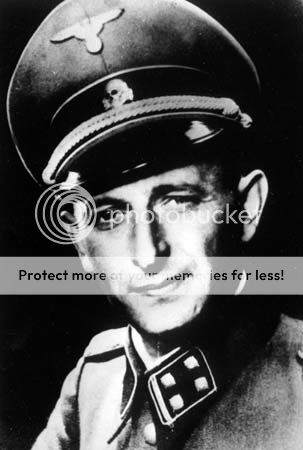
Speak of Nazi hunting and Simon Wiesenthal comes to mind.  For decades he was the face of trying tobring justice to those who had escaped. Sadly, as Walters shows, many of his achievments, the dramatic incidents in his life, were the stuff of exaggeration, even fantasy. His organisation claimed to have captured over a 1000 Nazis. In truth, they captured ten, and the information they provided to other organisations was often little more than rumour. They did give some support to the capture of Eichmann, more to the capture of Stangl, but even then Wiestenthal exaggerated, eventually putting himself in a wrestle with Eichmann in Argentina. But for all his faults he did keep the issue in the world’s eye, and made sure that time would not erase the memory of the crimes.

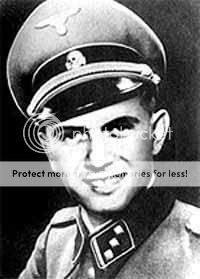
Nor was he alone in his misinformation about Nazi escapees. In the 80s, the US and Israelis finally put some real effort and money into hunting down Josef Mengele. Wiesenthal gave them information Mengele was here, now here, now here. But Mengele was already dead and buried. The money and effort that they put in went to finding a four-foot deep grave in a Paraguayan jungle.

Other myths get busted here too, notably ODESSA, the organisation that ran Nazis out of Europe and into safe havens. It probably never existed, certainly not as the professional rich organisation in Frederic Forsyth’s book. Escape groups did exist but were small, ad hoc, and more in the nature of mates helping mates. The notorious Bishop Hudal, the priest who hid and aided many Nazis as they went through Rome was oddly motivated by what sounds like Marxists ideals: the war was a conflict between two economic systems and the actions of individual soldiers should not be cause for their punishment. Among the people helped to escape was Franz Stangl, later convicted for co-reponsibility for 800 000 deaths. It is entirely possible that Hudal did not know who Stangl was, or what he had done. Not many people did. By the time Stangl was publicly identified as the commandant of Treblinka and Sobibor, he was already in Brazil.

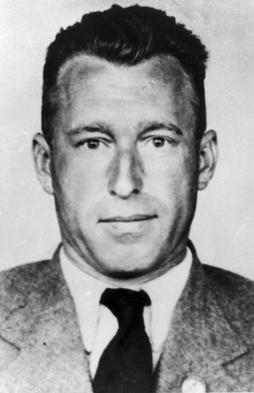
Stangl never changed his name. His wife sent mail back home to Austria, telling their friends where they were. They registered with the Austrian embassy. Yet even when his crimes became apparent, his friends did not betray them and the government, it seems, did not even run a check through their files. He was arrested finally in 1967. Even Mengele registered at a West German embassy, giving his real name and address. This is the most disturbing aspect of this book, the widespread lack of will from governments, churches and individuals, to do anything. And such will as existed is fading. We have had other wars, other attrocities. Do we try and bring justice? Or do we try to use moral relativism to reduce our responsibility to do something, as was attemped by Klaus Barbie’s defence lawyer? Or do we wait till the criminals are old or dead, and say, no matter how monstrous their crime, ‘it was all so long ago, it’s just not worth it’?

I have a theory why we are so ready to call someone like George Bush Jr or John Howard a Hitler, though the comparison is ludicrous. It comforts us to think that if someone like Hitler were to come along again, we would be among those who would resist him. But the truth is, most people in Germany, even if they did not agree with the Nazis (they never won an election outright) went along. It took extraordinary people to resist.  We are the 99%, or so we’ve been told lately. 99% went along. And given the chance to punish the Nazis, after a brief outburst of justice, most people slung it into the ‘too hard’ basket. The Nazis fascinate because they are humanity at its worst.  And the reactions of the non-Nazis, German, Austrian, and from every other country, could have been ours. I don’t know I would have resisted. And that thought terrifies me.

SaveSave