Showing posts with label War. Show all posts

Monday, March 19, 2018

Old movies, forgotten awards

I don’t think I particularly like the Oscars anymore. I was never mad for them, didn’t sit up watching till midnight avoiding the news so I wouldn’t know who won what, or of later years trying to find a venue to watch them live. Awards themselves are of dubious value, award shows even more so. When Nicole Kidman pretentiously said “Art is important” to defend her going to the Oscars in the wake of 9/11, the obvious riposte, “Yes but award shows aren’t”, wasn’t mentioned. Ultimately, good work doesn’t always get awards, and awards don’t always go to good work. And as Johnny Carson (I think) said, the Oscars are two hours of entertainment jam-packed into a five-hour show.

Over the last few years Hollywood’s night of artistic self-congratulation has turned into a  night of moral self-congratulation, when stars wear dresses of a certain colour or badges to show their disapproval of an appalling mode of human behaviour that has been in the headlines mainly because it is prevalent in Hollywood, whose disapproval is strongest in hindsight. They seem to confuse wearing a designer dress of one colour instead of another as some form of activism, like those people who wear “This is what a feminist looks like” t-shirt regardless of how they actually treat women in real life, or those people who wear Che Guevara t-shirts and have never once gone from war to war so they can shoot people (I assume that’s what they’re supporting; it was Che’s favourite activity.)  I’m not sure how many more open secrets Hollywood can all pretend to be appalled by.

I also dislike the articles that appear discussing the films etc that should never have won the Oscar. I think they’re mean-spirited (which admittedly is spiritus temporum) and again confuses awards with the worth of a film. I of course have my opinions on films I think weren’t worthy winners but good luck to those artists. It doesn’t change anything that matters. So overall, while I will never claim to be uninterested in the Oscars, I am tending towards the disinterested. 

But I still like films. One good thing this year is the Foxtel are showing all the best-film award winners in order. I say ‘all’, it’s actually ‘a lot’ but does include the first, 1927’s Wings, through to last year’s Moonlight. There’s a lot there I’ve only ever heard about but never seen: All about Eve, The Apartment, The Deer Hunter, and those that I haven’t seen for a long time: Shakespeare in love, which I will defend to the death so sod off. I would love to have the time and wherewithal to sit and watch for several days, which is a ludicrous idea but still. It’s sobering to consider how many of these films are forgotten. But such is art - and awards. 

One film I did watch was 1930’s big winner All Quiet on the Western Front, which won Best Picture and Best Director. It’s one year older than my Dad, and like him, sometimes shaky but stands the test of time well. The acting can be wooden and melodramatic but the film itself greatly affecting. A class of young German schoolboys are implored by their fiercely-patriotic teacher to enlist in the early days of the war, and we follow them through training, battle and their deaths. (Spoiler-alert I guess - but the film is 88 years old and the novel older and WWI isn’t a byword for happily-ever-after.) Some die on the battlefield, some in the hospital. One soldier spends a night in a shell crater, watching the enemy soldier he stabbed die over the course of the hours. He goes home but find no-one understands what he’s been through, least of all the teacher who started him there. It’s following them on this journey that makes it such a moving film. The ending is devastating and the final shot haunting.


The novel was written by Erich Maria Remarque, a WWI veteran, based on his experiences in the German army. Making the film in the late 1920s meant there were plenty of veterans around to act as advisors, in particular Germans, some of whom appear as trainers in the training sequences. The battle sounds are like nothing I’ve ever heard. An old corporal, Kat, describes the sounds of different shells to the newcomers, and I think this specificity is reflected in the soundscape. This closeness to the original event I suspect gives the film a verisimilitude later films can lack, despite advances in technique.

It’s also interesting to watch a film made before Hollywood imposed the Hayes Code on itself to prevent government censorship. A French soldier is blown up leaving nothing but his hands still clinging to the wire - a memory of one of the German veterans who worked on the film. Swimming in a river behind the lines, the young German men spot some French women and bribe them with food. Bare bottoms are seen when they boys show off in the river, and it’s clear the night does involve sex, without being explicit. This sequence is at once touching and pathetic. The women are desperate for food, but the subsequent liaison is one of genuine human connection, which both parties are clearly craving. It’s a
sequence that would not have appeared a decade later for example. For different reasons it may not appear if the film were made now. (There are stories of a new version coming.) And I don’t know if it’s a reflection of German society of the novel or American society when the film was shot, but the boys are also much freer displaying physical affection towards each other. It makes them seem much younger, and their descent into the horrors of war that much more terrible.


The film, like the book, was banned in Nazi Germany for the negative picture of the war. The film was banned in Poland and France for being pro-German. Controversial in its day, still affecting now. We should all be so lucky in the work we create.

Saturday, September 7, 2013

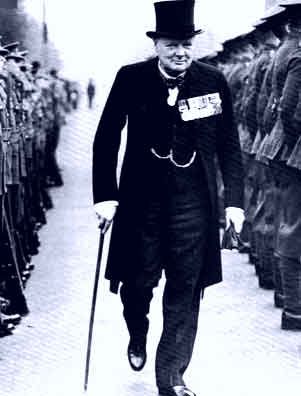
"Oh captain, my captain': Haig and Churchill, war leaders.


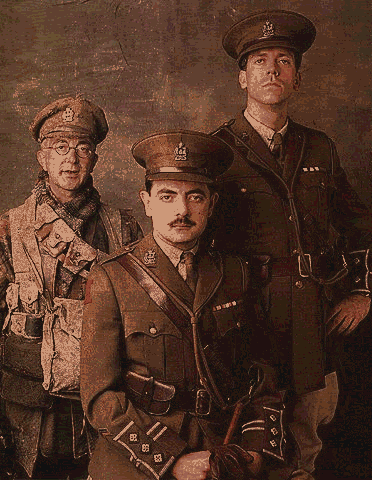
Making up quotations to suit yourself is not new.  One of the most popular fauxtations of WWI, the British army being lions led by donkeys, was created by the man who “quoted” it, British historian Alan Clark. He seems to have adapted it from other sources, about other wars about other armies, to use in his book, The Donkeys, about British military offencives during the war. As an image, it was picked up by the creators of Oh what a lovely war,  which depicted British generals as incompetant at best, and callous butchers at worst. This image in popular culture was still in use in Blackadder goes forth, which had General Melchett as incompetant and callous, and had Haig literally throw (model) soldiers into a bin while planning an attack.

But popular culture may not be your best guide to history. A shock, I know. Douglas  Haig’s reputation
went from respected in the aftermath of the war, until his relatively early death in 1928, through to villainy in the Sixties, as part of the antiwar movement of the time, to a more balanced and nuanced rehabilitation more recently. No-one is claiming he never set a foot wrong, or did not make decisions that cost thousands of men’s lives needlessly, but his reputation as unimaginative, unfeeling, and incompetant is nevertheless undeserved. Indeed one of his earliest critics, who criticised him during the war, was Winston Churchill. Writing his history of World War One afterwards, he was forced to admit, given the circumstances and resources available to Haig, Churchill’s respect for him grew.   

Water Reid’s Douglas Haig: Architect of victory is part of the move to redress this imbalance. Reid does not argue Haig was the best General available to the British, but he argues he was the best Commander in Chief, a role that demands much in administration and organisation and human resources, as well as military concerns. Haig oversaw an increase in his army from three hundred thousand to three million men (including soldiers from the Empire) and a revolution in military technology in the same time that has never been equalled. Far from being unimaginative or staid in tactics, he increased the engineering corps’ experimental section from by a factor of seventeen and was enthusiastic to introduce new weapons such as tanks that would help his soldiers. No other man at the time had this capability. By war’s end, the British army was the most efficient army on earth, bringing together infantry, armour, artillery and air support together, using tactics painfully learned, and in an attack that drove the German army from the centre of France back to the German border. Other experts, generals, politicians, expected the war would last until 1919. Haig was the only one, literally, who saw how the war could end in 1918, and was central to making it happen.

Churchil of course was Prime Minister of Great Britain in WWII. By this stage he was a veteran of three wars, including the First World War. He was a man of almost indominatable courage, imagination and energy. It would not be an exaggeration I think to say that Britain would have lost the Second World War without him. And if Britain had lost, sought peace with the Nazi regime, how would the attack on Russia have gone then, with a full German army concentrated on one side, and an entirely
unsupported USSR on the other? For all of the astonishing tenacity and courage of the Russian soldier, and their leaders’ disregard for their welfare, the modern world would be very different.

Carol D’Este’s book Warlord: a life of Winston Churchill at war 1874 - 1945, is a study of Churchill as a warrior both on the field and as a leader of a warring nation.  As a leader Churchill was responsible for some dreadful decisions that cost many men their lives such as the attacks on Gallipoli, Norway, and Greece. Yet no-one else could have done what he did, invigorated the British nation to stand and fight when nearly all hope was gone, and their allies defeated.  In his failures were elements of his greatness – imagination, the search for a bold stroke, his unwilliness to do nothing when danger was present. He was a flawed leader, and D’Este doesn’t pretend otherwise but he was a great man, and in the right place at the right time.

It is one of the ironies of Churchill’s life that he was to oversee the transition from Empire to a small nation on the second tier. By allying with the US and the USSR, he ensured the defeat of Nazi Germany but he also brought in the next generation of great powers. Churchill was central to the war effort up to 1941. Afterwards he was not, and he knew it. He still made his presense felt, and had his influence and of course his wonderful oratory, but Britain’s day as a world power was waning, and all he could do was eulogise the sunset.

Churchill knew war personally, had seen the massacre at Omdurman, (which De’Este sees as the beginning of the war between the Muslim and the West still going on today) and fought in the trenches in France. And yet he gloried in battle, and even in his sixties, leading the nation, yearned to grapple with the enemy personally. Robert E Lee said it, but Churchill knew what he meant: “It is well that war is so terrible, else we shoud grow too fond of it.” This conundrum, love of battle and awareness of it’s horrors also fed into Churchill’s leadership.

Churchill knew something else. He may have forgotten it in the attack on Italy but he knew it. Going to war means you have to know what you are fighting for, and you have to go all in or not at all – “war to the knife”. As we grapple with the Middle East, this is worth remembering for all our leaders.


Oh enough war. I have a book on octopuses now.

Sunday, July 28, 2013

"To the ends of the earth" Hunting Evil


I just finished watching an episode of the new BBC series of Father Brown. (Spoiler alert). The victim it turns out was a Nazi killer and the criminal one whose family he killed. Both spend time dressed as a Catholic priest. Escaped Nazis in England? The Catholic Church as a haven for killers? Both are true, as detailed by Guy Webster in his excellent Hunting Evil: How the Nazi war criminals escaped and the hunt to bring them to justice.

I am fascinated with Nazi Germany. A cultured highly educated nation, whose leaders appreciated art, poetry and classical music were between them responsible for one of the greatest horrors ever perpetrated upon by one set of human beings upon another. World War Two was bad enough, but the Holocaust, the systematic and deliberate attempt to wipe a group of people to the last individual off the earth was unprecedented and so far unreplicated. There have been other genocides but none so deliberate and priortised. It has been argued if the Nazis were not so anti-Semitic, the released resources could have seen them win the war. In other words, the top priority of Nazi Germany, as they ran a country and a war, was to kill every Jew on the planet. To do this, they sacrificed both the country and the war.

The full extent of the crimes against humanity took a long time, years, decades in some cases, to become apparent, in part due to their extent. Even so, during the war, the Allies declared that they would hunt the criminals to the ends of the earth. In practice, once Germany was defeated, priorities changed. No-one will be surprised to find that counties such as Argentina, Syria and Paraguay were happy to forget about Nazi atrocities as it suited them. It is a little more startling to find Britain, the United States, France and Soviet Russia, doing the same.

In his introduction, Webster says he considered changing his title to ‘Hunting Evil  - or not.’ Once the Second World War was over, priorities changed. The Allies were now split, the Communists trying to overthrow the West and vice versa. This was their top priority, and if it meant using Nazi war criminals for their expertise in espionage and knowledge of the other counties, they would do so.  Which is not to say there were not other parts of the same governments trying to bring Nazi criminals, often the same individuals, to justice. But the necessary resources of personnel and money were never made available. People driven by a sense of justice were left dangling.

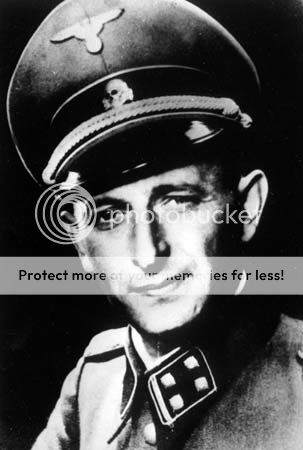
Speak of Nazi hunting and Simon Wiesenthal comes to mind.  For decades he was the face of trying tobring justice to those who had escaped. Sadly, as Walters shows, many of his achievments, the dramatic incidents in his life, were the stuff of exaggeration, even fantasy. His organisation claimed to have captured over a 1000 Nazis. In truth, they captured ten, and the information they provided to other organisations was often little more than rumour. They did give some support to the capture of Eichmann, more to the capture of Stangl, but even then Wiestenthal exaggerated, eventually putting himself in a wrestle with Eichmann in Argentina. But for all his faults he did keep the issue in the world’s eye, and made sure that time would not erase the memory of the crimes.

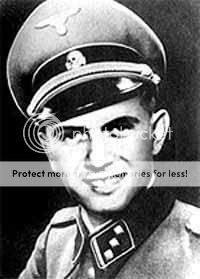
Nor was he alone in his misinformation about Nazi escapees. In the 80s, the US and Israelis finally put some real effort and money into hunting down Josef Mengele. Wiesenthal gave them information Mengele was here, now here, now here. But Mengele was already dead and buried. The money and effort that they put in went to finding a four-foot deep grave in a Paraguayan jungle.

Other myths get busted here too, notably ODESSA, the organisation that ran Nazis out of Europe and into safe havens. It probably never existed, certainly not as the professional rich organisation in Frederic Forsyth’s book. Escape groups did exist but were small, ad hoc, and more in the nature of mates helping mates. The notorious Bishop Hudal, the priest who hid and aided many Nazis as they went through Rome was oddly motivated by what sounds like Marxists ideals: the war was a conflict between two economic systems and the actions of individual soldiers should not be cause for their punishment. Among the people helped to escape was Franz Stangl, later convicted for co-reponsibility for 800 000 deaths. It is entirely possible that Hudal did not know who Stangl was, or what he had done. Not many people did. By the time Stangl was publicly identified as the commandant of Treblinka and Sobibor, he was already in Brazil.

Stangl never changed his name. His wife sent mail back home to Austria, telling their friends where they were. They registered with the Austrian embassy. Yet even when his crimes became apparent, his friends did not betray them and the government, it seems, did not even run a check through their files. He was arrested finally in 1967. Even Mengele registered at a West German embassy, giving his real name and address. This is the most disturbing aspect of this book, the widespread lack of will from governments, churches and individuals, to do anything. And such will as existed is fading. We have had other wars, other attrocities. Do we try and bring justice? Or do we try to use moral relativism to reduce our responsibility to do something, as was attemped by Klaus Barbie’s defence lawyer? Or do we wait till the criminals are old or dead, and say, no matter how monstrous their crime, ‘it was all so long ago, it’s just not worth it’?

I have a theory why we are so ready to call someone like George Bush Jr or John Howard a Hitler, though the comparison is ludicrous. It comforts us to think that if someone like Hitler were to come along again, we would be among those who would resist him. But the truth is, most people in Germany, even if they did not agree with the Nazis (they never won an election outright) went along. It took extraordinary people to resist.  We are the 99%, or so we’ve been told lately. 99% went along. And given the chance to punish the Nazis, after a brief outburst of justice, most people slung it into the ‘too hard’ basket. The Nazis fascinate because they are humanity at its worst.  And the reactions of the non-Nazis, German, Austrian, and from every other country, could have been ours. I don’t know I would have resisted. And that thought terrifies me.

SaveSave

Sunday, April 28, 2013

"What are they marching for?" Remembering ANZAC Day


In Australia, we have just marked ANZAC Day, which is our version of Memorial Day. We also mark Armistice Day in November, but ANZAC Day is our big one. It's a public holiday with dawn services, marches featuring veterans, their relatives and descendants and current serving men and women in major cities, special church services, and much drinking as the day goes on.

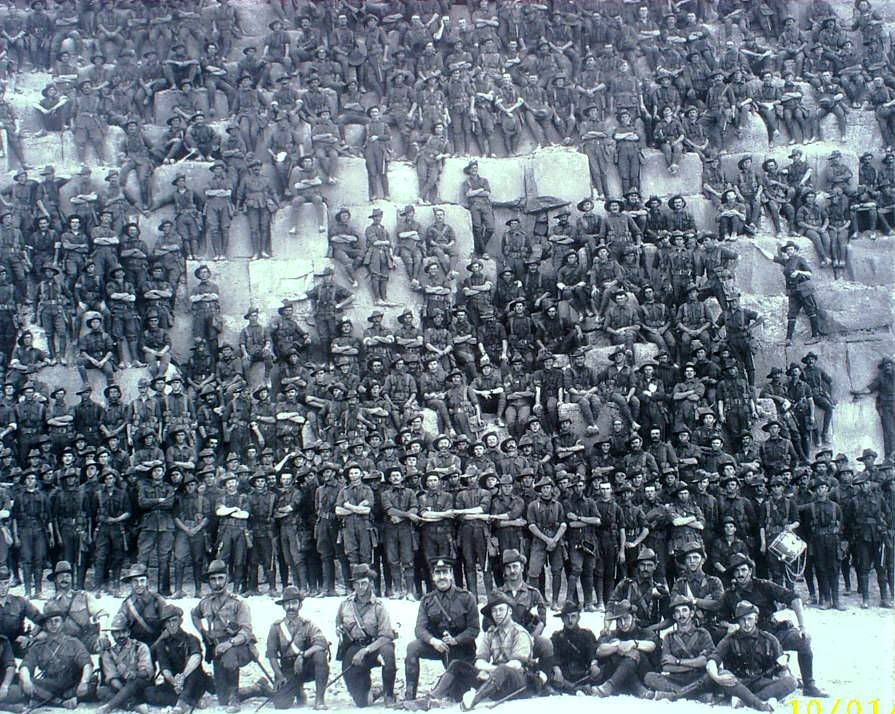
It is the anniversary of an attack on Turkey on the 25th of April 1915 which ended as a tremendous failure. ANZACs (Australian and New Zealand Army Corps) as well as troops from Great Britain, Ireland, France, India and Canada managed to get ashore in the Dardanelles, but fierce defence from the Turkish troops kept them pinned on the shore, with the furtherest point achieved at Chunuk Bair by New Zealand soldiers. After eight months of bloody fighting all Allied troops withdrew.

Although British troops lost far more men than the ANZACs, for Australia, then just a little over fourteen years old, the campaign was of a far greater significance. For the first time since we became a nation, we sent troops overseas and they acquitted themselves not only well but heroically. The reputation of the Australian army was made in that campaign, with praise coming from British commanders as well as Turkish opponents.

Looked at this light, it's no mystery why ANZAC Day so quickly became such an important day. It was marked the very next year and by 1923 had became a holiday. In the 60s and 70s, with the anti-war protests of Vietnam, and WWI veterans becoming a dying breed, the march and the day was in danger of becoming obsolete. Since the 90s it has enjoyed a resurgence in popularity, and is recognised as a day of solemnity, thanking those that died in the service of their country, and recognising all the victims of war, be they in uniform, at home, or even belonging to the enemy. Still doesn't mean that old soldiers don't like a beer when they get together.

 So being popular, and involving war, the more progressive type has to find fault with it. The ANZAC myth has produced the ANZAC myth myth, which tells us just about every thing you know about ANZAC campaign and the day is wrong, ill-informed, propaganda and glorifying war. Po-faced pundits on television, having neglected to study history, ask in very serious voices provocative questions that only they dare to ask, not realising, had they studied history, those questions have been asked and answered before. History is another subject people don't feel the need to study to pronounce on it.

The reputation of the ANZAC soldier has been exaggerated, they say, blaming C E W Bean, the official war historian. But Bean's work is impeccably documented and the praise that came from ally and enemy real enough. What about the soldiers that ran, that turned away from the enemy? They are in there too, and in the large print. But the vast majority of soldiers fought well, so if the emphasis of our memorial is on them, we are only going with numbers. Maybe they did join for a lark, to get away from small towns and be with their friends. But when they were confronted with the reality of war, they met the challenge.

Like in many other areas of life, there seems to be an idea that focussing on the negative, the worst of people, the darkness is somehow more courageous, more real, than focussing on the positive. But we're kidding ourselves. There is a thing called the Parochialism of the Present, the belief that what is now is the best that has been. The ANZACs  challenge that idea to say the least. They provide an example of bravery and self-sacrifice that we, in our comfortable, rich, well-protected lives have never been called on to match. I pray God we never will be. But there is that thought, in our darker hours, that maybe we couldn't. And it's much easier to denigrate the example than to think that we won't match it. In the end, if all you know of Gallipoli and the Dardanelles is the ANZAC legend, where troops were ashore in an ill-
conceived plan badly carried out, fought bravely, suffered, earned the respect of their allies and their enemies before evacuating in a well-planned, well-performed operation, you've actually got a pretty good idea of what happened.

ANZAC Day marks the day when Australia went from a political idea constructed from votes and legislation to a nation on the world stage, and we use this day to remember all those who suffered in war then and since. If you want to pooh-pooh this day, go ahead. We live in a free country. 

PS: This entry was inspired in part by John Hirst's Sense and nonsense in Australian history, a collection of his essays from a career studying Australian history. It's worth checking out!

Saturday, January 7, 2012

"The mystery of things." Bomber Harris, Orson Welles and Tom Waits - together at last!


Biographies have changed. Like other history books the authors aimed for a impersonal detached and objective tone. Now, with changes in taste and philosophies, the authors’s voice has become much more idiosyncratic and for mine, obtrusive. When Pamela Stephenson, for example, is writing about her husband Billy Connolly, such a personal approach may be justified. But many biographies these days seem to be written in a much more direct even chatty style, even when they don’t enjoy such a personal relationship with their subject.

The three latest biographies I have read have spread across the gamut of modern biography. One is old-school objective, another focussing on one section of its subject’s career, and the third an unauthorised biography of a still-active artist covering his entire life.

The first was Bomber Harris: His life and times the life of Arthur Harris, who led Britain’s Bomber Command during World War II. Harris still a controversial figure and Bomber Command’s tactics are still the cause of argument. But from Dunkirk through to Normandy, bombers were the only way Britain could fight against Nazi Germany and give support to the Russians on the Eastern Front. After the war, Albert Speer, Hitler’s Minister of Armaments, said the damage done by the bombers, the extra guns and troops stationed in Germany to combat them, was as effective as a second front and a large part of the reason Germany lost. This still leaves plenty of room for arguments about tactics and strategies, and morality.

There is no easy answer but the author fairly lays out the facts, opinions from others from the era, and gives differing conclusions from other historians, while presenting his own findings. In the end we get a pretty clear picture of the man both as a person and as a military commander, his strengths and his flaws. If the book is somewhat dry to read, and does get a bit bogged down in detail, it does what it sets out to do: tell the life and character of Arthur Harris.

The second book is not quite a biography but I’m not sure what else to call it. Clinton Heylin’s Despite the system: Orson Welles versus the Hollywood Studios examines the Welles’ Hollywood career, from Citizen Kane through to Touch of Evil from when he had complete control of his film to becoming a director for hire. Here the author is not afraid to make his voice heard at all and is quite scathing about a number of previous biographies of Welles, as well as praising a few others. He is especially scathing on half-arsed psychological assessments of Orson Welles that ‘explain’ the number of films he did not finish. By contrast he shows the hurdles the Welles had to overcome in terms of budgets and studio politics. These are real, identifiable and demonstratable. And as an explanation of Welles’ career, much more satisfying.

Welles’ personality of course did not help him in playing studio politics. He was never afraid to call a shovel a shovel or an idiot an idiot. He did have a tendency to indulge himself at some expense to his employers. But he deserved better than what he got. Welles’ control of his film Kane was unprecedented but now it is not uncommon. Directors now have complete control of their films and what do we get? More Kanes? No, we get “Indiana Jones and the Kingdom of the Chrystal Skulls” and the Star Wars prequels. It takes more than total control to make good art

Heylin also gave me an insight into Welles’ films I had not had before. Welles’ is a Brechtian film-maker, drawing attention to the techniques of film as you watch it. Also, as a result of his work on radio, he had a much more interesting and integrated approach to the use of sound in film. Even today he would still be a radical in Hollywood. When he was able to get these factors together, it made Welles’ films identifiable almost at a glance – and a listen.

He also puts to bed, for mine, the theory that Welles did not write Citizen Kane, but rather, at best edited what Herman J Mankiewicz wrote. Simply put, Mank’s scripts before and after Kane was formulaic pot-boilers. Welles on the other hand was making films that challenged Hollywood’s aesthetic, narratives and techniques for the rest of his career. Welles was always ready to give Mank credit when it was due, the  ‘Rosebud’ Macguffin but one example. It’s time some of his detractors gave Welles the same courtesy.

The next in this biographical triumvirate is Low side of the road: The life of Tom Waits  by Barney Hoskyns. I am an enormous fan of Waits, the wide range of his musical styles and his fun, provoking, often moving lyrics. Hoskyns is open about the music he likes and the music he finds not so essential. He is also ready to admit that others may disagree with his assessment - a radical approach for a critic. This is an unauthorised biography which often means a hatchet job, but not in this case. This is an admiring biography, while not shying away from aspects that Hoskyns does not find as admirable. It’s an entertaining and informative read. I was delighted to read that all the idiosyncratic names that pepper Waits' work are from people he has known.

Waits has lead an interesting life both professionally and personally. But unusually for these times, he keeps his private life very private. He also believes that an artist’s work should speak for itself and not be interpreted through the narrow lens of autobiography.  This is part of what makes Waits such an oddity. All art is supposed to be confessional and revealing one’s private life is supposed to be a sign of honesty. Both these ideas, though popular, are questionable. (Incidentally, Arthur Harris declined several offers to write his autobiography. He thought he had said quite enough on the subject.)

Waits and his wife and collaborator Kathleen Brennan asked people not to talk to Hoskyns, and Hoskyns is quite open about that. However a number of people did speak to him, and Waits himself has a sheaf of interviews published over the years, including several with Hoskyns and the result is a good read, a good biography. Once again, it had me going back to the music to listen to it with new ears, always a good sign.

Three books, three different approaches. All three are worth reading, but do any of them crack the mystery of their subject? Ultimately no. Where talent for music, film or leadership comes from is unsolvable. Welles and Waits have given us great art, Harris is one of those responsible for our freedom. They are imperfect as we all are. Perhaps in the biggest terms, biographies are another tool in our ongoing attempt to make sense of human existence and the meaning of life. Or perhaps we just find people interesting.

Tuesday, July 12, 2011

"Enemy coast ahead." The Dambusters

As I mentioned earlier, more information is forthcoming about World War Two, as more information becomes declassified and more sources are made available. But some sources are becoming more scarce. I refer to the veterans themselves, both combatants and non-combatants, military and civilian. Historian Max Arthur is aware of this and is publishing oral histories of the world wars, combining published sources and new interviews to bring us their stories in their own words. Such primary sources are invaluable, and offer an insight obviously unavailable in any other way.

Arthur’s lastest book is Dambusters the story of perhaps the most famous aerial attack in WWII when 617 Squadron attacked three major dams in Germany using Barnes Wallis’  ‘bouncing bomb’. The raid has already been a book, by Australian Paul Brickhill as well as a movie, both called ‘The Dam Busters.’ The name of their first raid stuck to the squad through other astonishing missions of precision bombing.  But this book gives us the story through the pilots, the crew, the ground crew, the scientists, and the civilians who lived underneath the dams themselves. It’s an interesting, affecting read.

The campaign by Bomber Command from 1939-1945 has been the subject of some controversy, particularly the further we get from the war itself. Some have said the area bombing of major German cities was a war crime, some even going so far as to compare it to the Holocaust. While the latter comparison is as silly as it is offensive, the overall question does deserve some attention.

My reply is always, what else were they to do? Britain had no other way to fight back against Germany except through Bomber Command. Speer, the organising genius of the Reich, said the bombing was like a second front. In using artillery, troops, aircraft, and other resources for defence and rebuilding, it was impossible for Germany to turn its full might on Russia. The Eastern front was a brutal, ugly, protracted fight – and a near thing. If Germany had been able to keep minimum resources at home and on its Western defences, who knows what may have been the result.

That said the campaign was not beyond criticism. If Arthur Harris had backed the Mosquito instead of the Lancaster, precision bombing using much lighter loads and fewer crew for better results might have resulted, with fewer civilian casualties. But this is decision much easier to see from here, and not from then, when aerial bombing was still a new tactic, subject to much argument. Certainly it can be argued that Harris continued with area bombing when other tactics were available.

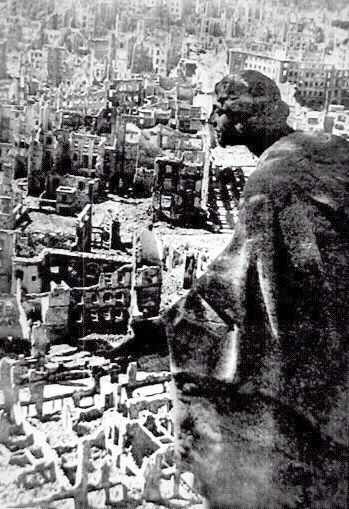
The bombing of Dresden in February 1945 by British and American crews is still a source of controversy. For some time, details came from the Nazis, and then the USSR, both of who had an obvious motivation in making the Western Allies look as bad as possible. The city was a major junction for troops heading for the Eastern Front, and the attack was in part requested by the Soviets, who for decades denied such a request existed. It was also the site of factories making parts for bombsights for German bomber, making Dresden as legitimate a target as any other city.

The story of Dresden as a source of shame for the allies was propagated by David Irving. Irving based his figures for civilian casualties on a German source, which was later shown to have been forged, the figures exaggerated by a factor of ten. Nearly twenty thousand casualties became 200 000. Irving also included stories of Allied fighters attacking refugees, for which there was no credible source. Irving’s great shame, and evidence of his lack of credibility, was that once the forgery was discovered, he kept quoting the false figure, even through later editions of his book.

But let’s not forget the 20 000.  Dresden was not the most severe raid of the war, but it was late in the piece with Germany on the edge of defeat, and while not a war crime, it could well be morally questionable. I suspect WWII had the greatest parity between civilian and military casualties of any war to that time, and mainland Europe took the greatest brunt of that. The line between civilian and soldier had been blurring through some years and advances in technology, and the bomber erased it completely. You should read Frederick Taylor’s Dresden: Tuesday February 13 1945 for a balanced assessment.

In any case, the argument about Bomber Command should take nothing away from the courage, skill and sacrifice of the young men in the airplanes.

Meanwhile the Dambusters raid was an astonishing feat of visionary engineering combined with courageous and superb flying, and worth revisiting. Peter Jackson is working on another big screen adaptation, with Stephen Fry writing the script. Recently it was announced that the dog belonging to Squadron Leader Guy Gibson would be called ‘Digger’. It seems a small point, but the dog died the night before the raid, and in memoriam, his name used as the codeword for a successful breach of a dam wall. So what? In reality, the dog’s name was Nigger, and this was the codeword that captured the great moment of triumph. (Yes the dog was black – Gibson had many positive qualities but racial sensitivity or a sense of irony was not among them). Fry was immediately accused of rewriting history. But again I ask, what else could they do? Even in the 1954 film, the name was dubbed ‘Trigger’ for the American release, and to use the N word, however accurately, in a 21st century film is commercially unthinkable. And phonetically, Digger is the better substitute, the tongue being in a very similar position on the hard ridge of the palate for the /d/ phoneme as for the /n/, even if the soft palate is doing something altogether different. Perhaps instead of the Director’s Cut DVD, they could release the Historical Stickler’s Cut with the dog’s real name dubbed as necessary – and a prominent offensive language warning.

Meanwhile, surely they won't touch the music?

Friday, July 1, 2011

"There, but for the grace of God, go I." Franz Stangl

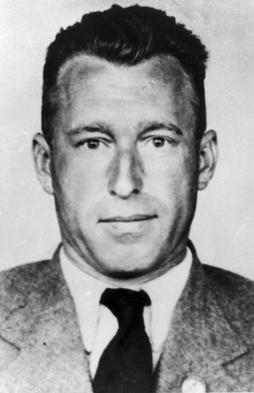
I have just read the most chilling book. Once I finished it I could not stop thinking about it, to the point where I had to start reading it again. It is the story of a fairly ordinary man, who did extraordinary things. Normally this story inspires, but not this one. This man was Franz Stangl, the commandant of the death camps Treblinka and Sobibor, and co-responsible for the death of 900 000 people. This astonishing book is called Into that darkness: From mercy killing to mass murder by Gitta Sereny.

Gitta Sereny is a Austrian-born writer whose career in part has been dedicated to trying to understand the German mind of WWII. As a school child she was forced to watch one of Hitler’s Nuremburg rallies. After the war, she was part of the United Nations Relief and Rehabilitation Administration and encountered the victims of various Nazi programs, as well as attending the Nuremburg Trials. She wanted to interview someone who was part of the administration, someone with enough intelligence and self-awareness to provide some insight to their own thoughts and actions. After the war Stangl escaped to Brazil, and was finally arrested there in 1967 and deported back to Germany to stand trial. Convicted, he was sentenced to life in prison. The Chief Prosecutor who knew of Sereny’s wish, alerted her that this might be that person. Watching him Sereny thought that this might be a man with a conscience, however repressed.

Stangl is no monster. He’s actually likeable, as his guards attest. There is no rabid anti-semitism, no mad devotion to the Nazis or Hitler. Indeed, as far as can be told, he never whipped, hurt or touched one of the prisoners. He had a lonely youth, married happily, was a good father, and became a policeman. He was ambitious, and weak. He was first assigned to the Euthanasia program, checking death certificates and making sure families received the personal effects. Then he was transferred to the army and into Poland.

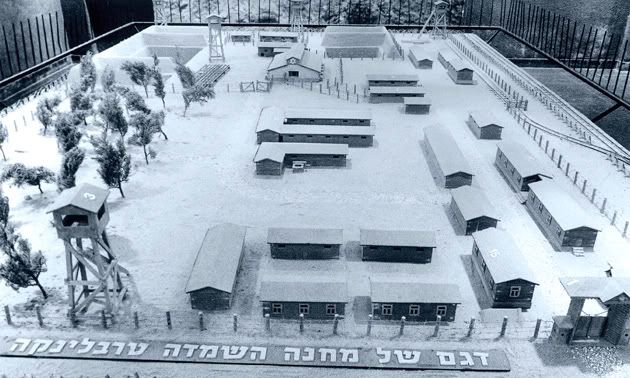
There is a difference between concentration camps and the death camps. Neither were a guarantee of a long life and while millions died in the concentration camps, the five death camps had no purpose except to kill the Jews. Victims arrived by the trainload and were whipped, stripped, all their goods stolen, and then they were gassed, shot or injected. Within hours of arrival, every man woman and child on a train would be dead. And Franz Stangl ran the most efficient camps in the system.

How can you do that and not become bestial? How can you live with such knowledge? The short answer seems to be to focus on his immediate task – running the camp; administration, inspections, building, all the time repressing somehow the knowledge of what it all led to. And yet he would, as part of his job, supervise the unloading of the trains, and the movement of the now naked prisoners, with their heads shaved, into the wire tunnel that led to the gas chambers. He could not bear, he said, to be in the hut where they were stripped of their clothes and other possessions and had their heads shaved. As Sereny observes, he could watch the people come off the train, and he could see the dehumanized mass walking to their death, but he could not watch the transition from people to, as he called them, cargo. And he drank – who would not?

 The book is full of such nightmare imagery as seeing piles of rotting corpses, or the ground erupting as frozen corpses in mass graves thaw and release pent up gasses. When Stangl arrived at Treblinka, he had to drive along a road littered with bodies and then actually wade through piles of money and other valuables stolen from the arrivals and not yet sorted. That was his job and his triumph, to make Trebilinka an efficient place for killing the Jews disposing of the bodies and distributing their goods. And he aided the psychological deception, beautifying Treblinka until it looked like a spa, with spruce train station and attractive landscaping. (The clock on the station tower was painted on. Who would ever have time to notice?) He was awarded an Iron Cross for his efforts.

And the book explores the system further. If you want to know how the Holocaust worked in practice, this book tells you. The Nazis had a collective genius for horror. They played off the divisions within the Jewish people, Eastern Jews and Western Jews. The whippings and other degradations were part of the system devised by people higher up the administrative scale. A cowered people, naked and anonymous, half-starved, covered in their own filth, were easier to herd to their deaths, and easier for the guards to avoid thinking of them as people. And though Stangl would say how horrible he found it all, he never took any steps to alleviate it.

And it was not just the dead who were denigrated. The work-Jews were a small group who lived in the camp and sorted out the belongings and building, sewing, goldsmithing and other skilled tasks. Their lives depended on the trains coming. Imagine that, if you can – your life dependent on thousands of others dying, thousands whose only crime was the same as yours, to be born into a particular religion. One talks about his relief when the trains resumed after a break. The work-Jews in two camps eventually rebelled, and Treblinka was burned to the ground. (So much for the myth the Jews went uncomplaining to death.) Many of the work-Jews were killed either in the outbreak or afterwards but some did escape - the only Jews to survive the death camps.

Sereny also interviews Stangl’s wife, his sister, his daughter, other camp guards and survivors, their stories often contradictory or conflicting, either from genuine lapse of memory or the tendency or need to remember things differently. This is a book of creeping horror. And all the time, Sereny is asking Stangl, could you have said no? He says not, but he also breaks down into tears often. I am not trying, nor was Sereny, to excuse Stangl. He was a large part of this monstrous crime. He was lucky to be sentenced to life and not hung. Perhaps if he had been tried in the immediate aftermath of the war, he would have been. He knew what was happening, was helping it to happen, and did nothing to change the situation, and not much to get out of it. But I cannot with confidence say I would not have been equally cowed or frightened or conditioned enough to do the same thing in the same circumstances.

Sereny also looks at the twenty years Stangl spent on the run. He was aided by Catholic Clergy through Rome to Damascus to Brazil. It’s possible they didn’t know who he was or what he had done, but it’s also possible that at least one key figure, Bishop Hudal, did.  Stangl never stopped using his real name, registered at the Austrian Embassy in Brazil with his wife and family, worked under his real name and yet it took decades before Austria issued an arrest warrant and it took Simon Wiesenthal to ‘discover’ where Stangl was. Very strange indeed.

It is only at the conclusion of his interviews with Sereny that Stangl, almost thirty years after the events, and six months after being convicted, is able to go beyond his argument that he was merely doing his job and following orders and say out loud that he was responsible for the deaths of almost a million people. Nineteen hours later, his heart, already scarred from previous heart attacks, stopped. There was no evidence of suicide. When he was able to admit to himself and to someone else what he had done, his body gave up. How can you live with this knowledge? Perhaps you cannot.

Tuesday, June 28, 2011

"It is well that war is so terrible." WWI revisited.


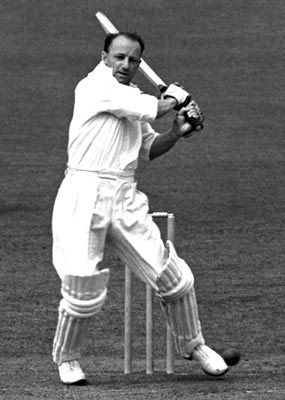
I have a suspicion of revisionist history. All too often it’s someone trying to make a name for themselves by courting controversy rather than revealing genuine new evidence or ideas. For example a few months ago, a writer on The Punch gave us a column taking on the great Australian cricketer Don Bradman, saying that Don had trouble dealing with some of his team mates to the point where they didn’t like him, and he was possibly involved in questionable business deals in Adelaide.  The writing suggested the journalist was being bold and iconoclastic. His content however was nothing you wouldn’t have read in any number of standard biographies of the man, even by an admirer. His column was perhaps twenty years too late to be brave or controversial.

However, the historical consensus can be wrong. In Australia of course, we have the example of the Aboriginals. When I was as school we learned about Aboriginal culture a bit, but it all just sort of stopped once Arthur Phillip stepped ashore. Nowadays, the relationship between Colonialist and Native from 1788 to today is one of the great themes of Australian history and society, a source of great argument and controversy and rightly so. So revisionist history has its place for certain.

An area that has been revisited with less fanfare is World War One. We all know about World War One, the pointless war directed by inept callous generals, using outdated tactics safe in their command posts while soldiers were slaughtered needlessly in mud and gas. General Douglas Haig, the Supreme Commander, was particularly inept, one of history’s greatest bunglers. We’ve seen ‘Oh What a lovely war’ and ‘Blackadder goes forth’ both of which encapsulate this view beautifully in popular entertainment.

However, this broad view, however popular and entrenched, may well be wrong. On one level, this makes perfect sense. Part of the popular view is how professional and good the German army was, yet they were defeated by the British army. To win the war, once the Germans has taken part of France, all they really had to do was stay there. Yet the inept British generals created and lead an army that drove them back to the point where they sued for peace. Mind you, if they had driven them all the way to Berlin as Haig and American general Jack Pershing wanted to, perhaps we could have prevented World War Two. But that’s history’s hypotheticals, another area all together.

In the last few years, more and more historians are suggesting that WWI was neither pointless nor badly managed. I’ve read a couple of books in this area, the latest being Mud, blood and poppycock: Britain and the Great War, by Gordon Corrigan, an ex-army officer. It’s a well-argued, clearly written book, taking a topical approach to subjects such as the causes of the war,  Britain losing a generation of men, life in the trenches, the cowardice and incompetence of the Generals, the small contribution by the US forces, justice in the army, and so on. I could explain some of these but it would be easier for you to read the book. Let one example serve: the lost generation. By use of population statistics, Corrigan shows that the number of men between 18 and 35 in Great Britain lost was not nearly as large as we think it was. You could not even say most of the men of this age were killed. However, the number of deaths in war was unprecedented for the British, if not for their European counterparts. Never before had Britain sent such numbers to fight and the number of deaths were commensurate.  Moreover, thanks to the Pals Battalions, where men from the same town or the same industry were allowed to stay together when they enlisted, places could lose all or most of their men in one day or one battle. So while in statistical terms, the myth is wrong, in terms of the psychological effect on Britain, the myth still has value. Corrigan is not a mindless iconoclast but an historian looking at evidence with a fresh eye.

And on a smaller note, Douglas Haig was never the Supreme Commander. Throughout the war, he was subordinate to the French who were the senior members of the Allied forces and his decisions, say to keep fighting on the Somme, were forced upon him by circumstances and military necessity.

Not that this makes everything okay. Bad mistakes were made, blunders that should have been seen at the time, not just with hindsight. Perhaps the worst day of the war was the last. Thousands of soldiers on both sides were killed between the time of the Armistice being signed early on the morning of November 11 and the time it came into effect. There were many reasons this happened, sometimes pure ignorance, but all too often the sheer bloody-mindedness of the commanding officers, sending men in to take land they could walk into a few hours later. I hope the spirits of the men who died that day rested heavily on the consciences of the men who sent them in.

Sunday, June 5, 2011

"I spy." Espionage in WWII

Being a spy is not easy, if you enjoy receiving credit. The better you are, the fewer people know about you. The best operations are the ones no-one ever discovers. (James Bond, by this standard, is one of the most hopeless spies ever. Everyone knows who he is.) Nor is much good for those who enjoy simplicity. You operate in a strange world of double-think and triple-think (“Now we know they know but they know we know they know but they don’t know that we know that they know we know they know, which gives us the advantage...") And you can never be honest, even with immediate family. The real world of spying seems to be a world of eccentrics and oddballs in a miasma of mistrust.

And the efficacy of espionage is one that is constantly under question. The better the information you gain, the more you tend to distrust it. Are the enemy playing with us the same way we play with them? Are they as good as us? Are they better? Despite all that, or perhaps because of it, I find true spy stories fascinating. In particular, stories from World War Two. These stories tend to have clear-cut goals and endings, which helps.

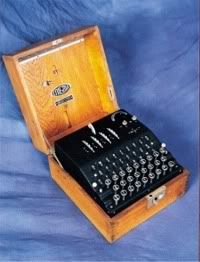
The greatest intelligence breakthrough of WWII was codenamed Ultra: the Allies broke the German code and were reading the bulk of all Axis communications. The Enigma machine was supposed to create unbreakable code, but thanks to the efforts and bravery of Polish soldiers, British sailors and the brains of an eclectic bunch of men and women at Bletchley Park, Axis secret communications had been compromised from the earliest days of the war. But this was kept secret for decades after the war had finished. (Incidentally, if you ever work out how the code-crackers did it, please let me know. I have read several accounts and still don’t understand.)

It is because of this official secrecy that old stories can be retold with more and better information. One of the greatest and most successful operations of WWII was Operation Mincemeat. A dead body with false plans for an invasion of Sardinia was floated ashore in Portugal, in hopes that the Germans would get a hold of them. All went to plan and many German troops, artillery and other materiel were transferred to Sardinia and were nowhere near the real attack on Sicily.

Once the war was over, rumours about this operation began to spread, despite it still being an official secret. As a result, Ewan Montague, the officer in charge of the operation, was given permission to publish an account of it, under the evocative title ‘The Man who Never Was’, which was a best seller then a successful movie. However, Montague was not able to tell the whole story. Much of their information on German activity was through the still-secret Ultra. Moreover, he felt a moral duty not to reveal the identity of the dead man who went to war as ‘Major Martin’.

Sixty years later and these restrictions no longer apply. Ben Macintyre, a British journalist, has written an exciting and fascinating account of the operation, under the simple title Operation Mincemeat. The bare bones provided by Montague are all present but now with more meat, complete with double-agents and cross-dressers. And the story of the man who became ‘Major Martin’ is pathetic and touching. It’s a great read and I recommend it, along with another of Macintyre’s book, Agent Zigzag.

Some of the men in Operation Mincemeat appear in this book too.  Agent Zigzag was Eddie Chapman, a thief and safecracker in England before WWII, who started the war in a Jersey prison and ended it back among the demimonde of London’s Soho. In between those times, he volunteered to spy for the Germans on the English, then was enlisted by the English to spy on the Germans. He lived in France, England, Norway and travelled to Germany. He proposed killing Hitler at a Nazi Party Rally in Berlin but his offer was knocked back. He got engaged to two women, one of which had his daughter but he married a third woman. He betrayed his German masters but had his spymaster at his daughter’s wedding years after his story became known. He wasn’t a dull man.

Like Operation Mincemeat, Chapman’s story has been a book and a movie but much information was suppressed. Again, McIntyre fills in the gaps and provides colourful background, including a German spy who studied Morris Dancing, and a concentration camp inmate who ends up butling for Clark Gable after the war. And it is filled with incidents that beggars belief. For example, in London in 1944 and coming to the end of his espionage career, Chapman asked his colleagues to help him find the girl he left behind in 1939. They were in a crowded restaurant and Chapman looked around to find someone who looked like her as a reference point. ‘That girl looks like her from behind. Actually that is her.” Not even Dickens would write a scene like that. Well, maybe Dickens, but no-one else.

And in the hall of mirrors that is espionage, nothing is ever certain. It is entirely possible that both Mincemeat and Zigzag were rumbled by German spies - spies who were quite happy to see Germany lose the war and so kept their suspicions to themselves. We will probably never know the entire truth.

World War Two continues to fascinate, as the flow of new books, games, movies and television attests. Despite the moral questions that have arisen, it is still clearly a war against an evil enemy, that we were right to fight and grateful to defeat. Mark Steyn in his column on ‘Saving Private Ryan’ rightly criticises the screenwriters for suggesting that defeating Hitler was not a sufficiently moral motivation for their characters. How moronic, how vacuous, how sadly desperate to show their liberal credentials, that the writers don’t like war. No-one likes war, soldiers least of all. Nor has anyone really written a pro-war book. Even the Illiad, which glories in descriptions of mythical battle, shows the gory reality of men thrust through with spears choking out their lifeblood in the dust, the poetry making the moment all the more visceral. And if we were all reasonable people, there would be no war. But we are not all reasonable people, and all of us are unreasonable at times. War shows humanity at its worst but also at its best. And for that reason, it will always fascinate.