Showing posts with label Religion. Show all posts

Monday, December 7, 2015

"Real life? Or is this just fantasy?" The story of the stories of Santa.


I've always had a soft spot for Santa Claus. Heck, I know, we all do but for me it goes further than that. I was named after him, or more specifically, St Nicholas, and now, almost 46 years later, I'm fat and jolly.

Santa Claus, like Christmas itself, is a combination of history, Christian mythology and Pagan mythology. Generally speaking, stories, factual and legendary, of Nicholas, Bishop of Myra in the 4th century became mixed with Norse mythology, largely stories of Odin, and other traditions and stories, to create this jolly fat fellow in red and white with a big beard, who whips around the world in one night to bring all good children presents on Christmas Eve. He has been celebrated in song and stories,movies and books, and portrayed as elf, human, jolly, stern, and psychotic robot. The only thing missing is a gritty re-boot, although that can only be a matter of time. Odin's missing eye could come in handy.


There have been attempts to give Santa a backstory, one that explains the elves, the workshop, the red and white look, the reindeer, the gift giving, the stockings, and above all the magic. The first attempt that I knew of was one of Rankin and Bass' stop motion animation classics, Santa Claus is coming to town. There the story is told by Fred Astaire and Santa was voiced by Mickey Rooney.

I saw this annually for many years on TV and since TV now is not so helpful, I watch it on DVD every year. It's set in a Ruritanian country, and Kris, an orphan brought up by elves, defies the miserable rule of Burgermeister Meisterburger to bring gifts to the children of a small town. Eventually, with the help of a reformed Winter Warlock and others, he does the same to the world. It's a charming tale, one of the best of the Rankin Bass stable.

It was some years later I discovered they had gone to the well a second time with The Life and Adventures of Santa Claus, a much darker and more mythical approach. Indeed, some fifteen years separate the two films. There the Great Ak, Master Woodsman, with many other forest spirits and creatures, debate whether the man called Claus had done enough to earn the Mantle of Immortality. A baby abandoned in a magic forest becomes Claus, a skilled toymaker. Again he conceives the idea of spreading happiness with toys, helped by his adoptive faery and elven family. But this quest is actively opposed by certain forest spirits who will kill him if they can. This one was not considered as successful, although I found it striking on first viewing. When the credits told me it was based on the novel by L Frank Baum, he of the Oz books, I was determined to find it.

This was pre-internet days (yes children, there were such times) and obscure books were difficult to find. Many years later I did find a copy in a second-hand bookstore. Sadly, I found it more in the vein of Baum's lesser Oz books, episodic, lacking a strong drive, and Claus is not the main mover in removing the threats to him or achieving his dreams, and so becomes a passive character. I have not seen the TV special for a long time, but I remember it as better. Perhaps I am wrong. I should get hold of it too. There is a more recent 2D animation, but it is not very good, although it did hold the attention of my  seven-year-old niece nicely.

More recently, Jeff Guinn attempted to bring the stories of Nicholas of Myra together with fables of Santa to write theThe Autobiography of Santa Claus. It's an admirable attempt to marry history and myth into a coherent whole but for me it was bit earnest and a teeny bit dull - it lacked magic.


This year has seen a wonderful addition to the ranks,  A boy called Christmas, by Matt Haig. While it hits many of the same points, elves, reindeer, presents, stockings etc it does so in a charming, off-beat and irreverent way, and the story as a whole has unexpected, fresh rhythm. 


You may wonder how I know the true story of Father Christmas and I will tell you you shouldn't question such things. Not right at the start of a book. It's rude, for one thing. All you need to understand is that I do know the story of Father Christmas, or why else would I be writing it? 


Nikolas, born on Christmas day, is the son of a woodcutter in Finland, whose only two Christmas presents ever have been a sleigh and a doll made out of a turnip. When his father joins an ambitious group looking for proof of elves up in Lapland, Nikolas is left in the care of his deeply unpleasant aunt Carlotta, and, as you might say, adventure ensues.

This is not a twee, nor even a safe story. Nikolas and the other characters he meets on the way are in genuine danger, and death and exploding heads can ensue. But through it all is the thread of belief in magic, and believing though you've never seen it, like a mouse can believe in cheese, even if he's never seen cheese. The illustrations by Chris Mould are fun and charming, and occasionally help to push the story along, or at least explicate a point otherwise glossed over. There's even some reindeer poo and wee jokes, if you like that sort of thing - and who doesn't? And in the end, it all boils down to the joy of giving.

I think this would make a lovely gift, and would be excellent book to be read aloud. I think you should get in quick before it becomes a classic book everyone knows. And available in bookstores right now!


SaveSave

Sunday, December 9, 2012

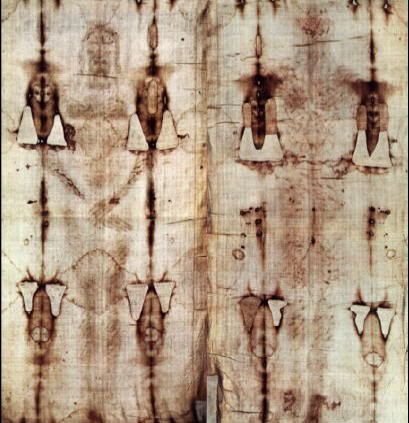
"That wraps it up!": The Shroud of Turin

Many years ago, I read a book by an American scientist, an atheist, who was one of an international team of scientists who were given unprecedented access to the Shroud of Turin by the Catholic Church for means of examination and scientific testing. The one test they were not permitted was carbon-dating, as this process destroys what you are testing.

The conclusions of the team were that the figure on the Shroud was formed by blood, contained pollen and dirt consistent with a Middle-Eastern origin, and showed a man who had been whipped with first-century Roman whips, and then crucified and had wounds on his his head consistent with sharp thorns. In short, as far as could be tested, everything showed it to be what it claimed to be: the burial shroud of a man from the Middle East crucified in the first century in same way as Jesus. Beyond that, they could not say more.

The Shroud of Turin, whatever else it is, is a mysterious object. If fake, then how was it done? If real, many more questions arise. But no-one had heard of it until the Middle Ages, and modern carbon testing has declared it a Medieval fake. So much for that.

Ian Wilson is an historian who has been examining the Shroud and historical evidence of the Bible for some time, with many books and television documentaries to his name. In his 2010 book, The Shroud: The 2000-year-old mystery solved he claims to have solved both the major objections to the authenticity of the Shroud. It is, to say the least, a bold claim.

He only spends one chapter on the Carbon Testing, which seems a little slight, but then he can only raise two objections. One, that mistakes happen and other carbon tests have been subsequently found to be way out. But this leads to his more interesting objections: these mistakes have often been due to contamination of the material being tested. The Shroud has been burned, soaked in water, repaired, displayed in front of burning candles and is anything from 700 to 2000 years old, most of that time not nearly as protected as it has been recently. Mmmmmm. Moreover, the strips that were cut for testing were taken from the upper-left corner. For many years, when the Shroud was displayed much more often than it is today, it was held up by clerics, with one at each corner, and on or two in the middle. This corner therefore was one of the most contaminated areas of the Shroud, filled with generations of dirt and sweat and skin cells. It was the area most likely to return a false result. Which then raises the question, why choose it?Short of letting another part of the Shroud being destroyed for more testing, speculation is all that is left for those who want to believe.

But as I say, this is only one chapter. Wilson spends most of the book on the other main objection: if it is real, then where was it for the first 1400 years of its existence? His answer for this is to link the Shroud to another mysterious image of Jesus on cloth that disappeared some decades before the Shroud appeared,the Image of Edessa.

Yes, I'd not heard of it either. But accounts of it date back to the 1st century to the town of Edessa, now called Sanliurfa, in modern Turkey, where it was kept from around 30AD to 944AD. Its history, and journey thereafter, are quite complicated, and rather than summarise, I would direct you to the book. 

But unlike the objections to the Carbon Dating, this is far more convincing and thorough, even to the point of tediousness. There is much speculation and supposition, as you would expect on any object from the 1st century, but Wilson makes as good a case as he can be done. It would be more convincing, but for the carbon testing.

Leonardo action figure: coming soon!
But even if you don't believe in the Shroud as the burial cloth of Jesus, there are still questions that have to be answered. Why did other scientific testing, finding blood and other materials, tend to prove it authentic? Why did a Medieval artist choose to do an anatomically correct crucifixion when no-one, no-one, else depicted it that way? And finally, how was it done? Despite many efforts, no-one has been able to recreated a Shroud in any way that is believable or practical. Leonardo da Vinci has been mentioned of course, but the Shroud, even as a fake object, existed before he did. (One wonders how Leonardo found time to do anything with all the conspiracies he up to his hips in.) Even as a fake, the Shroud still poses questions for which we cannot find answers.

Sunday, April 8, 2012

"Shtarker! This is Kaos!" The history of Israel


I mentioned Margaret Thatcher as a good argument starter. Israel is another cracker. (Both in the Australian slang sense as ‘very good’ and in the sense of explosive.) People in Australia protest outside a Jewish-owned chocolate shop, which is owned by another company that owns another company that sells chocolate to the Israeli army, and chant Hamas phrases calling for Israel to be wiped from the face of the earth and wonder why other people get upset. It’s a complex issue.

I thought Irish history both rewarded and was blurred by the long view. Compared to the Jews, the Irish are whippersnappers. And Jewish history too emerges from the mists of time and myth. Israel is condemned for the settlers in Hebron who forced out Arabs from the area, one of the most sacred Jewish sites in an area replete with them. But who condemned or even remembers the Arabs who forced the Jews out from Hebron before that? It wasn’t that long ago – survivors from that exile returned to force the Arabs out in their turn. And so it goes, tit for tat, this for that, an eye for an eye, back as far as you can see, and as far forward too.

Rich Cohen is an energetic vital writer. No prizes for guessing he’s Jewish. His 2010 book Israel is real: An obsessive quest to understand the Jewish nation and its history, the title taken from a tourist t-shirt, is an informal informative history of Israel from Abraham to the present day. It doesn’t excuse or condemn Israel but it does go a long way to explaining it. The great Israeli general Moshe Dayan, during the Yom Kippur war, which he almost lost along with the plot, called Israel the third Temple. Cohen agrees. His central thesis is that of the Temple, that was destroyed twice then transformed into an idea that could be taken anywhere. When Israel was created, the Temple became a physical object again, and again something that could be destroyed. 

The strongest characters in this book are the shtarkers, the Jewish tough guys from antiquity to today. (Some will remember Siegfried’s somewhat Nazi, wholly incompetant sidekick of that name from Get Smart.) And of all the shtarkers, Ariel Sharon is the exemplar, not only of the type, but of the history of modern Israel itself. A dashing commander in the 1948 Arab Israeli War who became the hero of the Yom Kippur War when he split the Egyptian army and against orders crossed the Suez Canal and saved Israel, it was he who as Prime Minister started the settler movement to protect Israel and he who later tried to stop it for the same reason, before being struck down by a stroke. It’s almost a three act play - a tragedy.

Cohen is no blinkered true-believer, nor is he a blinkered anti-Zionist. Israel is real and he tries to understand what this has done to those Jews who live there, and the others as well. He sums up the present impasse in a single sentece: We will stop building when you stop attacking and we will stop attacking when you stop building. Where’s the off-ramp of that roundabout?

Cohen uses anecdote, myth and history to weave an entertaining and thought provoking book. If you are interested in the topic at all, you could do a lot worse than reading this. 

Wednesday, March 21, 2012

"Without a hitch." Christopher Hitchens


Don’t read Christopher Hitchens’ essays last thing at night. Not that he’s frightening, it’s that he’s like Maltesers – you can’t stop at just one. I spend some night sitting up in bed, reading Arguably, a 2011 collection of essays and columns covering the breadth of his career.

And it is a breadth of subject as well as years. Reading some of the less-informed commentary on his death, you could be forgiven for thinking he had written one book, God is not great and had only one subject, atheism. Hitchens was able to turn his mind to many topics, cultural, historical, political and yes, religious. His writing is elegant, well-informed, witty, intelligent and compelling. I don’t think he ever wrote purely as a provocateur, but he was never afraid to offend nor did he ever curb his opinion to follow a popular line. He knew what he thought, and more importantly why he thought so, and was able to argue it lucidly and entertainingly.

Of course there are areas where I disagree with him. Oddly one day I met someone who knew I was a Catholic, and because of that, was surprised that I liked Hitchens. It was an example of a new intolerance I see creeping in. Just because I disagree with him on God, doesn’t mean I have to reject him and all his work. It’d be astonishly dull to read a writer with whom I agreed on everything anyway. Why bother?

But I was thinking of another topic. In 2002, Martin Amis (who with Clive James and others used to share a regular boozy Friday lunch with Hitchens) wrote Koba the Dread: Laugher and the Twenty Million, an examination of the reign of Stalin and the odd attitude the left wing has taken towards Communism then and now. He related a story where Hitchens told a story at a speech about his days as a Communist, and got a laugh. Amis wondered if Hitchens had related a story about his days as a Blackshirt, whether he would have got the laugh, or even been a working writer in modern Britain.

To me he raised a fair point: why do we still look at the USSR, with the Great Terror, the gulags, the use of famine as a tool of oprression, the twenty million dead (some sources would say more), as somehow all right, well-intentioned, while Nazi Germany is beyond the pale? Why is left wing extremism somehow not so bad, while right wing extremism is the greatest form of evil ever? To put it another way, why are we not as appalled by Stalin’s Socialism within One Country as we are by Hitler’s National Socialism? After all, to quote the political pundit Clint Eastwood, if you go far enough right you meet the same idiots coming from the left.

Hitchens didn’t believe this was so. He accused Amis of coming late to the information about the terrors of the USSR, and assuming no-one else knew about it either. I think Hitchens has made a similar mistake. He knew about it, and so assumed everyone else must know about it. And it still doesn’t explain the laugh – in fact, if they do all know about the horror of Stalin’s reign, the laugh becomes even more sinister.  But I believe there is an enormous double standard in our attitude towards left-wing totalitarianism and right-wing totalitarianism.

In another column, Hitchens supplies an example of this very phenomenon. He is reviewing the third volume of Victor Klemperer’s diaries. Third? Sure there were only two? Yes, two best-selling volumes about life under Nazi Germany, but a third volume, of life under the Communists in Eastern Berlin, could not get a publisher in the US nor as far as I can tell in Australia. And here it is! A book that tells of life under the Communists cannot get a publisher, even though the author had two best sellers! The interest, the market, is not there. We simply don’t take the terror of Communism with the same gravitas as we do for the terror of Nazism. And why that is, is a question of great interest. Hitchens never makes this connection, and so never turns his considerable mind to it.

But disagreements and argument were the stuff Hitchens thrived on. His work is provocative and entertaining. As a writer and as a man, he was courageous. Everyone is entitled to an opinion. Every one is free to write those opinions and get them published if you can (or blog/twitter them). But it is only if you bring the comparable intellect, knowledge, and integrity that you can be as respected as Christopher Hitchens. I suppose he would have thought me a complete idiot, being religious and all.  But I too am sorry I will never again reading something new he has written.

Thursday, March 8, 2012

"Oh Godohgodohgodohgod" - Three books on religion.


This has been a long time coming. Largely this is because this is dealing with a large topic. And a topic that seems to have travelled from something you just didn’t talk about to something that people won’t shut up about. And no, it’s not homosexuality.

I refer to religion. When I were a lad, it was one of those topics you didn’t discuss. Largely this was due to social niceties, but also a recognition that religion and belief was a deeply personal issue and perhaps one that defied conversation. Now of course it is the topic of best sellers, TV shows, political rallies and more. This may well be healthy in some ways but it has also unleashed a wave of ignorance, anger and intolerance.  And not all from the religious nutters.

That some Christians fail to live up to their ideals is not new. In fact, it’s one of the central ideas of Christianity, that life is a struggle to live up to those ideals. Of course, some of the failure has been spectacular, deliberate and evil. Christian churches, and others, have been responsible for some awful and distressing activities both as an institution and through actions of individual members.

That some liberals fail to live up to their ideals is less well-recognised. The intolerance, arrogance and plain rudeness of some louder atheists is astonishing, more so for their own failure to recognise it in themselves. They cry ‘hypocrite’ but forget their own. In Baudelaire’s words (via TS Eliot) “You hypocrite reader! My double! My brother!” (My translation but I think it’s right.)

So virtue and faults are on both sides. Sure, atheists haven’t killed nearly as many as believers have but thanks to the Soviet Union and Red China, the Khmer Rouge and many others, they’ve done the the best they can to catch up. A friend of mine suggested they killed believers because of their ideology so they weren’t really atheists. That their ideology was explicity atheist didn’t seem to bother him. On the other hand, it allowed me to develop another theory. No-one who kills someone else for their beliefs can be said to be living up to the example of Christ, so no Christian has ever killed anyone. Phew! That’s a load off my mind.

This is supposed to be a book blog. Here’s some thoughts on books I have read lately.

I’ve long thought that looking for a scientific proof of God is like looking for a mathematical formula for Hamlet. It’s a silly thing to do to start with, and has nothing to say about maths or drama. No-one would dream of looking for a mathematical proof for Hamlet but those who think there should be scientific proof of God include some luminaries as the Fundamentalist churches, Isaac Newton, Richard Dawkins and Christopher Hitchens. Even the intelligent are not immune from stupid ideas. Of course the fundamentalists and Ditchkens (in Terry Eagleton’s phrase) come to rather different conclusions, but it's a question simply not worth asking.

Terry Eagleton is an atheist and a Marxist and his book Reason Faith and Revolution: Reflections on the God Debate is a book that will bring comfort to neither atheists of the Ditchkens variety or believers. “Ditchkens” is his expression of views that Dawkins and Hitchens hold in common, just to save himself typing ‘Dawkins and Hitchens’ all the time. He is very careful to note where they vary, most notably of course in the quality of writing. Hitchens, it goes almost without saying, is the better writer. He finds their arguments for atheism shallow and poorly argued, and explains why.

Mind you, he is no less harsh on the Christian churches. The first sentence of the book is “Religion has wrought untold misery in human affairs.” He also recognises the positive role the Church as played, pointing out, for example, that the Church was the only organisation offering education and health care for the people for centuries.  However, he says the Church has betrayed the essentially radical message of Jesus, becoming part of the establishment to which, he maintains, Jesus was opposed, perpetuating the evils Jesus was trying to destroy.

While this book is slim, it holds some big ideas. His discussion of the nature of God is breathtaking. The book can be read with some ease, although some sections do require strong concentration. It is well worth it though, no matter what your beliefs are.

Karen Armstrong is a former nun and former atheist. Her writings on God and religion are dense, well-researched and well-written. However, they are not light reading. In her introduction to The case for God: What religion really means, she replies to those who describe one of her books as “really hard,” with “Of course it was. It was about God.” Her opening sentence is a telling one as well: “We are talking far too much about God these days and what we say is often facile.” Religion and theology is one of those topics that those who have done no reasearch into feel that they can comment on intelligently. It is a topic that deserves more than catchphrases and cheap point scoring, which is too often the way, from both sides.
The main thrust of this book is that we have lost contact with the orignal idea of God and tried to reduce him (or it – it is difficult to know what words to use) to a domestic, human creature that should share our ideals and values. In fact, she said, it is possible for a believer to say God does not exist, not in the sense that you or I exist. God is beyond our words, our minds. The Bible is not to be taken literally and it is only a recent idea that it should be. It is a book that needs to be continually reinterrogated. As a series of books written by multiple authors over the course of centuries, you’d think that would be an obvious thought but too many believers and atheists want to think of it a monograph. It was never meant to read as a novel. Both Jewish and Christian tradition involved the continual discussion of the Bible and its meaning, a tradition sadly lost in mainstream Christianity.

The word, the idea, that she thinks we need to rediscover is apophasia – that God is beyond definition, beyond our language. Instead, God is an idea that we should continually contemplate, question, and meditate upon. A residual of this idea, the contemplation of the ethereal, can be found in the Catholic Mass with its music and rhythmic chants of prayers, moving away from everyday language. Other religions have held on to this idea more strongly and more explicitly. It is an idea that appeals to me strongly I must admit. If there is a God that can create universes, what on earth makes you think you should be able to understand how God thinks?

On a lighter note, (thank God you might be thinking – even you atheists by now) is Peter Manseau’s Rag and Bone: A journey among the world’s holy dead, a combination travelogue and exporation of the world of relics: those bits of the revered dead or their possessions that are still in the hands of their followers and fellow believers. The book is irreverent without being disrespectful, and discusses relics from Christian, Muslim and Buddhist temples, (Judaism has no tradition of relics) that range from preserved bodies to a whisker from a beard. He ponders their provenance, their use and their meaning, both in themselves and what they mean to those that travel to see them or dedicate their lives to protecting them.

Relics are an odd business and always have been. Manseau notes the three skulls of John the Baptist that were doing the rounds for some time, as well as the sheer amount from the foreskin of Jesus (who must have been impressive, if you get my meaning). Mary apparently had the foresight to preserve breast milk for future generations. Other relics are more likely, including those with more recent provenace. But it is an interesting topic and Manseau writes well.

I have been to San Pietro in Vincoli (St Peter in Chains) Church in Rome, and in a glass case there are chains that are said to be the ones that held Peter when he was imprisoned. It’s possible – he was an important figure before he died, he may well have had followers among the jailers or at least people who knew where he had been held, and once the prison was demolished or altered, perhaps the chains were kept. Is is plausible? I don’t know. Does it matter? I suspect not. Go to the church anyway when you go to Rome. Michelangelo’s Moses is there, and well worth seeing. It’s only a stone’s throw from the Colosseum.

Perhaps those that say we should get rid of these things that divide us and have brought much misery hatred division and horror into the world, no matter what good it may do or how well intentioned it may once have been, are right. But politics will always be with us. Man, they say, is a political animal. I think he is a religious animal too.

Tuesday, September 6, 2011

"Thank God I'm an atheist." Melvyn Bragg on the King James Bible

As a society we like to focus on the negative. Why this is I do not know. But if an artist wants to be taken seriously, you need to focus on something ugly or horrifying, work out of a Jungian shadow. Everybody is up to something, everyone’s motives are ulterior. Cynicism is the ultimate virtue. But in doing this we miss a lot of positive things. Life is actually a mix of good bad and indifferent, as is art, history and any other field of human endeavour or study.

Everyone’s favourite whipping boy at present is religion. People like to think they gain instant credibility, intelligence and perspicacity by declaring themselves atheist, and dismissing anyone who thinks otherwise as stupid, ignorant, or dangerous – or all three. Do not misunderstand me here; I know any number of atheists who are intelligent, perspicacious, and for that matter lovely, but I also know a lot of people with belief who I would describe the same way. And as for the stupid, ignorant, and dangerous – well, belief or disbelief in God doesn’t seem to affect those descriptors in any way either. Nor am I going to pretend that bad hasn’t been done either in God’s name or by those who claim to represent him, either on a personal or organisational level. Horrible, evil things have been done, and continue to be done, in God’s name. I don’t have to convince you of that.

But what I would suggest, and what is forgotten, is that much good has been done and continues to be done, in God’s name. (And please don’t direct me to ‘debates’ between celebrities, decided by the acclaim of the audience.) And much of it is forgotten and denigrated, because now of course, we are much smarter and more worldly than any generation that came before us, and can see things from perspectives they did not know. I know we think that, because every generation does. But it’s entirely possible we’re wrong.

Melvyn Bragg’s new book The Book of Books: The radical impact of the King James Bible 1611-2011 is the story of the King James Bible and its impact on its readers and the world. As this was the book of the British Empire, and taken to all corners of the globe, you can imagine its impact has been massive. Rather unusually for a modern writer, Bragg focuses on the positive impact it has had. Crazy, right?

The King James Bible is probably the last effective thing a committee ever devised, and while Shakespeare has given us more words, the King James Bible has given us more phrases. It was written to be read out loud, hence the beauty of its language and its rhythms.  And so its impact on our language and our literature has been enormous, right down to the modern day. But Bragg goes much further than that. He suggests modern democracy, wide-spread education, abolition of slavery, female liberation and the war on poverty are all, at least in part, direct results of people being able to read the Bible in their own language, in a beautiful language, and being able to interpret it for themselves.  In doing so, they found the intellectual argument and the spiritual strength to right the wrongs they saw around them. It even led to the Enlightenment and the questioning of the veracity of the Bible itself. A classic own-goal you might think. No, the King James Bible has survived all that and more. There is something to it, much more than can be measured or seen.

We often talk about universal human rights and truths. I’m not sure there is anything natural or universal about them. I think they were created and defined by people, many of them driven by their religious beliefs, and the spread of those ideas to the point where we think of them as universal has been difficult and costly. To dismiss those who did so, and the traditions out of which they came, is insulting and frankly ignorant.

The Book of Books is not as compelling a read as I would have liked but it is well-written and makes a good argument.  And it is a refreshing change from the gloom we have about our history and our culture. Here are admirable men and women and no matter what you think about their beliefs, as Bragg points out, you have to respect the ideas, the strength and the courage those beliefs gave them. These are people who left the world a better place than they found it. How many of us will be able to say the same thing?

The King James Bible: it’s almost worth going C of E for.

Friday, July 1, 2011

"There, but for the grace of God, go I." Franz Stangl

I have just read the most chilling book. Once I finished it I could not stop thinking about it, to the point where I had to start reading it again. It is the story of a fairly ordinary man, who did extraordinary things. Normally this story inspires, but not this one. This man was Franz Stangl, the commandant of the death camps Treblinka and Sobibor, and co-responsible for the death of 900 000 people. This astonishing book is called Into that darkness: From mercy killing to mass murder by Gitta Sereny.

Gitta Sereny is a Austrian-born writer whose career in part has been dedicated to trying to understand the German mind of WWII. As a school child she was forced to watch one of Hitler’s Nuremburg rallies. After the war, she was part of the United Nations Relief and Rehabilitation Administration and encountered the victims of various Nazi programs, as well as attending the Nuremburg Trials. She wanted to interview someone who was part of the administration, someone with enough intelligence and self-awareness to provide some insight to their own thoughts and actions. After the war Stangl escaped to Brazil, and was finally arrested there in 1967 and deported back to Germany to stand trial. Convicted, he was sentenced to life in prison. The Chief Prosecutor who knew of Sereny’s wish, alerted her that this might be that person. Watching him Sereny thought that this might be a man with a conscience, however repressed.

Stangl is no monster. He’s actually likeable, as his guards attest. There is no rabid anti-semitism, no mad devotion to the Nazis or Hitler. Indeed, as far as can be told, he never whipped, hurt or touched one of the prisoners. He had a lonely youth, married happily, was a good father, and became a policeman. He was ambitious, and weak. He was first assigned to the Euthanasia program, checking death certificates and making sure families received the personal effects. Then he was transferred to the army and into Poland.

There is a difference between concentration camps and the death camps. Neither were a guarantee of a long life and while millions died in the concentration camps, the five death camps had no purpose except to kill the Jews. Victims arrived by the trainload and were whipped, stripped, all their goods stolen, and then they were gassed, shot or injected. Within hours of arrival, every man woman and child on a train would be dead. And Franz Stangl ran the most efficient camps in the system.

How can you do that and not become bestial? How can you live with such knowledge? The short answer seems to be to focus on his immediate task – running the camp; administration, inspections, building, all the time repressing somehow the knowledge of what it all led to. And yet he would, as part of his job, supervise the unloading of the trains, and the movement of the now naked prisoners, with their heads shaved, into the wire tunnel that led to the gas chambers. He could not bear, he said, to be in the hut where they were stripped of their clothes and other possessions and had their heads shaved. As Sereny observes, he could watch the people come off the train, and he could see the dehumanized mass walking to their death, but he could not watch the transition from people to, as he called them, cargo. And he drank – who would not?

 The book is full of such nightmare imagery as seeing piles of rotting corpses, or the ground erupting as frozen corpses in mass graves thaw and release pent up gasses. When Stangl arrived at Treblinka, he had to drive along a road littered with bodies and then actually wade through piles of money and other valuables stolen from the arrivals and not yet sorted. That was his job and his triumph, to make Trebilinka an efficient place for killing the Jews disposing of the bodies and distributing their goods. And he aided the psychological deception, beautifying Treblinka until it looked like a spa, with spruce train station and attractive landscaping. (The clock on the station tower was painted on. Who would ever have time to notice?) He was awarded an Iron Cross for his efforts.

And the book explores the system further. If you want to know how the Holocaust worked in practice, this book tells you. The Nazis had a collective genius for horror. They played off the divisions within the Jewish people, Eastern Jews and Western Jews. The whippings and other degradations were part of the system devised by people higher up the administrative scale. A cowered people, naked and anonymous, half-starved, covered in their own filth, were easier to herd to their deaths, and easier for the guards to avoid thinking of them as people. And though Stangl would say how horrible he found it all, he never took any steps to alleviate it.

And it was not just the dead who were denigrated. The work-Jews were a small group who lived in the camp and sorted out the belongings and building, sewing, goldsmithing and other skilled tasks. Their lives depended on the trains coming. Imagine that, if you can – your life dependent on thousands of others dying, thousands whose only crime was the same as yours, to be born into a particular religion. One talks about his relief when the trains resumed after a break. The work-Jews in two camps eventually rebelled, and Treblinka was burned to the ground. (So much for the myth the Jews went uncomplaining to death.) Many of the work-Jews were killed either in the outbreak or afterwards but some did escape - the only Jews to survive the death camps.

Sereny also interviews Stangl’s wife, his sister, his daughter, other camp guards and survivors, their stories often contradictory or conflicting, either from genuine lapse of memory or the tendency or need to remember things differently. This is a book of creeping horror. And all the time, Sereny is asking Stangl, could you have said no? He says not, but he also breaks down into tears often. I am not trying, nor was Sereny, to excuse Stangl. He was a large part of this monstrous crime. He was lucky to be sentenced to life and not hung. Perhaps if he had been tried in the immediate aftermath of the war, he would have been. He knew what was happening, was helping it to happen, and did nothing to change the situation, and not much to get out of it. But I cannot with confidence say I would not have been equally cowed or frightened or conditioned enough to do the same thing in the same circumstances.

Sereny also looks at the twenty years Stangl spent on the run. He was aided by Catholic Clergy through Rome to Damascus to Brazil. It’s possible they didn’t know who he was or what he had done, but it’s also possible that at least one key figure, Bishop Hudal, did.  Stangl never stopped using his real name, registered at the Austrian Embassy in Brazil with his wife and family, worked under his real name and yet it took decades before Austria issued an arrest warrant and it took Simon Wiesenthal to ‘discover’ where Stangl was. Very strange indeed.

It is only at the conclusion of his interviews with Sereny that Stangl, almost thirty years after the events, and six months after being convicted, is able to go beyond his argument that he was merely doing his job and following orders and say out loud that he was responsible for the deaths of almost a million people. Nineteen hours later, his heart, already scarred from previous heart attacks, stopped. There was no evidence of suicide. When he was able to admit to himself and to someone else what he had done, his body gave up. How can you live with this knowledge? Perhaps you cannot.

Tuesday, June 21, 2011

"Look at me Leonard." Leonard Cohen

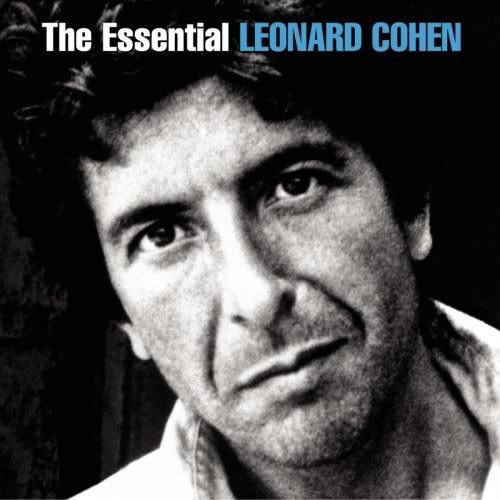
I have a friend, a professional musician (actually he’s a drummer, but I leave the jokes to you) who is (and this will be no surprise really) passionate about his music. I told him I had bought the Essential Leonard Cohen double CD. He said, ‘If you can find a dud track on that album, I’ll bash your face in.’ Luckily for my face, I found no dud track. (And yes, we’re both old enough to remember what an ‘album’ is.)

I was also lucky enough to see Cohen live on his latest tour. It was one of the greatest nights I have spent in a theatre. I have never seen a performer so free of ego. When Cohen gave the focus to the musicians or singers, he did not just step back but disappeared into the shadows. He genuflected to the audience and to his fellow musicians frequently, and seemed genuinely touched by the love that flowed from the crowd. When he played the simple one-fingered piano solo from ‘Tower of Song’ the crowd went nuts. His response: ‘You’re too kind.’ He is I think truly humble, in the correct sense of the word, one who knows his place in the world and the universe. In his 70s and after an almost three hour show, he literally skipped on for his encore.

I finished reading Anthony Reynolds’ 2010 biography Leonard Cohen: A remarkable life one Sunday morning and spent the afternoon listening to his music, performed by him and by Jennifer Warnes, KD Lang, Joe Cocker, Aaron Neville, John Cale, Nick Cave and the Klezmer Conservatory Band, among others. It was an afternoon well spent, and testament to the quality of this biography that it sent me back to the music. Had I Cohen’s poetry or novels to hand, I might well have gone there as well.

Cohen’s career began as a poet and novelist before he turned to music in the 60s, had almost petered out in the 80s but then came back with astonishing music. His fellow musicians have always respected his writing, with many cover versions done from his first album onwards.  Starting from the early 90s, his song ‘Halleluja’, almost overlooked on release, was everywhere. When his manager stole most of his money earlier this decade, he came back with a tour that is still going, cementing his place not as a nostalgia act but a musician and writer for our times.

He has always been ready to work in partnership with other composers, singers and musicians, who speak highly of him. The only person who seems to have a grievance is the Steven Marchat, the son and partner of Cohen’s manager Marty Marchat. They had a falling out over money and, it seems, Cohen’s reluctance to talk to Steven about his father. But even he concedes he likes Cohen.

Cohen has been called music to slit your wrists by, but this is an unfair, perhaps lazy, generalisation. His lyrics are much more literate and evocative than your average rock song, direct yet mysterious, and not without humour. His melodies are suited to his limited range so perhaps he is not the most melodic of writers, but songs such as ‘Hey that’s no way to say goodbye’ show he can write pretty melodies within these limitations. He self-deprecatingly referred to his gift of a golden voice, but as he has gotten older his unique (!) voice has gained depth, to the point where he sounds like an Old Testament prophet, if one was going to sing popular songs. It’s music that engages the mind as well as the ears.

It can also touch the soul. Cohen’s lyrics often reflect his spiritual journey. Cohen is a Buddhist monk but also a Jew who still has his traditional Friday night meal with family and friends. He has investigated and explored many of the major religious traditions and some of the more obscure ones. As he says in concert, “I have spent much of my life studying the great philosophies – but cheerfulness kept breaking through”. I think the nearest he comes to a single religious viewpoint in his song ‘Anthem’: There is a crack, a crack, in everything/ That’s how the light gets in.

He also writes with equal openness about sex and food and drink and women – especially women. On his latest album Dear Heather he says ‘Because of a few songs/ Wherein I spoke of their mystery/ Women have been exceptionally kind/ To my old age.’ From Suzanne on his first album to Heather on his last, women have been important figures in his songwriting, and his lyrics exploring this fascinating topic range from the mystic to the earthy, poetic and frank.

Which is why, I think, ‘Halleluja’ has become THE Cohen song. To me, it’s about a great love affair that had the intensity of religious ecstasy, which is now finished but has left the lover in a state of battered gratefulness. The two great themes of Cohen’s work come together in a song fusing the sensual and the spiritual into a coherent whole.

There is a crack in everything. Cohen’s money was stolen by his manager, which has forced him back on the road and back into the studio, which has given hundreds of thousands of fans the chance to see him live, for him to enjoy the love of his audience, and new music for the world. If you want it to put this down to the mysterious movement of God, or just a lucky variation of shit happening, I don’t care. It is a gift. Light got in.


PS Mark Steyn has just written a column this week on 'Dance me to the end of love', placing it within the great American songwriting tradition. It's worth a read.

Saturday, June 18, 2011

"All this is that." War comics and Margaret Atwood.

When I was a boy I used to read Commando comics and others of the type. I loved them. As I got older I still read them but I went through an ironic phase, noting the stock characters, (the cowardly private, the good German, the evil Jap, the stuffy officer, the renegade soldier, the younger son looking for redemption and so on and on), unlikely dialogue (‘You may be faster than us Fritz, but we’ll out turn you any day’ thus neatly giving us technical information about the relative performances of the ME109 and the Hurricane in naturalistic dialogue during a dogfight), formulaic plots, and characters that all looked the same, and then finally I stopped reading them altogether.

That said, their level of technical drawing in Commando comics was never less than superb which was a large part of their appeal to boys who made models of airplanes, ships and tanks, and played war in the playground. If the stories were Boys’s Own Adventure types and they never caused us to reflect on the futility of war, a) we were little boys who, quite rightly, hadn’t yet got around to considering the great moral questions and b) they were set in World War Two which is as near to a simple goodies versus baddies war as you’re likely to find.

As comics have gained more respectability as a literary form, Commando Comics have released big albums of their books. Each volume has twelve stories with a nominal theme, (Aussies!, Action! Spies! Etc – the exclamation marks are mandatory) are larger print than their original incarnation, and come with a handy attached bookmark. I’ve worked my way through two volumes now, one just recently and one a year or two ago, and I’m afraid my ironic teenage self was right. While they are aware of their own excesses, (their covers note things such as Europeans always screaming “Aaaauggh!” while Indians and Asians tend towards “Aieee!”) in the end they are poorly told stories (albeit sometimes with a good premise) and cluttered with clichés. On top of that the larger print makes these books unwieldy and subject to breakage. I can’t recommend these books except as an exercise in nostalgia, which, in their defence, is where they seem to be aimed. But nostalgia can be very powerful. I can’t remember if it was a British or German officer, but my brothers and I still giggle when we think of this piece of deathless narration: ‘He went quietly mad.’

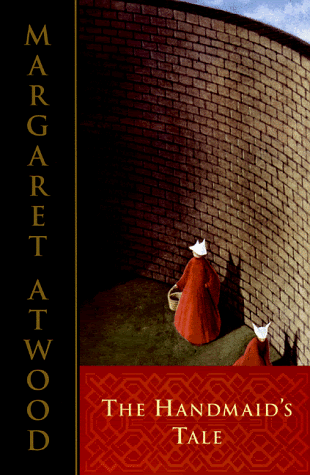
From the ridiculous to the sublime: Margaret Atwood’s The Handmaid’s Tale. This is the second of Atwood’s novels I’ve had the pleasure to read and she has the happy knack, unusual for a literary novelist who has won the Booker Prize among others, of writing page-turners. The Handmaid’s Tale takes place in a dystoptic world of a theocratic patriach totalitarian society in a constant war and suffering from falling fertility rates. The narrator is a Handmaid known only by her patronymic Offred, one of those whose job, and indeed sole purpose now, is to get pregnant to one of the society’s top strata’s male. If they do so, their life is safe; if not they could end up in exile or disappeared.

We hear the story in Offred's voice. We hear the details of her life, the prescribed dress, living conditions, social life,  even the regimented sex. We also get some information on her backstory, her marriage, her daughter, and how all this was stripped away from her with a brutal speed as the world was turned upside down. And the ending is ambiguous without being weak story-telling - a difficult trick to pull off.

Atwood has created a believable world with real affecting characters. Tim Blair, a right-wing Australian columnist, has invented Blair’s Law, “the ongoing process by which the world's multiple idiocies are becoming one giant, useless force". While in this case, it was two extreme groups coming together quite effectively to overthrow democracy.  The Handmaid’s world seems to be a bizarre result of religious fundamentalism fusing with radical feminism to create the society where women are simultaneously held in great esteem and confined to predetermined traditional roles without chance of change or escape except for the worse. The men too are trapped in strict strata.  Perhaps it’s more as Clint Eastwood put it: “If you go far enough to the right, you’ll meet the same idiots coming from the left.” 

It’s a superb novel. Once again I found myself torn between trying to find out what happens, and wanting the novel to last longer. Perhaps it’s not a novel you enjoy, but it stays with you. And it's certainly made its mark culturally, having been adapted both as a film and an opera.  It was Francis Trauffaut who said a masterpiece is something that has already found its definitive form. And so with this, as with other masterworks, it is best encountered in its original form. To be honest, I can only assume this, having seen neither the film nor opera. But I think it's a fairly safe truism that only second-rate novels make better films. Perhaps we have the odd exception (I understand both the play and opera of The Marriage of Figaro hold their place on stage) but go with me on this one. 

Monday, May 9, 2011

"That was then, this is now." Peanuts and other comics

Like everything else, books and literature are subject to trends, fads, and changing times. Books can soar up the bestseller lists and by the time you read them, you may wonder why. Future generations will read The Da Vinci Code and wonder about us, you can believe that. Other books become dated by their subject matter and are left behind by historical events and changing social mores.

A book that was a bestseller in its day but is now something of a curiosity is The Gospel according to Peanuts, which had sold over ten million copies since it was published in 1965. Booksellers are still selling it. I remember taking it off the shelf at my school but finding too much Gospel and not nearly enough Peanuts. Spotting it in a second-hand bookstore some time ago, I picked it up. My initial reaction was still the same, but I bought it anyway.

It’s not the silly idea that it may first appear. Charles M Schulz, the creator of Peanuts, was a devoted Christian who put Christian messages into his cartoons. This was not a constant in his work, nor particularly heavy-handed, but certainly present. Robert L Short, a Presbyterian theologian, used some of these cartoons to illustrate his book, showing Charlie Brown, Lucy, Linus, Snoopy and the others as avatars for adults grappling with an unfriendly world.

The book is very much of its time. It’s not talking down to its audience at all though, which can often be the mistake of popularisers of any ilk.  One can image Short doing this book as a series of lectures with the cartoons on slides. His aim is to make the message of Christianity accessible and he does this very well. Perhaps he is preaching to the converted but then who doesn’t?

Incidentally, if you are a Peanuts fan, you might want to read Schulz and Peanuts: A Biography by David Michaelis (2007). I found it good, and the creator of Calvin and Hobbes, Bill Watterson, feels the same. Others say it is inaccurate (Michaelis stands by his work) and tries too hard to find explanations in Schulz’ life for his art. I recommend it though.

The other books I read recently that have been left behind by time were two of Herge’s Tintin books, Tintin in the land of the Soviets, and Tintin in the Congo. The Tintin books have all now been published in eight volumes, hardcover books each with up to four stories. This is Volume 1.  I was never a huge fan of Tintin, although he has a big following, though I did read him occasionally. He has never been that popular in the US, which hasn’t stopped Steven Spielberg making a film coming to cinema near you!

Fans of Tintin may not recognize the first of these books, not just because of its relative obscurity. It is the first of Tintin’s adventures and looks very different to its successors. It is in black and white, and the drawing crude, particularly compared to what came after. Tin is a taller, more solid character, although Snowy is already Snowy. None of the other regular cast, Captain Haddock, Thomson and Thompson, appear.  The plotting is also crude. Trapped in a basement cell next to a river, Tinin finds a diving suit in the cell. No, really. It is a piece of anti-Soviet propaganda with Tintin uncovering fake factories and the underground vaults where Lenin and Trotsky and Stalin keep all the food and wealth they are stealing from the people, while the GDU try to capture, kill or convert him. Herge later disavowed the work, saying it was youthful folly.

Folly it may have been, but oddly accurate. Anyone who can spot the moral difference between Soviet Russia and Nazi Germany deserves a Nobel Prize in Hair Splitting – and that would be ill-deserved. Lenin introduced the use of terror as a means of control. The leaders deliberately starved their people.  Enemies of the State disappeared, and were tortured and killed at an impressive rate. I would not recommend this book as an accurate picture of the Soviet State but its broad brushstrokes somehow manage to reveal some detail.

The second book, in colour with Herge’s characteristic precise and detailed art, now has the reputation of being racist. It is. The Congolese are depicted with big red lips and big white eyes, childish and needing the wisdom that Tintin and Belgium can bring them (Had Herge read Heart of Darkness? Not by this stage.) . On the other hand the villains are a duo of white gangster and black witchdoctor– so that’s nice. Tintin also shoots a rhino, an elephant (taking home its tusks in triumph) as well as, hilariously, fifteen antelopes when he thinks he keeps shooting and missing the one.  And this is the version that Herge had adjusted in response to reader reactions.

The book now comes with a disclaimer that it is a product of its time. And so it is. Calls to ban the book are misguided. I would not buy this book for a child but with 21 (or 22 depending on how far you want to go) other stories, I don’t think the child would miss it. And by the time he or she picks it up on his own, they can work it out for themselves, or talk to you about it. That’s the whole point of teaching them to read, isn’t it?

Tuesday, April 26, 2011

"Doubt is uncomfortable, certainty is ridiculous." Graham Greene

Graham Greene: a literary life is a slim volume I found in The Book Grocer, a small chain of Melbourne Bookstores with an interesting if unpredictable range. It’s part of the series called ‘Literary Lives’. This is not a biography of Greene (see Norman Sherry’s monumental three volume work or Michael Sheldon’s one volume attack) but an extended essay by Neil Sinyard on reflections of Greene’s life in his work.

Looking for an author’s life in his or her work is a hazardous one. In Greene’s book of collected essays, he includes his assessment of Beatrix Potter, looking at the change in her style as she gets older and wiser.  He includes the letter he received from her in response, which told him the books were published in a different order to the one in which they were written, so his conclusions were based on false assumption and in any case he should probably avoid this sort of Freudian analysis.

That said, I thought this book was a good overview of Greene’s work. It draws interesting conclusions from his early work as a reviewer and its effect on his writing. There is an interesting parallel between Greene and Hitchcock, both Catholic, working with political and personal intrigue, innocents falsely accused or out of their depths, and guilt. Hitchcock tried to buy the rights to Our Man in Havana, which would have been a better film if he had. But Greene refused to sell them to him and Sinyard, who writes on cinema and the relationship between film and literature, has a good theory why.

What I love about Graham Greene is what he called the splinter of ice in the writer’s heart: in moments of high emotion or vulnerability or confidentiality, there is that part sitting back and remembering it for use later in the work. I think all artists have to have that to some degree: Sondheim dedicated a song to a similar idea. Greene takes it as far as he can. I can feel his cold, unsentimental, almost pitiless eye in his work; even in what Greene would call his entertainments he sees past what fronts people may put on, to the fears and insecurities and deeply-felt beliefs that drive them. Greene, like Lear, sees the poor bare forked animal.

Greene hated being called a Catholic writer, preferring to think of himself as a writer who happened to be Catholic. He converted to marry his first wife, later lapsing (both as a Catholic and as a husband) but towards the end of his life started receiving the sacraments again.  Four of his best novels, The Power and the glory, Brighton rock, The End of the affair and The Heart of the matter, all feature Catholics trying to balance the demands of their faith with the life that is before them. This to me is what faith and religion feels like – not the unthinking comfort that some would tell you, but a constant challenge. Engaging with God is not a cop-out but somewhere between an on-going duologue and endless wrestle.

If you do want to read a biography of Greene, Sherry’s is authoritative but long, and Sheldon’s short but bitter and distorted. I’m not sure why people sit down to write biographies of people they don’t admire but there it is. There are other single volume biographies, with good reputations, as well as memoirs and Greene’s own autobiographical work but I have not read them, so cannot comment.

Greene is one of the great novelists of the twentieth century though he never won the Nobel Prize. Perhaps, as has been suggested, his apparent use of the suicide of the husband of one of his lovers, both of them Swedes, in one of his plays (there’s that splinter of ice again) alienated the Swedish judges. Perhaps his conventional style looked old hat in the era of modernism and postmodernism and his popularity suspicious. In any case, as Sinyard points out, he shares that odd distinction with giants such as Tolstoy, Ibsen, Conrad, Woolf , and Chekhov. (Hitchcock never won an Oscar for directing either.) Another writer Bryan Forbes challenges anyone to quickly name the last three recipients of the prize. Glittering prizes are one thing, great art is another.  Greene is by turns empathetic, cruel, humorous and terrifying. But always, always, readable.

Saturday, January 1, 2011

"More things in heaven and earth." Two books on religion

Some years ago, two friends of mine, one an atheist, the other a new age spiritual type, were taking about the Narnia series. They both loved the books, then the atheist said ‘It’s a pity about all the Christian stuff though.”  It was like Ned Flanders saying he enjoyed Woody Allen films, “except for that nervous fellah who’s always in them.” It still strikes me as one of the most singularly stupid things I’ve ever heard, made all the worse by the intelligence of the speaker.

But religion, even the lack of it, can bring out the worst in people. It can also bring out the best, but this world being as it is, we tend to focus on the former. Reading any religious discussion on the net inevitably finds atheists lobbing in with their picture of any believer: stupid, ignorant, badly-read, afraid, unthinking, and atheists of course are all intelligent, perspicacious and brave. Actually if you tell me you are an atheist the only assumption I can make from there is that you don’t believe in God, which is rather a priori; anything else is up for argument. I know very stupid atheists and intelligent believers, and vice versa and everything in between.

I should lay my cards on the table at this point and say that I am a practising Catholic, with reservations about the Church. On the other hand, I have reservations about what people like to call secular society as well. I hope we never create a secular society. The pluralistic model seems to work much better. I will also say I am a big fan of science, and find it fascinating. Among the many things I love about science is that every answer found seems to create more questions.  The ideas, the scale, the revelations and the mysteries all boggle the mind, and I enjoy that. I'm not a fan of those who say you can believe in evolution or God but not both.

I’ve recently finished two books in this broad area, neither written by a believer. The first was Darwinian Fairytales by Australian philosopher David Stove, the second The Devil’s Delusion: Atheism and its scientific pretensions by American mathematician and philosopher David Berlinski. I don’t suppose either of them offer the final word in the area, but then who on earth thinks that they can – apart from Richard Dawkins? (Reading Richard Dawkins, I find, is rather like being shouted at.) Both books are very readable, with a sense of humour. I have never read Darwin or some of the other key authors so I can only take these authors’ word for what they said, but that is often the way.

I am not in a strong position to evaluate these writers in terms of their conclusions, but I am able to say that they ask very provocative questions. What both authors agree on is that Darwinian theory of evolution is not sufficient to answer the great questions, not even how did we get here, and certainly not why. Be careful here; both of them believe in evolution, but neither think Darwin nor his latter day followers have discovered how it works. Why do we sing, write poetry, music and operas? What survival skills do these relate to? The big flaw in attempts to use Darwinism to explain all human behaviour has always been altruism, the sacrifice of self for others with no reward, perhaps even risk of death. In The Naked Ape, Desmond Morris came up with a weak explanation and Richard Dawkins’ is merely an elaboration on it. They both claim we are all trying to protect our genes, however small an amount may be present in the other person we save. I think better of humans than either of these writers.

Science, for all its excellent qualities, does not have all the answers. And pretending it does makes it easy for those opposed to pick the flaws and the gaps and pretend it invalidates the whole. We see this in the global warming debate. Alarmist predictions and saying “The science is settled” have made it very easy to say ‘Well that bit’s wrong for a start”, “we haven’t run out of water, like you said we would” or “this scientist disagrees” and therefore the problem isn’t even worth discussing, let alone worth taking action. 

Berlinski says, quite reasonably, that the rise of militant atheism is a response to the rise of fundamentalism. However one side being close-minded, arrogant and convinced that only they have the answers is no reason for the other to become so. We have met the enemy, and he is us. Reading reviews and debates and online chats, one is always struck by the amount of anger and vitriol that is engendered. Believers are child-abusers, mentally deranged, or just stupid. I don’t want to live in a world dominated by fundamentalist Muslims, Christians or Jews. But reading Richard Dawkins, the fundamentalist Darwinian, with his angry, dismissive and arrogant approach to all who disagree with him, doesn’t make me want to live in his world either.

It has always seemed to me that in insisting God should be scientifically verifiable in order to be believed, atheists are making a category error, like criticising these apples for their thick skin, soft flesh and odd colour, and condemning those eating them as stupid fools for enjoying those appalling apples, when in fact the group are happily eating oranges, with all the fibre, flavour, and nutrients they are looking for. Mind you, a diet consisting entirely of apples or oranges doesn’t bespeak a particularly healthy or interesting life.

If you are interested in this topic why not read this debate between Dawkins and Francis Collins, a scientist and author of The Language of God: A scientist presents evidence for belief. Books such as Collins’ or Dawkins’ tend to appeal to someone already disposed to think they way the author does. All books do; why else do we pick them up? All we can do is keep thinking, wondering, exploring and, here’s a radical thought, listening. In the end, there is no scientific proof of God, but there is no scientific proof against the concept. As Richard P Feynman, Nobel laureate, atheist, and personal hero once said, “Today we cannot see whether Schrödinger’s equation contains frogs, musical composers or morality. We cannot say whether something like God is needed, or not. And so we can all hold strong opinions either way.”