Showing posts with label Politics. Show all posts

Monday, June 17, 2013

'Warriors three' - The Collapse of the Soviet Union


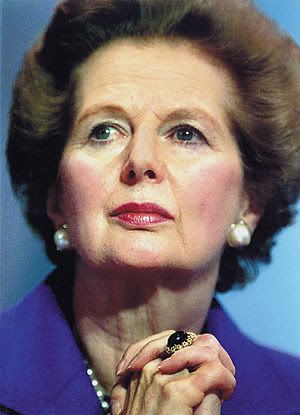
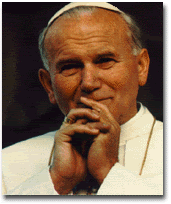
Margaret Thatcher, Ronald Reagan, John Paul II: there are no finer names to get Lefty blood boiling. John O’Sullivan, a conservative writer, journalist, and editor and one-time advisor to Thatcher, finds all three admirable. But then that’s how it goes. One side’s heroes are another side’s villains and God forbid we should find anything admirable in our villains or disappointing in our heroes. Not that The President, The Pope and the Prime Minister: Three who changed the world is a hagiography. But it is certainly written from a conservative viewpoint.

Its main thrust is the part these three played in the collapse of the Soviet Union. There are those that will tell you the Soviet Union would have collapsed anyway. Oddly these are often the same people who were screaming at the policies that were brought in place to try and engender the collapse of the Soviet Union. These policies will never work! They’re dangerous! We’ll be at war before the USSR collapses! [USSR collapses] Oh well, that was always going to happen.

This is the argument used whenever someone we don’t like does something that is good; that was always going to happen, or as an alternative, oh anyone would have done the same in the same circumstances. God knows I’ve done it myself. But John O’Sullivan shows that the downfall of the Soviet Union was brought about in large part due to the change in direction at the Vatican, Downing Street and the White House when these ‘conservative’ leaders took quite radical turns.

It was Richard Nixon who engineered Détente, a policy of co-existence that was to ensure that the two
most powerful nations in the world would have no reason to go to war. But what this did, as writers and dissidents such as Natan Sharansky will tell you, was to trade the human rights of people living under the Soviet Union for international stability. Living in a Western democracy that now was under less threat, this probably seemed like a good deal. Living in a gulag, less so.

Reagan, Thatcher and John Paul II refused to accept the Soviet Union as a fact of life. And this was quite a radical step. During Reagan’s presidency for example, Teddy Kennedy visited the USSR to advise them how to deal with Reagan. This was not done out of any traitorous leanings but because Kennedy, like so many, assumed the USSR was not going anywhere and so to antagonise them as Reagan was doing, was dangerous. It was sincerely held belief, and as it turns out, wrong.

John Paul knew what living under a Communist dictatorship was like, which drove his policy towards the Soviet Union. His visit to Poland in 1979, which O'Sullivan sees as a starting point, was greeted by thousands and thousands of his fellow Poles, giving them the knowledge that their unhappiness with their government was shared by millions of their fellow Poles. Between his speeches calling for free and just government and their sheer will and numbers, the Poles received strong moral support for their long and difficult campaign for freedom.

This was supported by political, military, economic and moral pressure from Britian and the US. Sullivan brings together many of the events of that time from 1978 through to showing the effect on the Cold War endgame, including the Falklands War, the Iran-Contra scandal, and the assasination attempts on all three of his main players. Some of the stories as played out in popular culture are revealed as having layers. For example, Reagan’s Star Wars Initiative as it was known was a controversial attempt to build defensive missile shield in outer space. This was portrayed at the time as as dangerous game of military-economic brinkmanship. Less well known was Regan’s repeated offers to the USSR to share the technology. If both sides had it, then they could both reduce their nuclear stockpile as it would not be much use. This offer was knocked back, more than once. Certainly I never knew this. Doubtless the element of risk was still there. But if O’Sullivan’s account is accurate, Reagan read the Soviets better than they read him.

 Of course it was not just these three people who brought about the change. From Lech Walena through to the thousands of politicians, workers, protesters and dissidents in many countries, most of whose names we will never know, there were many others, and their struggles and sacrifices were crucial. But their efforts would have been in vain without the support of these leaders showing it in practical terms on the world stage.

You can read of more critical accounts of this time - His Holiness by Carl Bernstein and Marco Politi, for example - if you wish, and I don’t claim this book to be the final word. Any big topic like this requires wide reading. Nor, before anyone jumps and down, do I claim these three are beyond criticism. But it shook a few of my preconceptions of the time, particularly my view of Reagan, and that’s a good thing. If you only read to find writers you agree with, what’s the point of reading at all?

Sunday, April 8, 2012

"Shtarker! This is Kaos!" The history of Israel


I mentioned Margaret Thatcher as a good argument starter. Israel is another cracker. (Both in the Australian slang sense as ‘very good’ and in the sense of explosive.) People in Australia protest outside a Jewish-owned chocolate shop, which is owned by another company that owns another company that sells chocolate to the Israeli army, and chant Hamas phrases calling for Israel to be wiped from the face of the earth and wonder why other people get upset. It’s a complex issue.

I thought Irish history both rewarded and was blurred by the long view. Compared to the Jews, the Irish are whippersnappers. And Jewish history too emerges from the mists of time and myth. Israel is condemned for the settlers in Hebron who forced out Arabs from the area, one of the most sacred Jewish sites in an area replete with them. But who condemned or even remembers the Arabs who forced the Jews out from Hebron before that? It wasn’t that long ago – survivors from that exile returned to force the Arabs out in their turn. And so it goes, tit for tat, this for that, an eye for an eye, back as far as you can see, and as far forward too.

Rich Cohen is an energetic vital writer. No prizes for guessing he’s Jewish. His 2010 book Israel is real: An obsessive quest to understand the Jewish nation and its history, the title taken from a tourist t-shirt, is an informal informative history of Israel from Abraham to the present day. It doesn’t excuse or condemn Israel but it does go a long way to explaining it. The great Israeli general Moshe Dayan, during the Yom Kippur war, which he almost lost along with the plot, called Israel the third Temple. Cohen agrees. His central thesis is that of the Temple, that was destroyed twice then transformed into an idea that could be taken anywhere. When Israel was created, the Temple became a physical object again, and again something that could be destroyed. 

The strongest characters in this book are the shtarkers, the Jewish tough guys from antiquity to today. (Some will remember Siegfried’s somewhat Nazi, wholly incompetant sidekick of that name from Get Smart.) And of all the shtarkers, Ariel Sharon is the exemplar, not only of the type, but of the history of modern Israel itself. A dashing commander in the 1948 Arab Israeli War who became the hero of the Yom Kippur War when he split the Egyptian army and against orders crossed the Suez Canal and saved Israel, it was he who as Prime Minister started the settler movement to protect Israel and he who later tried to stop it for the same reason, before being struck down by a stroke. It’s almost a three act play - a tragedy.

Cohen is no blinkered true-believer, nor is he a blinkered anti-Zionist. Israel is real and he tries to understand what this has done to those Jews who live there, and the others as well. He sums up the present impasse in a single sentece: We will stop building when you stop attacking and we will stop attacking when you stop building. Where’s the off-ramp of that roundabout?

Cohen uses anecdote, myth and history to weave an entertaining and thought provoking book. If you are interested in the topic at all, you could do a lot worse than reading this. 

Wednesday, March 21, 2012

"Without a hitch." Christopher Hitchens


Don’t read Christopher Hitchens’ essays last thing at night. Not that he’s frightening, it’s that he’s like Maltesers – you can’t stop at just one. I spend some night sitting up in bed, reading Arguably, a 2011 collection of essays and columns covering the breadth of his career.

And it is a breadth of subject as well as years. Reading some of the less-informed commentary on his death, you could be forgiven for thinking he had written one book, God is not great and had only one subject, atheism. Hitchens was able to turn his mind to many topics, cultural, historical, political and yes, religious. His writing is elegant, well-informed, witty, intelligent and compelling. I don’t think he ever wrote purely as a provocateur, but he was never afraid to offend nor did he ever curb his opinion to follow a popular line. He knew what he thought, and more importantly why he thought so, and was able to argue it lucidly and entertainingly.

Of course there are areas where I disagree with him. Oddly one day I met someone who knew I was a Catholic, and because of that, was surprised that I liked Hitchens. It was an example of a new intolerance I see creeping in. Just because I disagree with him on God, doesn’t mean I have to reject him and all his work. It’d be astonishly dull to read a writer with whom I agreed on everything anyway. Why bother?

But I was thinking of another topic. In 2002, Martin Amis (who with Clive James and others used to share a regular boozy Friday lunch with Hitchens) wrote Koba the Dread: Laugher and the Twenty Million, an examination of the reign of Stalin and the odd attitude the left wing has taken towards Communism then and now. He related a story where Hitchens told a story at a speech about his days as a Communist, and got a laugh. Amis wondered if Hitchens had related a story about his days as a Blackshirt, whether he would have got the laugh, or even been a working writer in modern Britain.

To me he raised a fair point: why do we still look at the USSR, with the Great Terror, the gulags, the use of famine as a tool of oprression, the twenty million dead (some sources would say more), as somehow all right, well-intentioned, while Nazi Germany is beyond the pale? Why is left wing extremism somehow not so bad, while right wing extremism is the greatest form of evil ever? To put it another way, why are we not as appalled by Stalin’s Socialism within One Country as we are by Hitler’s National Socialism? After all, to quote the political pundit Clint Eastwood, if you go far enough right you meet the same idiots coming from the left.

Hitchens didn’t believe this was so. He accused Amis of coming late to the information about the terrors of the USSR, and assuming no-one else knew about it either. I think Hitchens has made a similar mistake. He knew about it, and so assumed everyone else must know about it. And it still doesn’t explain the laugh – in fact, if they do all know about the horror of Stalin’s reign, the laugh becomes even more sinister.  But I believe there is an enormous double standard in our attitude towards left-wing totalitarianism and right-wing totalitarianism.

In another column, Hitchens supplies an example of this very phenomenon. He is reviewing the third volume of Victor Klemperer’s diaries. Third? Sure there were only two? Yes, two best-selling volumes about life under Nazi Germany, but a third volume, of life under the Communists in Eastern Berlin, could not get a publisher in the US nor as far as I can tell in Australia. And here it is! A book that tells of life under the Communists cannot get a publisher, even though the author had two best sellers! The interest, the market, is not there. We simply don’t take the terror of Communism with the same gravitas as we do for the terror of Nazism. And why that is, is a question of great interest. Hitchens never makes this connection, and so never turns his considerable mind to it.

But disagreements and argument were the stuff Hitchens thrived on. His work is provocative and entertaining. As a writer and as a man, he was courageous. Everyone is entitled to an opinion. Every one is free to write those opinions and get them published if you can (or blog/twitter them). But it is only if you bring the comparable intellect, knowledge, and integrity that you can be as respected as Christopher Hitchens. I suppose he would have thought me a complete idiot, being religious and all.  But I too am sorry I will never again reading something new he has written.

Thursday, December 1, 2011

"Not since Lincoln." Lincoln's struggle with slavery.


We live in a shallow age. Not only are Tony Abbot’s swimwear and Julia Gillard’s accent considered two to the top political issues of the day, we are content to find one statement, one epithet, one action from a politician we don’t like and base our judgment on a person or a career on that. We think ‘racist’, ‘sexist’, ‘homophobe’ or whatever the appropriate word and reject that person and all their works. (Mind you, if you can apply all three to one person, you may be on to something.)

But take this statement:

I will say then that I am not, nor ever have been in favor of bringing about in anyway the social and political equality of the white and black races - that I am not nor ever have been in favor of making voters or jurors of negroes, nor of qualifying them to hold office, nor to intermarry with white people; and I will say in addition to this that there is a physical difference between the white and black races which I believe will forever forbid the two races living together on terms of social and political equality. And inasmuch as they cannot so live, while they do remain together there must be the position of superior and inferior, and I as much as any other man am in favor of having the superior position assigned to the white race. I say upon this occasion I do not perceive that because the white man is to have the superior position the negro should be denied everything.

Surely this appalling man was condemned to the political fringe, or at least ended his career in ignominy. However, the formal language and the vocabulary is a bit of a giveaway that this is a politician from some time ago. The speaker is Abraham Lincoln, one of the greatest presidents of the United States, the Great Emancipator, and the man who did more for the advancement of black Americans in one stroke than anyone else.

But the man is a racist! Surely we should condemn him, say that history is telling us a great lie, and insist anything he did was motivated by a grasp for power and nothing else.

We could do that. Look up that quotation on the internet and commentators indeed are way ahead of me. But they are wrong. You could say they are wrong in part, but that part is such an enormous part let’s just call them wrong.

I have just read The Fiery Trial: Abraham Lincoln and American Slavery by Eric Foner, which traces Lincoln’s attitudes and actions with regard to American Slavery from his youth through to his assassination in 1865. And what he finds is a man whose attitudes towards slavery and Black Americans evolved as he went through his life, both personally and politically. Imagine that! A politician whose ideas evolve! Who responds to what he hears and sees and experiences. No! We have caught Lincoln uttering racist remarks in a political debate, we must condemn him forever!
Lincoln was a product of his time. But even as a young man he found slavery abhorrent. But being opposed to slavery did not mean feeling the Negro (to use his language) was his equal. You don’t need me to tell you that Emancipation didn’t lead to social equality. That struggle is still going on. Those calling for immediate abolition of slavery weren’t necessarily calling for full citizenship for the slaves. There were many gradations of beliefs between the radical abolitionist and those slave owners who refused to see there was even a problem.

Despite what people will tell you, the Union broke on the issue of slavery. Lincoln, along with many other politicians, was satisfied to limit the spread of slavery while allowing it to remain in the states where it existed, believing, probably rightly, that the ‘peculiar institution’ would die a natural death. The laws governing slavery, including runaway slave laws and rights of transit for slave owner in non-slave states were complex and often changing. But that solution was not good enough for many slave state who insisted the Federal Government had no rights to place limits on slaveholding anywhere. (It didn’t impress Abolitionists or black Americans much either.) The Southern States insist they broke away over state rights. But the state rights they were worried about were all to do with slavery.

Lincoln then moved to gradual, compensated abolition, with the children of slaves made bondsmen instead, which meant eventual freedom, and owners compensated for any loss of their “property”. This too was rejected not only by the Confederate States, but by the border states, slave-owning states that had remained in the Union.

All the while, Lincoln was a big believer in emigration for freed slaves, either to Africa or South America. He believed both whites and blacks would be happier separate. He was to hold to this belief for a long time, but it too was one he would eventually alter, convinced by arguments from anti-slavery activists, both black and white.

During the early years of the Civil War, Lincoln insisted the war was about preserving the Union, treating the Confederate States with the rights of any other state under the Constitution. This was his way of trying to reassure the more conservative elemens of both sides that they had nothing to fear from being part of the United States. It was only when the war was going badly and the North’s fighting spirit need reinvigorating that Lincoln finally talked about the enormous elephant in the room: the war was about slavery.  As Lincoln had said many times before, the country could not exist half-slave and half-free. Here is another Lincoln quote:

As a nation, we began by declaring that "all men are created equal." We now practically read it, "All men are created equal, except Negroes." When the Know-Nothings get control, it will read, "All men are created equal except Negroes, and foreigners, and Catholics." When it comes to this I should prefer emigrating to some other country where they make no pretense of loving liberty - to Russia, for instance, where despotism can be taken pure, without the base alloy of hypocrisy.

Lincoln knew that if you allow discrimination to one group, you prepare the way for discrimination against more.  He also knew that “all men” included those brought over in slave ships and their descendents. In a later speech, he referred to “Americans of African descent,” thus including them with all other American descended from other lands. How Lincoln would have handled the Negro question in post-war American, of course we shall never know. Doubtless he would have struggled and changed and moved between ideal and practical, the way he dealt with the slavery question.

The Emancipation Proclamation, though limited in its scope, gave the Civil War a moral and clear purpose. The war wasn’t about a poltical principle it was about a humane one. Without slavery the war may well have never come about. Without its abolition, there was no point to carrying on the struggle. The Proclamation was not a military turning point, but a moral one, for the country as a whole. Once again, the United States was reminded of the principles on which it was founded, and its people, led by their President, insisted they be upheld.

Lincoln may have been by our standards racist, but he was intelligent and open to new ideas. He was also courageous and stood up for his beliefs. If Lincoln did not genuinely believe in the intrinsic wrongness of slavery, he had many opportunities to allow it to continue and let later generations deal with it, but he did not. He played a tough political role in keeping his party with radicals and conservatives united and fought a war rather than let slavery continue. In the end, he was killed for it, the victim of a group led by a Southern white supremacist. Lincoln’s greatness, while marked by speeches and actions, may be due to his ability to evolve as a human being. He was not held by his time, or his upbringing or any other constraint. He admitted when he was wrong, saw what was right, and strove to bring it about.

The fiery trials through which we pass will light us down in honor or dishonor to the latest generation.

Foner’s book is a good read, if a bit dry and academic, dealing as it often does with legislation and political manouvres. But it shows a great man struggling towards greatness. Or if you like, a great soul struggling towards its ultimate expression. There are very few Abraham Lincoln’s around, then as now. But part of our political responsibility it to listen to arguments and to engage with them. Many people such as Frederick Douglass were appalled by some of the things Lincoln said and did.  He could have dismissed him as racist, insulted him in the press and made fun of his beard. In 2011, this is the sort of thing that often passes for political debate. But he met with him, talked with him, argued with him and helped to change his mind. Listening, talking and thinking– still powerful tools.

Lincoln was one of what we all are – a flawed human being. But he rose above his time, his upbringing, his own prejudices and the pressures of his political career to end one of the greatest injustices of all time.  His methods and solutions are not perfect, but I still don’t understand those that now want to denigrate his memory. Thank goodness for historians like Eric Foner.

You may not know – I did not - that 27 million people are in slavery today, more than in the 400 years of the trans-Atlantic slave trade. Evil goes on, demanding our best efforts. I hope we are equal to the task.


PS: And while we’re on the subject of changing people’s minds through talk, last night my home state of Queensland passed legislation recognizing civil unions for homosexual couples. Congratulations to everyone for that one.
Wednesday, August 17, 2011

"It's not the voting." Natan Sharansky and democracy


I was a bit disturbed the other day by the protests outside Max Brenner Chocolates. Apparently this was not a protest against chocolate but against Israel. Max Brenner Chocolates is owned by another company, the larger company is a supplier to the Israeli army, therefore the protesters were not advocating boycotting a Jewish business but protesting Israeli occupation of the Western Bank. This is part of a larger campaign, Boycott Divestment and Sanctions against Israel. This campaign seems to me to be based on a false assumption, that peace in the Middle East is entirely dependent on the actions of Israel, as if the Arab nations, Hamas and the Palestinian Authority have no part to play in the process. In fact, I never hear or read of any protest against anybody else except Israel, which makes me worry about it on another level. Hopefully, I’m reading too much into it, that ignorance and the hope for an easy solution is responsible for these actions and not a darker motive. Indeed I give the benefit of the doubt to most of the protesters.

Possibly there is a one-word solution to the Middle East, and that word is Democracy. Anyone familiar with the history of democracy in general, and in the case studies of France, Great Britain and Germany for example, know that democracy is not easy to establish or maintain. So Democracy may be one word, but it is not an easy answer. And it can make things more complicated.

I’ve just read Natan Sharansky’s book The Case for Democracy; The Power of Freedom to Overcome Tyranny and Terror. Sharansky was a champion chess player in the Soviet Union before his activism on behalf of Soviet Jews saw him declared a refusenik and exiled to Siberia before he was finally able to emigrate to Israel. There he established a political party representing all immigrants which, he is happy to report, seems to have outlived its usefulness. On the other hand, he was a member and minister in a number of successive Israeli governments. His life as a dissident in a totalitarian country then as a minister in the sole democracy among other totalitarian counties gives him a unique perspective. One can certainly argue with him, but you cannot dismiss him. As some people have tried to do anyway.

I don’t want to summarise Sharanksy’s arguments on the power of democracy to lead to greater peace, for fear of expressing them badly. A couple of points are worthwhile repeating here though. The way a country treats its citizens are an indicator of how a country will treat the rest of the world. That’s pretty good. Democracies don’t tend to go to war with each other. Try to think of the exceptions. Everybody is ready for democracy. For some decades at least we have been hearing that the Arabs are not ready for democracy. But the same was said of Germany and Japan and many more besides. And more recently, since this book was written, we have seen clearly that Syrians. Libyans and Egyptians, among others, seem to think they’d like to give democracy a go. Who are we to say no?

Sharanksky condemns the US policy of dealing with dictators for the sake of stability. They have turned away from human rights abuses for political and economic reasons.  With the USSR this was called  Détente, and people still look at it fondly. And it was not until the US under Ronald Reagan linked aid to Human Rights that cracks appeared in the Soviet monolith. No-one is suggesting this is the only reason for the fall of the Soviet Union, but when the USSR started giving more rights to its people, more freedom, it could not sustain itself. And dealing with tyrants for the sake of stability has given us people like, ooh let me see... Saddam Hussein. Look how well that went in the long run.

Democracy may not give us the results we want. We may see more Islamist governments, for example, take over from secular governments in the Middle East. But if the democracy is real, if the people see the benefit of living in a genuine democracy and being part of the world community, we should see a more moderate approach in the long run, from all parties. But who these days is prepared for the long run? The media certainly doesn’t encourage that approach and going by what I read on social media ie us, we aren’t either. Hence the search for immediate easy results.

All people crave freedom. The history of politics in broad terms is a history of the spread of power and freedom from the few to the many. If we link our foreign aid to human rights we can start to make dictatorships and totalitarian governments rethink the way they treat their people. It's a controversial idea, but it is one worth considering.

Monday, June 20, 2011

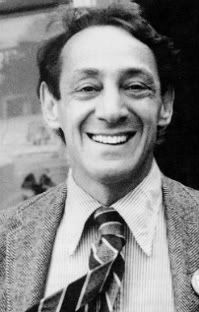
"Only one life." Harvey Milk

I seem to have hit a biographical patch for some reason. Biographies are popular. For the famous and infamous, our heroes and villains, we want to penetrate their mystery. Where do artists and politicians and scientists get their inspiration, their ideas? (More than one artist, when asked this question, has responded “If I knew that, I’d go there.”) What makes one person become Abraham Lincoln, another Adolf Hitler? And then there are the people of whom we have heard something or come from a world we are only vaguely familiar with, if at all. Their biographies offer a way into their world and their work. In the end, the biography is yet another attempt to understand the puzzle of human nature, of existence. And so they will never entirely succeed. But the best of them make the journey worthwhile, even if we end up a little short of the destination.

Two biographies I’ve recently undertaken are Randy Shilt’s The Mayor of Castro Street: the life and times of Harvey Milk, and Anthony Reynolds’ Leonard Cohen: a remarkable life. On my to-read pile is Barney Hoskyn’s Lowside of the road: A life of Tom Waits, and the other day I bought Blood Kindred: W B Yeats; the life, the death, the politics by W J McCormack. I’ve finished the first two in this list and was going to write about them both but the entry was getting well above my self-imposed maximum of 1000 words. So here is my response to Shilt’s book, Reynold’s will be next and I’ll get to the others later.

I first came across Harvey Milk by watching a film about Dan White, the man who shot him and San Francisco Mayor George Moscone. Milk in this case was played by Peter Coyote, a good actor who has never become a star. My interest was piqued. I had never heard of Milk (in fact I remember thinking I was mishearing his name) and the manner of the murders and the trial that followed kept his name in mind.

Despite my interest, I have yet to see Sean Penn’s take on the character, but I found this biography on the shelf in my library, so decided to pick it up. And I’m glad I did. What an eye-opener it was for me, coming from a conservative Australian family in a nice suburban middle-class upbringing. I’m not complaining about my life, just observing it meant I did not knowingly encounter a gay man until I was about 21. Working in the theatre, as I do, I have since met a lot more. And in other places obviously. Indeed, dare I say it, some of my best friends are gay.

That said, while I had the occasional glimpse of what homosexuals have to put up with, I had no idea of the struggle they have undergone, or the distance they have come in social and legal acceptance within my lifetime. Obviously that struggle is far from over, but I had no idea of the life that the vast majority of homosexuals were forced to leave, if they could, before what was called the Gay Liberation Movement – repressed, secretive, dangerous, often fatal. If it is not easy to be gay now in our liberal society, being gay in the 50s or before was impossible. The idea that someone would choose that life is laughable.

But it is an idea Harvey Milk and many others had to fight, as well as others equally strange. (Sadly, you still hear it.)  Milk was a leading figure against a law trying to make it illegal for homosexuals to be teachers, on the basis that they would use that platform to recruit youngsters. Again this is not some medieval prejudice but within my lifetime! (41 years and about six months as of time of writing.) He lost that battle but the war went on. His chief message, the theme of his speeches, and one of his favourite words was hope. He saw himself as trying to give hope to those men and women who had none.

Milk achieved much in his short lifetime. If his only achievement was to be the first openly-gay politician elected to office he would be worth remembering, but he did much more. Most of his achievements came from community activism, working with gay and straight alike to achieve civil rights for homosexuals, long before he came to office. He is an inspiration for anyone who wants to change the world.

Milk was murdered and his murderer got away with manslaughter. It’s a depressing end to his story but almost inevitable. He was loud, confrontational and bold. He was always convinced he would be killed by the assassin’s bullet.  Indeed he spoke of it so often you can’t help wondering if it was he who inadvertently gave Dan White the appalling idea. And the trial was a travesty as if to prove how far gay liberation had to go, even in San Francisco. One witness remembers one cop patting ex-cop White as if for a job well done. The Prosecution didn’t present a strong case and White was free in a few years. But he killed himself a few years after his release. But injustices like this can give impetuous to the causes they are designed to repress, and this was no exception.

If as an eight-year-old, this whole story passed me by, it was not just because I was an eight-year-old in Australia. The big story the week of Milk’s death was the Jonestown Massacre, which also had its roots in San Francisco politics. It was an extraordinary time indeed.

Not long before Milk’s death he recorded a political will, which included the memorable line, “If a bullet should enter my brain, let that bullet destroy every closet door.” Closet doors and violence sadly still have their place in our world but we are progressing, thanks to people like Milk and the many others who followed. He was not alone in the struggle, and has his critics as well as admirers but they all have their voices heard in Shilt’s book. Definitely worth a read, if only to remind us of our recent past.

Saturday, June 18, 2011

"All this is that." War comics and Margaret Atwood.

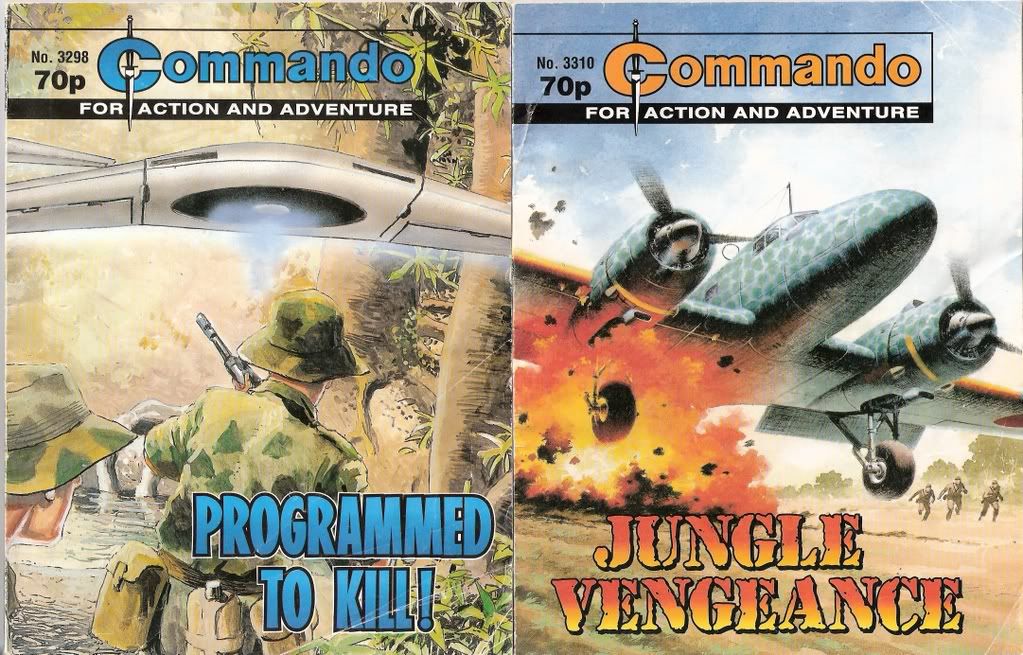
When I was a boy I used to read Commando comics and others of the type. I loved them. As I got older I still read them but I went through an ironic phase, noting the stock characters, (the cowardly private, the good German, the evil Jap, the stuffy officer, the renegade soldier, the younger son looking for redemption and so on and on), unlikely dialogue (‘You may be faster than us Fritz, but we’ll out turn you any day’ thus neatly giving us technical information about the relative performances of the ME109 and the Hurricane in naturalistic dialogue during a dogfight), formulaic plots, and characters that all looked the same, and then finally I stopped reading them altogether.

That said, their level of technical drawing in Commando comics was never less than superb which was a large part of their appeal to boys who made models of airplanes, ships and tanks, and played war in the playground. If the stories were Boys’s Own Adventure types and they never caused us to reflect on the futility of war, a) we were little boys who, quite rightly, hadn’t yet got around to considering the great moral questions and b) they were set in World War Two which is as near to a simple goodies versus baddies war as you’re likely to find.

As comics have gained more respectability as a literary form, Commando Comics have released big albums of their books. Each volume has twelve stories with a nominal theme, (Aussies!, Action! Spies! Etc – the exclamation marks are mandatory) are larger print than their original incarnation, and come with a handy attached bookmark. I’ve worked my way through two volumes now, one just recently and one a year or two ago, and I’m afraid my ironic teenage self was right. While they are aware of their own excesses, (their covers note things such as Europeans always screaming “Aaaauggh!” while Indians and Asians tend towards “Aieee!”) in the end they are poorly told stories (albeit sometimes with a good premise) and cluttered with clichés. On top of that the larger print makes these books unwieldy and subject to breakage. I can’t recommend these books except as an exercise in nostalgia, which, in their defence, is where they seem to be aimed. But nostalgia can be very powerful. I can’t remember if it was a British or German officer, but my brothers and I still giggle when we think of this piece of deathless narration: ‘He went quietly mad.’

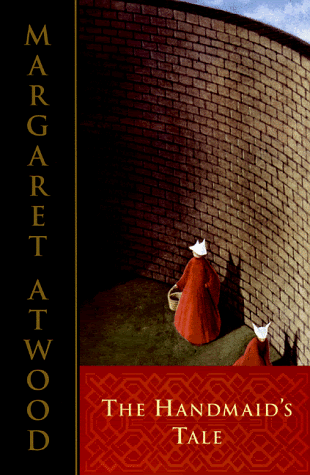
From the ridiculous to the sublime: Margaret Atwood’s The Handmaid’s Tale. This is the second of Atwood’s novels I’ve had the pleasure to read and she has the happy knack, unusual for a literary novelist who has won the Booker Prize among others, of writing page-turners. The Handmaid’s Tale takes place in a dystoptic world of a theocratic patriach totalitarian society in a constant war and suffering from falling fertility rates. The narrator is a Handmaid known only by her patronymic Offred, one of those whose job, and indeed sole purpose now, is to get pregnant to one of the society’s top strata’s male. If they do so, their life is safe; if not they could end up in exile or disappeared.

We hear the story in Offred's voice. We hear the details of her life, the prescribed dress, living conditions, social life,  even the regimented sex. We also get some information on her backstory, her marriage, her daughter, and how all this was stripped away from her with a brutal speed as the world was turned upside down. And the ending is ambiguous without being weak story-telling - a difficult trick to pull off.

Atwood has created a believable world with real affecting characters. Tim Blair, a right-wing Australian columnist, has invented Blair’s Law, “the ongoing process by which the world's multiple idiocies are becoming one giant, useless force". While in this case, it was two extreme groups coming together quite effectively to overthrow democracy.  The Handmaid’s world seems to be a bizarre result of religious fundamentalism fusing with radical feminism to create the society where women are simultaneously held in great esteem and confined to predetermined traditional roles without chance of change or escape except for the worse. The men too are trapped in strict strata.  Perhaps it’s more as Clint Eastwood put it: “If you go far enough to the right, you’ll meet the same idiots coming from the left.” 

It’s a superb novel. Once again I found myself torn between trying to find out what happens, and wanting the novel to last longer. Perhaps it’s not a novel you enjoy, but it stays with you. And it's certainly made its mark culturally, having been adapted both as a film and an opera.  It was Francis Trauffaut who said a masterpiece is something that has already found its definitive form. And so with this, as with other masterworks, it is best encountered in its original form. To be honest, I can only assume this, having seen neither the film nor opera. But I think it's a fairly safe truism that only second-rate novels make better films. Perhaps we have the odd exception (I understand both the play and opera of The Marriage of Figaro hold their place on stage) but go with me on this one. 

Monday, May 16, 2011

"... and I'll cry if I want to." Barry Cassidy on the 2010 election

Australia, it has been said, is the lucky country. Donald Horne meant lucky in the sense we had got where we are more by good luck than good management. Perhaps he is right but I am not entering that argument. However we got here, Australia, broadly speaking, is in a good place.  When people get sick of governments, we get rid of them with a vote that the government initiates. We don’t have battles, airstrikes, suicide bombings, hunger strikes or any of the more extreme methods other countries have had to use to get rid of their governments. Our leaders don’t have private armies, nor do we lie awake at night dreading the knock on the door, hoping the footsteps continue up the stairs to our neighbour and not to us. We have a working democracy, rule of law, and freedom of worship, assembly and speech (up to a point). We have faults of course, but we also have the means and the will to fix them. Cecil Rhodes once said that to be an Englishman was to have won in the lottery of life. In the broad scheme of the modern world, being an Australian is something similar. And our weather is better.

People complain that Australian politics are dull. Thank God. Interesting politics are like the interesting times of the Chinese curse. That said, I think the complaint inaccurate. Readers of this blog will already know that I am neither disinterested or uninterested in politics. Nor do I claim not to be partisan. I’m a liberal conservative – or a conservative liberal. Or something else. I do think anyone who can describe their politics, or those with whom they disagree, in the one label – left-wing, right-wing, conservative, liberal or whatever – suffers from lack of imagination. Such labels are often handy  but rarely accurate. I cannot think of anyone offhand whose views do not range across what we call the political spectrum; different issues, different circumstances, different times call for different responses. This is not hypocrisy but honesty and open-mindedness. Still they are useful shorthand, I must admit. And demonstrate below.

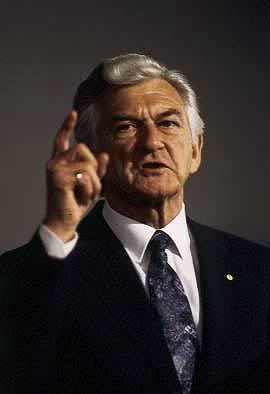
All this is a preamble to my response to Barrie Cassidy’s The Party Thieves: The real story of the 2010 election. Cassidy is best known these days as the host of Insiders, the nearest the ABC gets to a balanced look at politics. That the balance is usually represented by two left-leaning journos and one right-leaning journo gives you a fair idea of the ABC’s usual tilt at the concept. Cassidy however keeps a fairly tight grip on the tiller. Once Labor PM Bob Hawke’s Press Secretary, he is in interviews as keen to put the curly questions to Labor politicians as he is to Coalition politicians. Nor does he listen to noisier elements of the audience who demand this or that journalist never be allowed on the show again, usually starting their demand with “I’m all for freedom of speech, but…” (Just a tip: if you do use that phrase, you aint.) We need more journalists of Cassidy’s quality.

If you are at all interested in Australian politics, you should read this book. It is a good demonstration of Cassidy's virtues. As well as balanced, this book is eminently readable. The writing is clear and simple, while being entertaining and interesting. He writes the way he speaks, which is often the mark of a journalist (see Jeremy Clarkson’s work for the same effect.) He has real insight into politics and journalism, bringing years of experience in both fields to bear. And he is able to see the faults and strengths that both side of politics brought to the 2010 election.

Significantly, he doesn’t get to the 2010 election until halfway through the book. The first half is taken up with the story of the party thieves of the title: Malcolm Turnbull and Kevin Rudd. Cassidy sees both their ascensions to leadership as stealing the party from the rightful owners and both their downfalls had similar causes. Both stopped listening to the party and demanded their own way at all times. The big difference is, Liberals Party members still seem to like Turnbull and there may be a day when he becomes leader again. Meanwhile no matter how much Kevin Rudd woos the voters and flies about the world, he is so loathed by his party he has as much chance of being leader of the Labor Party as I do. The character of Kevin Rudd is, as Joseph Conrad said of the history of conquest of the world, not a pretty thing to look into too much.

Then of course there is the election itself, which no one party won, and finally Gillard managed to form government by gaining (or buying, depending on your view) the support of the Greens and a sufficient number of independents. In light of the election campaign and the consequent government we have, it is hard to disagree with Bob Hawke’s assessment that the Australian people generally get it right at elections, and 2010 was no exception. No-one deserved to win and no-one did. I was tickled to find some of Cassidy’s ideas of what went wrong and what went right occasionaly chimed with my own, while often finding correctives and illumination and information in areas of which I was unaware or misinformed or plain ignorant. Cassidy’s analysis is clearly-stated and well-argued.

It is also hard to argue with his conclusion that we as a people are hungry for a government that will do things because they are the right or best thing to do, not because a focus group liked it. The Hawke-Keating and Howard governments were of this type, which is why they both enjoyed long runs.  I tend to agree with Henry David Thoreau – a government is best that governs least. But in the end they must govern, not try to keep on the right side of popularity polls at all times.

Monday, May 9, 2011

"That was then, this is now." Peanuts and other comics

Like everything else, books and literature are subject to trends, fads, and changing times. Books can soar up the bestseller lists and by the time you read them, you may wonder why. Future generations will read The Da Vinci Code and wonder about us, you can believe that. Other books become dated by their subject matter and are left behind by historical events and changing social mores.

A book that was a bestseller in its day but is now something of a curiosity is The Gospel according to Peanuts, which had sold over ten million copies since it was published in 1965. Booksellers are still selling it. I remember taking it off the shelf at my school but finding too much Gospel and not nearly enough Peanuts. Spotting it in a second-hand bookstore some time ago, I picked it up. My initial reaction was still the same, but I bought it anyway.

It’s not the silly idea that it may first appear. Charles M Schulz, the creator of Peanuts, was a devoted Christian who put Christian messages into his cartoons. This was not a constant in his work, nor particularly heavy-handed, but certainly present. Robert L Short, a Presbyterian theologian, used some of these cartoons to illustrate his book, showing Charlie Brown, Lucy, Linus, Snoopy and the others as avatars for adults grappling with an unfriendly world.

The book is very much of its time. It’s not talking down to its audience at all though, which can often be the mistake of popularisers of any ilk.  One can image Short doing this book as a series of lectures with the cartoons on slides. His aim is to make the message of Christianity accessible and he does this very well. Perhaps he is preaching to the converted but then who doesn’t?

Incidentally, if you are a Peanuts fan, you might want to read Schulz and Peanuts: A Biography by David Michaelis (2007). I found it good, and the creator of Calvin and Hobbes, Bill Watterson, feels the same. Others say it is inaccurate (Michaelis stands by his work) and tries too hard to find explanations in Schulz’ life for his art. I recommend it though.

The other books I read recently that have been left behind by time were two of Herge’s Tintin books, Tintin in the land of the Soviets, and Tintin in the Congo. The Tintin books have all now been published in eight volumes, hardcover books each with up to four stories. This is Volume 1.  I was never a huge fan of Tintin, although he has a big following, though I did read him occasionally. He has never been that popular in the US, which hasn’t stopped Steven Spielberg making a film coming to cinema near you!

Fans of Tintin may not recognize the first of these books, not just because of its relative obscurity. It is the first of Tintin’s adventures and looks very different to its successors. It is in black and white, and the drawing crude, particularly compared to what came after. Tin is a taller, more solid character, although Snowy is already Snowy. None of the other regular cast, Captain Haddock, Thomson and Thompson, appear.  The plotting is also crude. Trapped in a basement cell next to a river, Tinin finds a diving suit in the cell. No, really. It is a piece of anti-Soviet propaganda with Tintin uncovering fake factories and the underground vaults where Lenin and Trotsky and Stalin keep all the food and wealth they are stealing from the people, while the GDU try to capture, kill or convert him. Herge later disavowed the work, saying it was youthful folly.

Folly it may have been, but oddly accurate. Anyone who can spot the moral difference between Soviet Russia and Nazi Germany deserves a Nobel Prize in Hair Splitting – and that would be ill-deserved. Lenin introduced the use of terror as a means of control. The leaders deliberately starved their people.  Enemies of the State disappeared, and were tortured and killed at an impressive rate. I would not recommend this book as an accurate picture of the Soviet State but its broad brushstrokes somehow manage to reveal some detail.

The second book, in colour with Herge’s characteristic precise and detailed art, now has the reputation of being racist. It is. The Congolese are depicted with big red lips and big white eyes, childish and needing the wisdom that Tintin and Belgium can bring them (Had Herge read Heart of Darkness? Not by this stage.) . On the other hand the villains are a duo of white gangster and black witchdoctor– so that’s nice. Tintin also shoots a rhino, an elephant (taking home its tusks in triumph) as well as, hilariously, fifteen antelopes when he thinks he keeps shooting and missing the one.  And this is the version that Herge had adjusted in response to reader reactions.

The book now comes with a disclaimer that it is a product of its time. And so it is. Calls to ban the book are misguided. I would not buy this book for a child but with 21 (or 22 depending on how far you want to go) other stories, I don’t think the child would miss it. And by the time he or she picks it up on his own, they can work it out for themselves, or talk to you about it. That’s the whole point of teaching them to read, isn’t it?

Tuesday, March 29, 2011

"Your a idoit" Clive James and P J O'Rourke

Politics seem to create blind spots in people who might otherwise be quite reasonable. If my side has told lies, it was only in the pursuit of a higher truth. If your side tells lies, they are the lowest of the low. If my side uses foul language, it is a result of passion. If your side uses bad language, they are dangerous extremists. It can be like what Yes Minister used to call irregular verbs:  My political views are informed, yours are mistaken, his are the blitherings of a dangerous idiot.

I have friends with whom I can discuss politics quite happily despite where we both might sit on the political spectrum. Others I avoid like the plague. They might be quite reasonable people otherwise but get them onto politics and the crazy come out. It seems that all those who differ in their opinion shouldn’t be allowed freedom of speech. They cannot imagine that anyone of any intelligence would think anything about any topic except what they believe, and those who do disagree with them are idiots at best, evil at worst. And if an election puts the other side into office, there is something very wrong with the system! They often call themselves liberals, but I may be displaying my own prejudices there.

Not that I think the terms ‘right-wing’ or ‘left-wing’ are particularly useful. If there is a political spectrum it is a line that runs from anarchy, where there is no government control at all, to totalitarianism, where government control is total, and the vast majority of Australians sit somewhere in the middle, as in any liberal democracy. Perhaps it is the small differences between modern political positions that make people want to treat them as gaping chasms, to be defended to the last. And the screaming battlefield is often online.

Comment sections on the Internet could cause one to despair about the future of the human race.  What was envisioned as a modern-day equivalent of the Athenian forum, or the cut and thrust of the Algonquin table degenerates quickly into ill-considered, poorly spelt and ungrammatical name-calling and abuse. And some ideas are so stupid that they seem to require repeating. One is the idea that those on the opposite side of the political spectrum have no sense of humour, and only people who think the same way we do are funny. If any evidence against this idea (one hesitates to give it such a word) is actually needed, ladies and gentlemen, I give you Clive James and P J O’Rourke.

James is an Australian left-wing liberal and O’Rourke an American right-wing libertarian. Politically they couldn’t be further apart (in a liberal democracy kind of way) but they are two of the funniest, most intelligent writers going around. And as the interview on James' website shows, they also get along very well.  (Scroll down about two thirds to find it.) Their books will always find a place on my shelf, and I read both not only for the content, but for what they can teach me about good writing. If this blog is anything it is an attempt for me to learn the art of the essay, and I am picky about my models.

They have their differences. James is serious writer who writes great gags, while O’Rourke is a humorist who makes serious points.  James’ career is based on literary criticism, while O’Rourke is a political and social writer. I think it is the intelligence that they have brought to bear on their political, cultural and social viewpoints that gives them the confidence in those viewpoints that allows them to joke about them, rather than rage.

The politics in PJ O’Rourke’s work is of course more obvious; it is his topic after all. And there are opinions in his work that would make a left-wing liberal gag. But, if that person is fair-minded, there are many that would make them laugh like drains. In his latest book, Don’t vote! It just encourages the bastards, O’Rourke attempts to summarise what he has learnt in forty years of political reporting.  He finds that Government is too large, the importance of politics is overrated, and that the government is trying to control too many aspects of its citizens’ lives. O’Rourke is writing firmly from an American viewpoint, but I imagine these ideas would find recognition in many Australian’s minds. And not just the ones who vote the same way I do.

Part of O’Rourke’s appeal is actually his fair-mindedness. He doesn’t idealise the Right and demonise the Left, and spends several chapters on how conservative governments in the US have not lived up to conservative, small government ideas. And he is open about the faults of conservative politics. Here he is on illegal immigrants:

George W. Bush, at his most beneficent, said that if illegal immigrants wanted citizenship, they would have to do three things:  pay taxes, learn English and work in a meaningful job. Bush didn’t meet two out of three of those qualifications.

A writer of any political stripe would be proud of that line, both for its humour and for what it says about the debate about illegal immigration.

Clive James writes about society, history, literature, television and film.  His essays are full of big ideas leavened with big laughs. He is well-read in several languages, and his literary references sometimes makes me feel like I’ve never read a book in my life, not one that matters. And although politics is not his main topic, it can inform his essays and speeches. Like O’Rourke, he is not hostage to one set of political ideas. There is often an attempt to narrow all of us down. If I say I believe in A, there are people who rush to assume that I believe in B C and D. However, really all you can assume is that I believe in A, and the rest you can ask me about. But James has enough intelligence and integrity to discuss things as he sees them, not as he wishes they would be.

All James’ books of essays are worth looking at. His magnum opus is Cultural Amnesia, a book of essays each springing from a quotation, the whole of which is the result of his reading, writing and thinking throughout his career. The book can be dipped into at any point, but each essay requires attentive reading. Not that he is difficult to read, quite the contrary, but because he writes so well and incisively and wittily.

A lighter read is his by now five volume of autobiography. They can be read in any order, and I have just finished the fourth, North Face of Soho, an account of his early career in journalism, criticism, music and television. Again the humour is strong, but what struck me even more was his honesty. He writes about the people who taught him to write, who helped him to learn his craft, his successes and his failures. And he writes openly about the people he has done wrong, or let down along the way. At times, it is an almost painful journey of self-knowledge. If we are to be honest with our audience, we must first be honest with ourselves. I don’t want to make this book sound too heavy. It made me laugh out loud on the train several times. Not that that would worry too many people. Odds on I was wearing my train worker uniform at the time, so everyone had already assumed there was something wrong with me. (This is purely a reflection on what seems to be the Melbourne public’s attitude towards my employer, not on rail workers in general, a group of people I enjoy.)

James discusses in this volume an attempt to film the first volume, Unreliable Memoirs, about his Sydney childhood, which ultimately came to nothing. I wonder if anyone is still considering that. I hope so.

Good writing transcends mere politics. I think O’Rourke is right, we credit politics with too much importance. Enjoy writers, books, comedians and anyone else even if you disagree with their politics. Life’s too short, and people too important. After all, some of my best friends vote Labor.

Monday, March 14, 2011

"Is there a villain here?" Richard Nixon

Poor old F Scott Fitzgerald. Not only did he have an unhappy life marred by alcoholism, a destructive marriage, and a lack of appreciation for his genuine literary genius, I looked up his quotation about there being no second lives in American lives to discover people call him, on the basis of that thought, fatuous, asinine and plainly stupid. And this for a line found in notes for a novel that was never finished, let alone published. I hope none of us are so castigated for our unpublished thoughts.

Fitzgerald himself had no second act (or perhaps he did, but it was certainly a downer) but others have. Some people point towards celebrities but in this day of celebrityitus, I say, who gives a toss? If a celebrity can’t recover from a career disaster, it says more about the quality of their publicist than any reflection on the nature of American life. A much more substantial second act, if not a third, was in the career of Richard M Nixon.

Nixon, one of the greatest politicians of the 20th Century, rose to become Vice President under Eisenhower, before losing the presidential election to everyone’s favourite political Rorschach inkblot, John F Kennedy, retired from politics to come back to claim the presidency in 1968, destroyed his own career through the illegalities and ineptitudes of the Watergate scandal, and then came back again to become a (usually secret and private) advisor to successive presidents on US foreign policy.

Nixon is a challenge to our simplistic 21st century morality. Although we pride ourselves on seeing the other’s point of view, and resile from imposing our views on others and believe all things are relative, and generally become so understanding and sensitive and open that we create a society that stands for nothing and offers less, we still like to make famous people heroes or villains. People must be either good or bad. If we find one flaw in a person, we must condemn that person utterly. This prevents considering people as complicated beings and considering their actions and statements on their own merits. As the Onion Newspaper t-shirt states, stereotypes are a real time-saver.

And so it is with Richard M Nixon. There are those who want to sum up Nixon as a bad man or a good man, but this is impossible. Nixon did corrode the office of the President of the United States with illegal activities and cover-ups, actions with the potential to destroy the role completely. He was anti-Semitic (yet pro-Israel) and paranoid. But he also was intelligent, with a good analytic mind, a superb politician (no-one gets to the top who isn’t) and a good president, with major and lasting achievements in social justice and foreign policy.  If you don’t believe me, you might want to read Nixon/Frost by David Frost (with Bob Zelnick) his own account of the famous interview now immortalised (again, to be fair to the man) on stage and film. Frost has written of these interviews before and they are available on DVD. The account of the interviews while interesting does not contain, I thought, anything particularly new, but his assessment of Nixon’s presidency and his account of Nixon’s recovery and final years I thought illuminating and quite fair. What does come through is the amount of rigourous research and preparation that Frost and his team of US researchers put in, forcing Nixon to be honest in his responses through their grasp of the material and honest presentation. Like Woodward and Bernstein, success came though sheer hard work.

As Nixon’s career recovered to some degree, there were those who were determined that he should never be forgiven. One book I read, the name of which mercifully escapes me, was ludicrous in emphasising not only whatever Nixon had done wrong, but anything he may have done wrong, and anything he was ever accused of doing wrong, and insisting that was the only basis on which to judge the man and his career. That is as a stupid an approach as to say Watergate was a pretty minor crime (which in itself it was) and therefore was blown way out of proportion, as if the President using government agencies to cover up crimes of his associates is the sort of thing that Presidents, really, should be allowed to get away with. There are cynics who argue that Presidents get away with that sort of thing all the time. The fact remains they should not and US democracy would be in real danger if they did.

I was reminded of the John Howard years and people like David Marr and Philip Adams claiming that free speech was being repressed during his government, through their columns in national and city major dailies, as well on television and radio. Nixon was likewise accused of suppressing the media. His response: ‘[W]ho was repressed? My God, was CBS repressed? Was ABC repressed? The New York Times? The Washington Post? What about the dissenters? Were they repressed?  Were they afraid to speak?” Journalists I suppose like to cast themselves in a heroic light.
One thing I did strangely like about Nixon in this book was his inability or refusal to indulge in self-analysis. He would discuss his actions and the political and other repercussions but any time Frost tried to get him to indulge in a little psychological discussion he would move away. Maybe some self-analysis would have helped him resolve his odd personality, but then we wasn’t about to fall in the modern-day trap of thinking about himself so often that he could not spare much time to think about something else. Nixon was a politician who understood the people a great deal better than he understood himself. For a leader, that’s a good balance.

I’ll let David Frost have the finalish word on Nixon: To many he was a villain, to others a hero, to all an enigma. The excavation of Richard Nixon will no doubt continue well into the new century.

PS: I just found this in the Amazon website, a reader's (very positive) review of Frost's first book on the topic (link above). It's a good warning for us self-appointed experts;  there simply aren't that many people interested in Nixon's first post-resignation interviewPlaywrights, movie makers, and millions of audience members would now I think disagree.

Sunday, February 13, 2011

"What do you make of it, Mr Spock?" Peace in Northern Ireland

They’re can’t be many modern writers who have created a proverb. By their very nature, proverbs are old, time-tested pieces of folk wisdom.  Over the course of the last few weeks, I’ve read two pieces of prose on serious topics and they both have used the proverb “Only Nixon could go to China.” This is remarkable on two bases: one, the event that inspired the proverb happened only in 1972, and two, the expression became famous only through its use in Star Trek VI: The undiscovered country. Neither writer credited the movie, the character Mr Spock (who introduced the phrase as an old Vulcan proverb) or the writer Nicholas Meyer.

Nicholas Meyer is an American writer who sent Jack the Ripper to modern New York pursued by H G Wells in his time machine, had Sherlock Holmes' cocaine addiction treated by Sigmund Freud, and wrote the three best Star Trek films. (If I have to explain that those are Wrath of Khan, The Voyage Home, and The Undiscovered Country, I’m not sure our relationship is going to last.) While the expression “Only Nixon could go to China” existed before “Star Trek VI”, it was not proverbial, or even in common use, until Meyer, to coin a phrase, made it so.

The two pieces of prose were an article by Noel Pearson on the current debate on recognition* of Aboriginals in the Australian Constitution (a topic I know far too little about to make comment  - an attitude which may queer my membership of the Bloggers Union) and the other was Great Hatred, Little Room: Making peace in Northern Ireland by Jonathan Powell, Tony Blair’s Chief-of-staff and chief negotiator for the UK Government during the peace process that left notorious rabble-rouser and Unionist Ian Paisley and ex-IRA terrorist Martin McGuinness as Chief and Deputy Minister of a working and independent Northern Irish Government. One can criticise Tony Blair for many things, not the least of which was leaving government in the hands of Gordon Brown, but his achievements in Northern Ireland are a legacy of which he can be proud.

Nor is it simply his legacy. As Yeats might say, I write it out in prose;  David Trimble, John Hume, Ian Paisley, Martin McGuinness, Gerry Adams and many more all had to transcend their country’s history, tribal hatreds, real and imagined wrongs, their political parties and their own personal and interpersonal histories to achieve the creation of viable government in Northern Ireland that truly represents its people and not just a small section, and an end to widespread political violence. Nor is the story come to an end. Sinn Fein still want a united Ireland, the Unionists parties still want to maintain their link with the UK, and violence can still raise its ugly head. But both parties are committed to the concept that Northern Ireland will go in the direction that its people dictates, and that violence is not part of the solution.

Powell’s book is a detailed account of the negotiations between the Unionist, Nationalist and Republican political parties,  and the UK and Irish governments that resulted in the St Andrew’s Agreement of 2007. Someone once said there was no future in Ireland, just the past happening over and over again. The peace process was a microcosm of the country’s history. Agreements nearly made, then broken, promises made, then broken, small advances, huge setbacks. Powell has little gift for giving us an assessment of the characters of the people involved but his head for detail makes complex negotiations at least intelligible for the lay reader. He is even-handed not only about the parties directly involved but also for what came before, in a potted history of Northern Ireland and even giving due credit to John Major and Margaret Thatcher. As the British government’s chief negotiator, this book is invaluable for an understanding of the process and will be essential reading for anyone interested in the topic. In the end, this is but one man’s view and I’m sure many more will follow. David Trimble has already registered some of his objections to this book and he will not be alone.  I look forward to reading more.

This final process seemed to begin with moderate Nationalist politician John Hume’s decision to start talking to the Republican Sinn Fein. This was against his personal and political beliefs but he recognised that the only way to get anywhere was to talk. That is Powell’s chief message – the need to talk and to persist in talking even when it appears hopeless; worth remembering as we despair about the Middle East. It is also worth remembering both Hume and his Unionist counterpart Trimble (who shared the Nobel Peace Prize) were eventually forced out and replaced by the more extreme Sinn Fein leaders and Ian Paisley, who brought the process to its conclusion. In the end, only Nixon could go to China.

Live long and prosper.


*Not the original article but a follow-up.