Showing posts with label Non-fiction. Show all posts

Friday, April 21, 2017

"All the live long day" Working the railway

For most people today the train is just a means of getting to work. From our suburban station, we ride in increasingly crowded carriages until we get to the city stations, and shuffle off onto crowded platforms and up uncertain escalators and out of the station and off to wherever we work. We don't think about the trains all day until work is over and we hope it's running on time and we can repeat the procedure and get home as quick as we can. Aluminium, hopefully air-conditioned, rubbish on the floor, graffiti on the windows, rubbish and graffiti on the seats, they are a means to an end and nothing more.

And yet, if from inside a train late at night, you see the yellow light on an empty platform, perhaps a young couple waiting together, you are reminded of the romance the rails once held, and sometimes still do. Watch a busy city station when a steam engine happens to pull through. Voices drop, heads turn, and together we watch this archaic vehicle make its way noisily, belching black smoke, hissing steam, rattling on the rails, and all we see is an elegant survivor from a simpler, more innocent time, and there in the chaos of a modern city, the station becomes a sudden pool of yearning. Then the train goes and modernity floods us in its wake.

Trains were the harbingers of modern life. Now we could travel great distances in reasonable time and reasonable comfort. People who had never travelled more than ten miles from their home could travel across countries, across continents. And many did, a whole world opening to the common person. Crops, livestock, and minerals could now be transported quickly and efficiently from deep inside a landmass and taken to the ports for transportation across the seas. Modern globalisation began with the rails.

Now we needed to know the time in other places. If a train left New York, say, at midday, when would it encounter the train from Chicago, which left at Chicago's midday?  Two metal behemoths driven by engines powered by high pressure steam heading towards each other with no idea of when or where they might meet  and no way to avoid each other if they did was clearly a recipe for disaster.  Time zones were introduced across the United States expressly to make sure everyone knew where trains were going to be at any time.

So the history of trains is not just adventure and romance. Making long distance travel relatively fast and convenient saw small towns, often self-contained communities,  become mere specks on the way to somewhere else, as goods could now come in from the big cities and the young people would go away. The death of many a small country town was heralded by their train station.

They have been the tools of oppression and control. The transcontinental railway of the United States brought the country together and made it easier to drive the Native Americans off their lands. The trains of India, now a backbone of the country, were put in place by British companies to take their produce out of the country and get armed troops to trouble spots as quickly as possible. The train timetables of 1914 made war inevitable as armies were mobilised via rail even before war was declared, with no way to bring them back. And how can we forget the millions shovelled into trains and freighted to the death camps of Nazi Germany, through stations with flowerbeds and painted clocks that no 'passenger' would see twice? Or the long tracks across Russia to take their internal enemies to isolation and death in the gulags? Even now, China has built an "impossible" rail line into Tibet through the natural border of the Himalayas, an act described by the Dalai Lama as 'cultural genocide'.


Tom Zoellner in his book Train: Riding the rails that created the modern world - from the Trans-Siberian to the Southwest Chief covers well the many facets of railway history, and the train's continuing economic and social impact. There is a good potted history of trains, (the Americans called it the 'railway', the British the 'railroad', then at some point they swapped) then the rest of the book is taken up of his travels on long-distance trains, including going down the length of Britain, crossing Russia and the United States, through India, China, South America and the super fast trains of Japan.  Each chapter considered the purpose and history of these lines, and their future. Rail is still the most efficient and greenest way to transport heavy materials across country, even if governments are reluctant to spend money on the infrastructure. Perhaps one of the impacts of global warming will be a return to the trains on a greater scale. While the book isn't as enthralling as I had hoped, it is good. Perhaps to a more dedicated train man, there would be greater appeal.

As I've mentioned, I work on the trains in Melbourne Australia. Since the 90s, railway patronage has boomed from a long decline as people got tired of putting expensive petrol into cars to drive to difficult-to-find parking and paying through the nose. Government (not only Victoria's but everywhere; the long decline and sudden rise of passenger numbers was common throughout the first world) was slow to react, and tired facilities and other inefficiencies saw long delays and cancelled or overcrowded trains. Since I've been working, however, new trains continue to be bought and put into service, more services are running and are more on time, stations are being redeveloped, or new ones added, and level-crossings are disappearing, leading to a more efficient passenger service. Co-incidence? Perhaps… I'm not going to pretend everything's fine, but it is much better and continues to improve. People are voting with their feet and passenger numbers still rise.

I don't think we'll see another golden age of the railway. The luxury services are more expensive than flying, by quite a margin, and we all seem to have less time than ever. Attempts to put in fast trains between Sydney and Canberra, or other Australian cities, always come up against the barrier of cost versus benefit, perhaps rightly. Europasses and long rail trips are the stuff of holidays and backpacking, not of everyday life. But next time you're in the train, heading to work, wondering if they guy next to you even knows what deodorant is, try to listen to the rhythm of the wheels in their timeless pattern on steel, rock and wood,  and ponder the long history that you are part of, every time you ride.


Wednesday, February 11, 2015

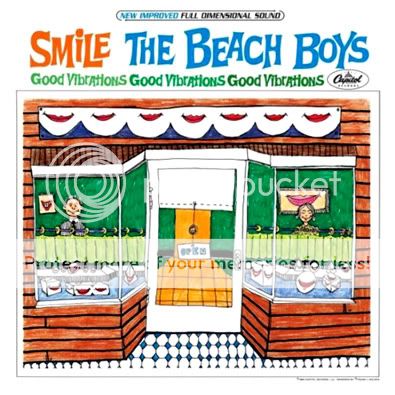
Tried to smile, gave it all away? 'Smile' lost and almost found.

There is an excellent series of small books on great or significant albums called 33 1/3.  If you are interested in popular music, you may want to get hold of these. Each album is selected by the author, each with their individual approach and style, reflecting on the album, the artist, and the times they operate in.  With more than one hundred books and counting in the series- from Serge Gainsborough, to Nine Inch Nails, Johnny Cash, Hole, Public Enemy, Flying Burrito Brothers, Black Sabbath and Kanye West - they cover a wide range of style and times. If you feel so moved, you can pitch an album and have a go yourself.

Personally, I have Swordfishtrombones (Tom Waits) ABBA GoldPet Sounds, and Smile (both The Beach Boys) from the series. So far, only the Beach Boys have two albums covered in the catalogue. Even odder, one of those albums doesn't exist. Not really. Which is maybe why it's there.

Smile was the great unfinished album of the 60s. So the story goes, hearing the Beatles' Rubber Soul, Brian Wilson, the composer and producer for the Beach Boys, was inspired to write an album in which every song was good, no filler. The result was Pet Sounds, often held up as one of the great albums. The Beatles' response to that was Sergeant Pepper's Lonely Hearts Club Band, no slouch itself. Wilson went to top that with Smile, a teenage symphony to God, as he termed it. But pressure from his band, himself, his drug-use, his already fragile psyche, and from the industry saw increasingly-eccentric Wilson crack, and put the tapes away, never he said to be used. Wilson himself went into a long period of psychological trauma, from which he emerged periodically only to fall back, until he made a solo comeback, problematic in itself,  in the late 80s. The man back today producing new music, appearing live around the world, is a scarred-survivor.


But some of the songs did come out on other albums; 'Heroes and Villains', 'Barnyard', 'Vegetables', 'Momma Says' 'Wind Chimes', 'Wonderful' and 'Surf's Up', the song that prompted Leonard Bernstein to call Wilson a genius, all made their way onto other releases, some as whole songs, some as fragments. (Van Dyke Parks, Wilson's lyricist for Smile, suggested 'Surf's Up' be put on one album and used as the title instead of the planned Landlocked, and the album should sell a million. He was right.) Wilson's magnum opus, 'Good Vibrations', previously released as a single, was the band's first million seller and was meant to be the album's climax. Why that never happened has been the topic of books, movies, articles and countless discussions and arguments.

The Beach Boys next album instead of Smile was Smiley Smile, which Carl Wilson described as a bunt, rather than a home run. The Beach Boys stumbled ahead of the game here, with an album whose production was simpler and more direct. Dylan and the Beatles were both to offer much simpler albums in its wake. Hopes that Smile would ever see the light of day faded and fans responded with pirated bootleg versions, arguing over which songs would make the album and in which order. My favourite comment of all time, about just about anything on the internet, was one fan who declared, "I don't care what Brian Wilson says, [name of song] was never going to be on Smile!"  If that doesn't sum up the world of internet comments, I don't know what does. 

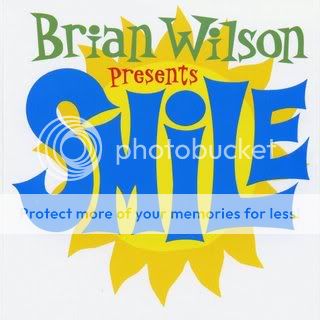
Then in 2004, the unthinkable happened; Brian Wilson toured presenting a live version of Smile, then released a studio album, Brian Wilson presents SMiLE. The arguments started immediately, how much was this the Smile album, really? It was forty years since he had first attempted it, production methods are all so different, didn't he say it should never be released,  the voices were not the Beach Boys, and so on. Indeed, given what had happened to him in the interim, how much was Brian Wilson still Brian Wilson? The album was a critical success, winning a Grammy for Best Rock Instrumental Performance. Then in 2011, the Beach Boys management released The Smile Sessions, doing what the fans had been doing for decades, creating an album from the session tapes. It too was supervised by Wilson but it too is not the Smile album, by definition. In any case, there are now two official versions of an album that doesn't exist.

Being a bit of a Beach Boys tragic, I have both versions in my collection. Wilson's is the better for mine, better finished with a better flow, which only makes sense, as he extensively reworked the material with a band, led by musical director Darian Sahanaja, while Parks reworked the lyrics. The voices are not the Beach Boys, but they're pretty darn good. I can also see why the rest of the band was so worried about it. It is an unusual album, a collection of three suites rather than a traditional pop album. Park's lyrics are poetic, obscure, baroque.  You can hear the influence of Gershwin's Rhapsody in Blue, Wilson attempting to give pop music the same veneer and relationship to classical music as Gershwin did for jazz. The opening number, 'Our Prayer', would not sound out of place next to the 'Humming Chorus' from Madame Butterfly. The album has a ambition and scope that is unmatched in popular music.

In any case, 33 1/3's Smile is an atypical book in the series. Usually, the track by track analysis of the album takes up the bulk of the book. Instead, we have an essay on the Beach Boys and Brian Wilson, the progress of their music and its place in the popular pantheon, as well as an examination of the story and myth of Smile. Only in the last few pages are individual tracks glanced at.  The author Luis Sanchez finds a much more positive story in the tapes from the Smile sessions. Instead of a man falling apart, he hears a man in control of himself, his music and sensitive to the needs of his collaborators. There are other books on the subject that I think are better. As it never actually examines the album itself, it doesn't really fit in with the series. I was disappointed. There is much to discuss with the extraordinary music and lyrics, the differences between the 1966 tapes and the 2004 versions musically, lyrically, as well as the differing track orders proposed by Wilson then and now, but Sanchez does nothing with any of this. It's a missed opportunity.

Why Smile was never finished in 1966 remains a mystery. We can never know what it would have been like, but at least we now have some good educated guesses to go on.

SaveSave

Thursday, July 12, 2012

"Father and son." Henry IV and V


Our picture of the English kings from Richard II to Richard II (which includes Henrys IV. V and VI and Edward IV) is largely shaped by Shakespeare’s plays. Thus we have the evil Richard III, the saintly but ineffectual Henry VI, the romantic if hopeless Richard II, the warrior-playboy Edward IV and the glorious Henry V. But Henry IV is oddly elusive despite appearing in three of the plays, two of which bear his name. As Bolingbroke he seems to have no inner life as he moves remorselessly to the crown. As king, he is always on guard, facing rebellions from within and without England, and even within his own family. It is not a role that attracts the great actors, and is overshadowed by Prince Hal, Hotspur and that great glorious force of life Falstaff.

But both Henry IV and V may well have been unfairly treated by Shakespeare. (And let’s not get into Richard III.) Henry IV overthrew a tyrant to the general acclaim of his countrymen, and through tenacity, courage, military prowess and mercy, left his son a secure throne, and set England on the path to Constitutional Monarchy. Henry V was both a religious hypocrite and fantatic, not afraid to go to war in the name of God and sacrifice common men to secure his own glory. So argues Ian Mortimer in his two books The fears of Henry IV: the life of Engand’s self-made king, and 1415: Henry V’s year of glory.

Mortimer, as I’ve mentioned before, writes exciting readable histories, and is not afraid to be inconclastic without being gratuitious. His books are well-researched and well-argued. Henry Bolingbroke is a rounded believeable character, far-removed from the politic and guilt-ridden character in the plays. His relastionship with his two wives, his problematical relationship with his eldest son, and his relationship with the lords and powerful of his time are all brought to life in fascinating detail.

The fears of Henry IV is a conventional biography in form, while 1415 takes a very different approach. He studies wills, diaries, letters, account books and other sources to create an almost day-by-day look at this crucial year. Sometimes this can became, I found, a little tedious but on the other hand it serves to bring the era to life in compelling detail. The Henry of this book is colder, more machievellian than Shakespeare’s, while still being a great king and warrior.

Mind you, Shakespeare’s Henry V, on a close reading, is not quite the straightforward hero of popular thought. Through the characters of Pistol, Nym, Bardolph, as well as Fluellen and Williams, we see the king as a powerful man who uses the little people as a tool on his way to glory. The ghost of the rejected Falstaff lurks nearby, and makes us query this man’s actions and rhetoric. Harry is a great king, but a great king is not necessarily a great man.

Having recently played in a production of Henry IV 1, which prompted me to read both these books, I wonder at Shakespeare’s great design of his plays. Shakespeare, I have no doubt, wrote on the fly, without too much revision or planning. But still, having written the plays covering the War of the Roses, he was then prompted to go back and write the story of the lead-up, from the deposition of Richard II. I wonder now if Shakespeare, as a loyal subject of Elizabeth I, didn’t see the deposition of Richard, the annointed monarch, as a great sin, that in almost Greek fashion could only be extirpated by the death of all involved, whether that involvement was their own or their family’s. Only when all the Plantagenants were dead could true peace return to the realm. It’s an attractive theory, attractive in the sense that it can never be disproved. But ‘tis mine, and I will have it.

Wednesday, July 11, 2012

"None so blind." AIDS and America


I don’t often have visceral reactions to book. Sure they can make me laugh, make me cry, but until I read  And the band played on: Politics, people and the AIDS crisis, I’ve never thrown up in my mouth a little. And it wasn’t the revelation of various more extreme gay sexual practices (which oddly I seem to have been largely aware of) or the descriptions of the diseases that suddenly were infecting young men with horrific results, nor the horrid hatred that was revealed against gays. No, it was the reaction of a bathhouse owner to the threat of closure.  For those of you not in the know, the bathhouses were places where gay men would have multiple anonymous partners, and as such were one of the hubs of the American AIDS crisis. One of the owners turned to a doctor after a meeting and said, “What do you care? We make money when they come here, you make money when they get sick.” Another said, “There is no evidence that AIDS is a sexually transmitted disease.” Togther, they made the bile, or something, rise to the back of my throat.

The AIDS epidemic, as author Randy Shilts, says, didn’t happen to America, it was allowed to happen. Between “not inflaming the homophobics while not offending the gays”, government indifference, from all levels and all parties, scientists arguing over funding and credit rather than doing research, and gay activists more worried over their civil right to anonymous multiple partners than the lives of others, AIDS got a grip in America in a way that could easily have been, if not avoided, certainly minimised. It’s a book that will make you angry and saddened.

At the same time, you meet men and women, gay and straight, who were not afraid to tell the truth, to take on the problems of trying to deal with a disease that was either being ignored or denied, working with little or no support, inadequate or no funds, watching friends, loved ones, patients dying around them, fighting in the political, social, economic, and scientific arenas. Some of them ended up with the disease themselves but kept going. Some of the good guys are unexpected. For example C Everett Koop, a Reagan-appointed fundamentalist Christian, was the Surgeon General who treated AIDS as a public health issue, rather than a moral or social issue. It was late but it was something.

Some of the people are inspiring, some infuriating, some touching, some more ambivalent. The infamous Patient Zero, Gaetan Dugas, deliberately was having sex without telling his partners he had the disease or taking any precautions. And yet, while he angers with his actions, he comes across sometimes as a tragic figure, tormented by chance and his personal demons. Although Shilts has been accused of creating a gay bogeyman in Dugas, I thought his portrayal was compassionate without losing sight of Dugas’s role.

The book covers the year 1980 to 1985 in detail, culminating in Rock Hudson’s announcement of his disease, when AIDS finally became part of the public discussion. Apart from the social and political story, it is also fascinating to read how a new disease is recognised, found, defined and isolated. And for a book full of science, technical terms, and government departments and acronyms, it’s quite the page turner. Its believed AIDS arrived in the US in 1976 with the Bicentennial celebrations. Before then it was already in Africa and France. Only in America, because of how it first presented, did it become known as the gay disease, with disasterous consequences worldwide. Shilts was the only journalist to follow the story from the beginning, and was uniquely placed to write this book. We should be grateful he did.

There is still no cure for AIDS, only treatments. As more young gay men, as I am told, are thinking AIDS is no longer a threat, this book may still be timely reading.

Wednesday, May 30, 2012

"The Unforgiveable Sin." Myra Hindley and the Moors Murders


It’s one of the more famous mugshots in the world – a sullen looking peroxide blonde with mascaraed eyes, glaring at the world, her eyes devoid of emotion. Or is she wearied, the lack of expression due to exhaustion? The woman is Myra Hindley, who with her boyfriend Ian Brady murdered at least five victims, including children, after torturing and raping some of them, between 1963 and 1965. At least one victim is yet to be found, still buried on the moors.

For many, Hindley was the picture of evil. We will never know to what extent she participated in the murders themselves – Brady and Hindley’s testimony conflicts on this point – but we know she lured the children into the car, was present at the torture of Lesley Ann Warren and watched while Brady swung a hatchet into the head of Edward Evans, their final victim. Brady never denied his activities, once convicted, but it was Hindley who received the lion’s share of the public oppobrium and hatred.

There are a number of reasons for this. That a woman could participate in such activity was much more shocking than a man. But as Carol Ann Lee discusses in her book One of your own: The life and death of Myra Hindley, it was Hindley who kept her name in the public eye, who claimed innnocence, who made public criticism of the parents of her victims, and who seemed to completely misunderstand the public conception of her and her crimes. Despite high profile supporters, her reception into Catholic Church and continued application for parole, Hindley died in prison, unforgiven by society. Ian Brady, who never applied for parole, is still in prison, currently fighting to prove himself sane, so as to give himself the capacity to suicide. The families of their victims still suffer, fifty years on.

What makes someone a genius is a mystery. So is what makes someone evil. There is no particular reason why Hindley turned out the way she did. She had a brutal childhood, but as even she admitted, no more brutal than that experienced by most children in her neighborhood. Brady’s upbringing too was uncoventional but provides no explanation. Both were intelligent and enjoyed poetry and classical music. They were aspirational, yearing to escape their working class origins. Look as you might, there is no clue, no ‘ah-hah’ moment, to explain Brady’s yearning to hurt children and Hindley’s willingness to help him.

It’s entirely possible that if Brady and Hindley had never met, then neither would have participated in any such activites. Hindley’s defenders claim she was under his spell, enthralled to a charismatic psycho. She claimed to be afraid he would hurt her family if he did not go along. But these explanations pale against her actiions both during the murders and after. She did not claim remorse, but rather innocence. Innocence! As if she bore no repsonsiblity for her actions. She wondered in public why the families of her victims were so unforgiving.  In a private letter, she suggested one mother should ‘get a brain transplant.’

This 2010 book is as dispassionate a book as you could hope to find on the subject. It tells the story clearly and investigates the murder and the mistreatement of the victims unsensationally. Lee presents Hindley’s version of events, but also Brady’s where they conflict and the story as suggested by the evidence. She captures the pain of the families and the police involved in the investigation, and its lasting effect. 

Was Hindley rehabilitated? Could this woman have been allowed back on the street without fear? But who would dare take that chance? It was Graham Greene who wrote of the strangeness of the mercy of God. Perhaps God forgave Myra Hindley, as she liked to think Being neither fundamentalist nor atheist, I don’t claim to know how God thinks. But I cannot blame those who could not bear the thought of Myra Hindley enjoying one day of freedom, after what she did to their brother, their sister, their daughter, their son. If there is an unforgiveable sin, it is hurting a child.

Wednesday, March 21, 2012

"Without a hitch." Christopher Hitchens


Don’t read Christopher Hitchens’ essays last thing at night. Not that he’s frightening, it’s that he’s like Maltesers – you can’t stop at just one. I spend some night sitting up in bed, reading Arguably, a 2011 collection of essays and columns covering the breadth of his career.

And it is a breadth of subject as well as years. Reading some of the less-informed commentary on his death, you could be forgiven for thinking he had written one book, God is not great and had only one subject, atheism. Hitchens was able to turn his mind to many topics, cultural, historical, political and yes, religious. His writing is elegant, well-informed, witty, intelligent and compelling. I don’t think he ever wrote purely as a provocateur, but he was never afraid to offend nor did he ever curb his opinion to follow a popular line. He knew what he thought, and more importantly why he thought so, and was able to argue it lucidly and entertainingly.

Of course there are areas where I disagree with him. Oddly one day I met someone who knew I was a Catholic, and because of that, was surprised that I liked Hitchens. It was an example of a new intolerance I see creeping in. Just because I disagree with him on God, doesn’t mean I have to reject him and all his work. It’d be astonishly dull to read a writer with whom I agreed on everything anyway. Why bother?

But I was thinking of another topic. In 2002, Martin Amis (who with Clive James and others used to share a regular boozy Friday lunch with Hitchens) wrote Koba the Dread: Laugher and the Twenty Million, an examination of the reign of Stalin and the odd attitude the left wing has taken towards Communism then and now. He related a story where Hitchens told a story at a speech about his days as a Communist, and got a laugh. Amis wondered if Hitchens had related a story about his days as a Blackshirt, whether he would have got the laugh, or even been a working writer in modern Britain.

To me he raised a fair point: why do we still look at the USSR, with the Great Terror, the gulags, the use of famine as a tool of oprression, the twenty million dead (some sources would say more), as somehow all right, well-intentioned, while Nazi Germany is beyond the pale? Why is left wing extremism somehow not so bad, while right wing extremism is the greatest form of evil ever? To put it another way, why are we not as appalled by Stalin’s Socialism within One Country as we are by Hitler’s National Socialism? After all, to quote the political pundit Clint Eastwood, if you go far enough right you meet the same idiots coming from the left.

Hitchens didn’t believe this was so. He accused Amis of coming late to the information about the terrors of the USSR, and assuming no-one else knew about it either. I think Hitchens has made a similar mistake. He knew about it, and so assumed everyone else must know about it. And it still doesn’t explain the laugh – in fact, if they do all know about the horror of Stalin’s reign, the laugh becomes even more sinister.  But I believe there is an enormous double standard in our attitude towards left-wing totalitarianism and right-wing totalitarianism.

In another column, Hitchens supplies an example of this very phenomenon. He is reviewing the third volume of Victor Klemperer’s diaries. Third? Sure there were only two? Yes, two best-selling volumes about life under Nazi Germany, but a third volume, of life under the Communists in Eastern Berlin, could not get a publisher in the US nor as far as I can tell in Australia. And here it is! A book that tells of life under the Communists cannot get a publisher, even though the author had two best sellers! The interest, the market, is not there. We simply don’t take the terror of Communism with the same gravitas as we do for the terror of Nazism. And why that is, is a question of great interest. Hitchens never makes this connection, and so never turns his considerable mind to it.

But disagreements and argument were the stuff Hitchens thrived on. His work is provocative and entertaining. As a writer and as a man, he was courageous. Everyone is entitled to an opinion. Every one is free to write those opinions and get them published if you can (or blog/twitter them). But it is only if you bring the comparable intellect, knowledge, and integrity that you can be as respected as Christopher Hitchens. I suppose he would have thought me a complete idiot, being religious and all.  But I too am sorry I will never again reading something new he has written.

Thursday, March 8, 2012

"Oh Godohgodohgodohgod" - Three books on religion.


This has been a long time coming. Largely this is because this is dealing with a large topic. And a topic that seems to have travelled from something you just didn’t talk about to something that people won’t shut up about. And no, it’s not homosexuality.

I refer to religion. When I were a lad, it was one of those topics you didn’t discuss. Largely this was due to social niceties, but also a recognition that religion and belief was a deeply personal issue and perhaps one that defied conversation. Now of course it is the topic of best sellers, TV shows, political rallies and more. This may well be healthy in some ways but it has also unleashed a wave of ignorance, anger and intolerance.  And not all from the religious nutters.

That some Christians fail to live up to their ideals is not new. In fact, it’s one of the central ideas of Christianity, that life is a struggle to live up to those ideals. Of course, some of the failure has been spectacular, deliberate and evil. Christian churches, and others, have been responsible for some awful and distressing activities both as an institution and through actions of individual members.

That some liberals fail to live up to their ideals is less well-recognised. The intolerance, arrogance and plain rudeness of some louder atheists is astonishing, more so for their own failure to recognise it in themselves. They cry ‘hypocrite’ but forget their own. In Baudelaire’s words (via TS Eliot) “You hypocrite reader! My double! My brother!” (My translation but I think it’s right.)

So virtue and faults are on both sides. Sure, atheists haven’t killed nearly as many as believers have but thanks to the Soviet Union and Red China, the Khmer Rouge and many others, they’ve done the the best they can to catch up. A friend of mine suggested they killed believers because of their ideology so they weren’t really atheists. That their ideology was explicity atheist didn’t seem to bother him. On the other hand, it allowed me to develop another theory. No-one who kills someone else for their beliefs can be said to be living up to the example of Christ, so no Christian has ever killed anyone. Phew! That’s a load off my mind.

This is supposed to be a book blog. Here’s some thoughts on books I have read lately.

I’ve long thought that looking for a scientific proof of God is like looking for a mathematical formula for Hamlet. It’s a silly thing to do to start with, and has nothing to say about maths or drama. No-one would dream of looking for a mathematical proof for Hamlet but those who think there should be scientific proof of God include some luminaries as the Fundamentalist churches, Isaac Newton, Richard Dawkins and Christopher Hitchens. Even the intelligent are not immune from stupid ideas. Of course the fundamentalists and Ditchkens (in Terry Eagleton’s phrase) come to rather different conclusions, but it's a question simply not worth asking.

Terry Eagleton is an atheist and a Marxist and his book Reason Faith and Revolution: Reflections on the God Debate is a book that will bring comfort to neither atheists of the Ditchkens variety or believers. “Ditchkens” is his expression of views that Dawkins and Hitchens hold in common, just to save himself typing ‘Dawkins and Hitchens’ all the time. He is very careful to note where they vary, most notably of course in the quality of writing. Hitchens, it goes almost without saying, is the better writer. He finds their arguments for atheism shallow and poorly argued, and explains why.

Mind you, he is no less harsh on the Christian churches. The first sentence of the book is “Religion has wrought untold misery in human affairs.” He also recognises the positive role the Church as played, pointing out, for example, that the Church was the only organisation offering education and health care for the people for centuries.  However, he says the Church has betrayed the essentially radical message of Jesus, becoming part of the establishment to which, he maintains, Jesus was opposed, perpetuating the evils Jesus was trying to destroy.

While this book is slim, it holds some big ideas. His discussion of the nature of God is breathtaking. The book can be read with some ease, although some sections do require strong concentration. It is well worth it though, no matter what your beliefs are.

Karen Armstrong is a former nun and former atheist. Her writings on God and religion are dense, well-researched and well-written. However, they are not light reading. In her introduction to The case for God: What religion really means, she replies to those who describe one of her books as “really hard,” with “Of course it was. It was about God.” Her opening sentence is a telling one as well: “We are talking far too much about God these days and what we say is often facile.” Religion and theology is one of those topics that those who have done no reasearch into feel that they can comment on intelligently. It is a topic that deserves more than catchphrases and cheap point scoring, which is too often the way, from both sides.
The main thrust of this book is that we have lost contact with the orignal idea of God and tried to reduce him (or it – it is difficult to know what words to use) to a domestic, human creature that should share our ideals and values. In fact, she said, it is possible for a believer to say God does not exist, not in the sense that you or I exist. God is beyond our words, our minds. The Bible is not to be taken literally and it is only a recent idea that it should be. It is a book that needs to be continually reinterrogated. As a series of books written by multiple authors over the course of centuries, you’d think that would be an obvious thought but too many believers and atheists want to think of it a monograph. It was never meant to read as a novel. Both Jewish and Christian tradition involved the continual discussion of the Bible and its meaning, a tradition sadly lost in mainstream Christianity.

The word, the idea, that she thinks we need to rediscover is apophasia – that God is beyond definition, beyond our language. Instead, God is an idea that we should continually contemplate, question, and meditate upon. A residual of this idea, the contemplation of the ethereal, can be found in the Catholic Mass with its music and rhythmic chants of prayers, moving away from everyday language. Other religions have held on to this idea more strongly and more explicitly. It is an idea that appeals to me strongly I must admit. If there is a God that can create universes, what on earth makes you think you should be able to understand how God thinks?

On a lighter note, (thank God you might be thinking – even you atheists by now) is Peter Manseau’s Rag and Bone: A journey among the world’s holy dead, a combination travelogue and exporation of the world of relics: those bits of the revered dead or their possessions that are still in the hands of their followers and fellow believers. The book is irreverent without being disrespectful, and discusses relics from Christian, Muslim and Buddhist temples, (Judaism has no tradition of relics) that range from preserved bodies to a whisker from a beard. He ponders their provenance, their use and their meaning, both in themselves and what they mean to those that travel to see them or dedicate their lives to protecting them.

Relics are an odd business and always have been. Manseau notes the three skulls of John the Baptist that were doing the rounds for some time, as well as the sheer amount from the foreskin of Jesus (who must have been impressive, if you get my meaning). Mary apparently had the foresight to preserve breast milk for future generations. Other relics are more likely, including those with more recent provenace. But it is an interesting topic and Manseau writes well.

I have been to San Pietro in Vincoli (St Peter in Chains) Church in Rome, and in a glass case there are chains that are said to be the ones that held Peter when he was imprisoned. It’s possible – he was an important figure before he died, he may well have had followers among the jailers or at least people who knew where he had been held, and once the prison was demolished or altered, perhaps the chains were kept. Is is plausible? I don’t know. Does it matter? I suspect not. Go to the church anyway when you go to Rome. Michelangelo’s Moses is there, and well worth seeing. It’s only a stone’s throw from the Colosseum.

Perhaps those that say we should get rid of these things that divide us and have brought much misery hatred division and horror into the world, no matter what good it may do or how well intentioned it may once have been, are right. But politics will always be with us. Man, they say, is a political animal. I think he is a religious animal too.

Saturday, January 7, 2012

"The mystery of things." Bomber Harris, Orson Welles and Tom Waits - together at last!


Biographies have changed. Like other history books the authors aimed for a impersonal detached and objective tone. Now, with changes in taste and philosophies, the authors’s voice has become much more idiosyncratic and for mine, obtrusive. When Pamela Stephenson, for example, is writing about her husband Billy Connolly, such a personal approach may be justified. But many biographies these days seem to be written in a much more direct even chatty style, even when they don’t enjoy such a personal relationship with their subject.

The three latest biographies I have read have spread across the gamut of modern biography. One is old-school objective, another focussing on one section of its subject’s career, and the third an unauthorised biography of a still-active artist covering his entire life.

The first was Bomber Harris: His life and times the life of Arthur Harris, who led Britain’s Bomber Command during World War II. Harris still a controversial figure and Bomber Command’s tactics are still the cause of argument. But from Dunkirk through to Normandy, bombers were the only way Britain could fight against Nazi Germany and give support to the Russians on the Eastern Front. After the war, Albert Speer, Hitler’s Minister of Armaments, said the damage done by the bombers, the extra guns and troops stationed in Germany to combat them, was as effective as a second front and a large part of the reason Germany lost. This still leaves plenty of room for arguments about tactics and strategies, and morality.

There is no easy answer but the author fairly lays out the facts, opinions from others from the era, and gives differing conclusions from other historians, while presenting his own findings. In the end we get a pretty clear picture of the man both as a person and as a military commander, his strengths and his flaws. If the book is somewhat dry to read, and does get a bit bogged down in detail, it does what it sets out to do: tell the life and character of Arthur Harris.

The second book is not quite a biography but I’m not sure what else to call it. Clinton Heylin’s Despite the system: Orson Welles versus the Hollywood Studios examines the Welles’ Hollywood career, from Citizen Kane through to Touch of Evil from when he had complete control of his film to becoming a director for hire. Here the author is not afraid to make his voice heard at all and is quite scathing about a number of previous biographies of Welles, as well as praising a few others. He is especially scathing on half-arsed psychological assessments of Orson Welles that ‘explain’ the number of films he did not finish. By contrast he shows the hurdles the Welles had to overcome in terms of budgets and studio politics. These are real, identifiable and demonstratable. And as an explanation of Welles’ career, much more satisfying.

Welles’ personality of course did not help him in playing studio politics. He was never afraid to call a shovel a shovel or an idiot an idiot. He did have a tendency to indulge himself at some expense to his employers. But he deserved better than what he got. Welles’ control of his film Kane was unprecedented but now it is not uncommon. Directors now have complete control of their films and what do we get? More Kanes? No, we get “Indiana Jones and the Kingdom of the Chrystal Skulls” and the Star Wars prequels. It takes more than total control to make good art

Heylin also gave me an insight into Welles’ films I had not had before. Welles’ is a Brechtian film-maker, drawing attention to the techniques of film as you watch it. Also, as a result of his work on radio, he had a much more interesting and integrated approach to the use of sound in film. Even today he would still be a radical in Hollywood. When he was able to get these factors together, it made Welles’ films identifiable almost at a glance – and a listen.

He also puts to bed, for mine, the theory that Welles did not write Citizen Kane, but rather, at best edited what Herman J Mankiewicz wrote. Simply put, Mank’s scripts before and after Kane was formulaic pot-boilers. Welles on the other hand was making films that challenged Hollywood’s aesthetic, narratives and techniques for the rest of his career. Welles was always ready to give Mank credit when it was due, the  ‘Rosebud’ Macguffin but one example. It’s time some of his detractors gave Welles the same courtesy.

The next in this biographical triumvirate is Low side of the road: The life of Tom Waits  by Barney Hoskyns. I am an enormous fan of Waits, the wide range of his musical styles and his fun, provoking, often moving lyrics. Hoskyns is open about the music he likes and the music he finds not so essential. He is also ready to admit that others may disagree with his assessment - a radical approach for a critic. This is an unauthorised biography which often means a hatchet job, but not in this case. This is an admiring biography, while not shying away from aspects that Hoskyns does not find as admirable. It’s an entertaining and informative read. I was delighted to read that all the idiosyncratic names that pepper Waits' work are from people he has known.

Waits has lead an interesting life both professionally and personally. But unusually for these times, he keeps his private life very private. He also believes that an artist’s work should speak for itself and not be interpreted through the narrow lens of autobiography.  This is part of what makes Waits such an oddity. All art is supposed to be confessional and revealing one’s private life is supposed to be a sign of honesty. Both these ideas, though popular, are questionable. (Incidentally, Arthur Harris declined several offers to write his autobiography. He thought he had said quite enough on the subject.)

Waits and his wife and collaborator Kathleen Brennan asked people not to talk to Hoskyns, and Hoskyns is quite open about that. However a number of people did speak to him, and Waits himself has a sheaf of interviews published over the years, including several with Hoskyns and the result is a good read, a good biography. Once again, it had me going back to the music to listen to it with new ears, always a good sign.

Three books, three different approaches. All three are worth reading, but do any of them crack the mystery of their subject? Ultimately no. Where talent for music, film or leadership comes from is unsolvable. Welles and Waits have given us great art, Harris is one of those responsible for our freedom. They are imperfect as we all are. Perhaps in the biggest terms, biographies are another tool in our ongoing attempt to make sense of human existence and the meaning of life. Or perhaps we just find people interesting.

Friday, September 23, 2011

"I'll think about it tomorrow." Vivien Leigh

I’m not sure what constitutes a tragic life. I’m sure I don’t have one certainly. Some people’s lives might pass through tragedy or end in one, but I’m not sure you can have a tragic life. I mean, the whole life? It seems unlikely. Maybe those who are born into abject poverty or famine and die early, millions of whom we never hear, but outside of that, such a description reads as indulgent.

Vivien Leigh is one of whom it is often said had a tragic life. There was sadness in her life, haunted by bipolar disorder and battling tuberculosis. Her manic episodes were frightening to behold. They contributed to the end of her marriage to Laurence Olivier and cost her work in her career. And the TB eventually killed her at the young age of 53 in 1967, which sounds like the stuff of melodrama transplanted into late 20th Century.

However, reading Alexander Walker’s 1987 biography Vivien: The Life of Vivien Leigh, one is not left with an impression of tragedy. The woman had so much joie de vivre I think she would kick you in the shins if you described her life as tragic or even sad. She had a happy childhood, three long-term relationships with the best men for that time of her life, a career that can be called, with all due caution, wildly successful, and died loved and cared for and wealthy, and had tremendous fun along the way.

Her hospitality and generosity were legendary. She took delight in decorating her stately homes and transforming their gardens. Friends had to put a curb on her spending for opening night gifts lest her impulses lead to her over-spending. Guests at her homes would find fresh flowers from her own garden, cut by her own hand, every day. The weekends, for multiple guests, would be filled with food, drink, games and sports. Few could keep up with her for long, but many loved trying.

She is a testament to the power of positive thinking. Her first sight of both first husand Leigh Holman and second Laurence Olivier prompted her to say to a friend,  “That’s the man I’m going to marry” and she did. She read “Gone with the Wind” and told friends who were positing her and Olivier as Rhett and Scarlett “Larry won’t play Rhett but I shall play Scarlett O’Hara” and similarly declared she would play Blanche Dubois and took that role from theatre to film to her second academy award. Not all her predictions worked out so happily but that’s not a bad average.

All of which is not to dismiss the pain and sorrow that was in her life. But I suppose in the end what you make of another person’s life is the same of what you make of your own. Focus on the positive and things can look good. Focus on the sad and soon that’s all you will ever see. I know where Vivien Leigh would have been looking

Wednesday, September 7, 2011

"The #!@ing words are awfully strong." Stephen Sondheim

The Canadian political writer Mark Steyn, who has a background as a theatre critic, says Stephen Sondheim doesn’t fit into the great American songbook tradition, as it is impossible to sing his songs in any other way that the way he wrote them. And when you see singers doing Sondheim songs, they always do them with the same tempi and in the same style as he wrote them.  You rarely hear jazz singers toy with the melody and pace of a Sondheim song as they do with, say, a Cole Porter.

Sondheim I suspect would take this as a compliment. Whereas Porter, Berlin, the Gershwins were by and large writing for the hit parade, with the particular show the means of delivery, Sondheim is very much writing for the moment and the character in the show. This is as much because of his aesthetic as it is because of changing times and expectations. So if his songs are difficult to understand out of context, and difficult to ‘re-interpret’, Sondheim would say he is doing his job.

(While I’ve got you here, I do find the habit of jazz singers of taking a classic song that we all love and thinking ‘You know, I think this would be improved with a different melody and a different rhythm and hell, a few extra lyrics. What did Porter know?” a bit odd, to say the least. Perhaps I am yet to hear a superb jazz singer, which is entirely possible.)

While Sondheim is currently a gold standard of modern Broadway, he is, like the gold standard, getting on. There have just been celebrations for his 80th birthday, and as someone said, one feature of old age is a tendency to reminisce, what has also been called our anecdotage. When someone like Sondheim starts to reminisce, the best thing to do is encourage him.

And so we have Finishing the Hat: Collected Lyrics (1954–1981) with Attendant Comments, Principles, Heresies, Grudges, Whines and Anecdotes by Stephen Sondheim. This covers Sondheim’s career up to ‘Merrily we roll along’. Each chapter begins with a short essay on the provenance and history of each show. Then we have the complete lyrics, often with deleted lines, cut songs, and alternate materials included. And this is all sprinkled with commentary and anecdotes about performers and collaborators, as the title suggests. A second volume, Look I made a hat, taking the story up to 2011, is in the pipeline.

The endpapers are decorated with Sondheim’s three great principles: less is more, God is in the details, and content dictates form. All of which he explores in the body of the book.

Lyrics, Sondheim insists, are not poetry. This will find disagreement in those who want to push the likes of Paul Kelly, or (God forbid) Jim Morrison as poets. But, as Sondheim discusses, poetry is read at one’s own leisure whereas lyrics work with music defining the timing, pace and time you have to take the words in. If your songs are part of a show, there are even more constrictions. Therefore, the demands on the words are very different. Putting poetry to music is fraught with peril, you either work against the rhythm of the poet, or are trapped by it. By the same token, lyrics without music can be a bit flat and uninvolving. It is the relationship between the words and the music that gives lyrics their power.

And he is very particular about what makes a good lyric. Whatever else Sondheim does with words, he does not mince them. In sidebars on other lyricists, he is not afraid to criticise the greats, from Ira Gershwin to Alan Jay Learner to even his own mentor, Oscar Hammerstein.  He believes his pastiche of W S Gilbert’s lyrics in ‘Pacific Overtures’ is better than Gilbert. He praises too, often the same writer. Sometimes these are an aesthetic judgement, other times technical, sometimes bordering on the pedantic, but always well-argued and based on principle. And he is not averse to bringing this judgement on his own work.

His dislike for his work on ‘West Side Story’ is fairly well known. “Somewhere” he recalls as the “a” song, as that’s the word given an entire bar on the highest point of the melody as if it meant something. “I feel pretty” has a Puerto Rican Girl making sub-Cowardian internal rhymes. (He doesn’t like Coward’s lyrics too much either, for that matter.) But his self-criticism lasts into later and more mature work. So if you’ve picked a flaw or two in a Sondheim lyric, I suspect he got there first.

If you’re interested in musicals or writing, this is definitely worth a look. It’s an expensive book (I bought mine online, again a LOT cheaper) but it’s a book I can see myself going into over and over. What can I say? God knows how fond I'm of Sondheim.

Tuesday, September 6, 2011

"Thank God I'm an atheist." Melvyn Bragg on the King James Bible

As a society we like to focus on the negative. Why this is I do not know. But if an artist wants to be taken seriously, you need to focus on something ugly or horrifying, work out of a Jungian shadow. Everybody is up to something, everyone’s motives are ulterior. Cynicism is the ultimate virtue. But in doing this we miss a lot of positive things. Life is actually a mix of good bad and indifferent, as is art, history and any other field of human endeavour or study.

Everyone’s favourite whipping boy at present is religion. People like to think they gain instant credibility, intelligence and perspicacity by declaring themselves atheist, and dismissing anyone who thinks otherwise as stupid, ignorant, or dangerous – or all three. Do not misunderstand me here; I know any number of atheists who are intelligent, perspicacious, and for that matter lovely, but I also know a lot of people with belief who I would describe the same way. And as for the stupid, ignorant, and dangerous – well, belief or disbelief in God doesn’t seem to affect those descriptors in any way either. Nor am I going to pretend that bad hasn’t been done either in God’s name or by those who claim to represent him, either on a personal or organisational level. Horrible, evil things have been done, and continue to be done, in God’s name. I don’t have to convince you of that.

But what I would suggest, and what is forgotten, is that much good has been done and continues to be done, in God’s name. (And please don’t direct me to ‘debates’ between celebrities, decided by the acclaim of the audience.) And much of it is forgotten and denigrated, because now of course, we are much smarter and more worldly than any generation that came before us, and can see things from perspectives they did not know. I know we think that, because every generation does. But it’s entirely possible we’re wrong.

Melvyn Bragg’s new book The Book of Books: The radical impact of the King James Bible 1611-2011 is the story of the King James Bible and its impact on its readers and the world. As this was the book of the British Empire, and taken to all corners of the globe, you can imagine its impact has been massive. Rather unusually for a modern writer, Bragg focuses on the positive impact it has had. Crazy, right?

The King James Bible is probably the last effective thing a committee ever devised, and while Shakespeare has given us more words, the King James Bible has given us more phrases. It was written to be read out loud, hence the beauty of its language and its rhythms.  And so its impact on our language and our literature has been enormous, right down to the modern day. But Bragg goes much further than that. He suggests modern democracy, wide-spread education, abolition of slavery, female liberation and the war on poverty are all, at least in part, direct results of people being able to read the Bible in their own language, in a beautiful language, and being able to interpret it for themselves.  In doing so, they found the intellectual argument and the spiritual strength to right the wrongs they saw around them. It even led to the Enlightenment and the questioning of the veracity of the Bible itself. A classic own-goal you might think. No, the King James Bible has survived all that and more. There is something to it, much more than can be measured or seen.

We often talk about universal human rights and truths. I’m not sure there is anything natural or universal about them. I think they were created and defined by people, many of them driven by their religious beliefs, and the spread of those ideas to the point where we think of them as universal has been difficult and costly. To dismiss those who did so, and the traditions out of which they came, is insulting and frankly ignorant.

The Book of Books is not as compelling a read as I would have liked but it is well-written and makes a good argument.  And it is a refreshing change from the gloom we have about our history and our culture. Here are admirable men and women and no matter what you think about their beliefs, as Bragg points out, you have to respect the ideas, the strength and the courage those beliefs gave them. These are people who left the world a better place than they found it. How many of us will be able to say the same thing?

The King James Bible: it’s almost worth going C of E for.

Wednesday, August 17, 2011

"Come sing a song of joy my brothers." The Bee Gees


I have a friend who for all her positive qualities has trouble telling stories. Not that her stories aren’t entertaining but she does tend to think every detail is equally important. Which can bog the stories down a bit, or muddle the point. Still it’s a minor fault, particularly as I don’t see her too often and I enjoy her company. Indeed, as she is aware of this aspect of her story telling it’s often charming and fun.

I thought of her as I waded through The Ultimate Biography of The Bee Gees: Tales of the Brothers Gibb by Melinda Bilyeu, Hector Cook, and Andrew Mon Hughes, with assistance from Joseph Brennan and Mark Crohan. It was with some trepidation I took this book down from the shelf in the library. There are three Bee Gees and they have had a long career from early teenage years to the death of Maurice in 2003, which effectively ended the band, but still the book seemed inordinately large. Was there that much to be said about any pop group?

To begin with, I was pleasantly surprised. Before the second chapter was over, both Barry and Maurice had almost been killed in childhood accidents, both before they were two.  Later on, Robin is almost wiped out by a truck. And they become youthful vandals and troublemakers. This was evidently a story fraught with incident and accident and who knows what else.

But then the story slowed down bogged in unimaginable detail. The Bee Gees started performing as children and their career continued for five decades. They also had a career as song writers, a career that started early and continued alongside their performing careers. It’s an important facet of their story. More than once, Barry Gibb and the others have said they would rather be remembered as a songwriters than pop stars. If you doubt me, read this book. This gets stated at least five times.

In addition we get a potted history of just about every band that ever recorded a Gibb Brothers song. Or played with the Bee Gees. Or musicians who played a gig in the Bee Gees band then went on with their own lives.  Not potted in a sentence but in at least two or three paragraphs. And the vast majority of pop bands disappear without trace, so this is tedious detail on bands you never heard of. 

And all incidents seem to require the viewpoint of all three brothers at least, if not their wives, families and business associates. Which might be useful if these views were substantially different but often they’re not. It’s more often reiteration than clarification or diversification. It’s like watching those all-star films where the contract states they all get equal screen time.

And we get press releases and statements, not summarised or effectively quoted but quoted in full. For example, Robin moves to the country with his wife and buys a dog, and as pop stars do, makes a statement about it. This may be of interest to fans, and the private life of one of the Bee Gees is fair fodder for a book like this. But do we need three paragraphs quoted in full on the dog taking to the country life? Wouldn’t one sentence do?

Not that this is not a story without interest. Three brothers creating a band and a sound that lasts for decades, producing some of the great pop songs, with break-ups, arguments, triumphs and low points, personal tragedy, there is a lot to be enjoyed here. (And compared to another family band, the Beach Boys, the Bee Gees are the Brady Bunch.) Meanwhile, their song-writing abilities alone deserve respect. They once wrote three number one hit songs in a fifteen-minute session. We learn their method of working, keeping rhythm by slapping their thighs, they set the melody first and never deviate from it, which may account for the tortured syntax some of their lyrics can have. This should be a scintillating and insightful read. But the book betrays its origins. It’s written by a committee (this approach worked once, with the King James Bible, and never since) and started life as a blurb for a program for one of their concerts. You’ve read one of those blurbs. Now imagine that going on for 700 pages. Not that it’s a hagiography. The band and its individual members get criticised and this is reported fairly.

Its major fault is a lack of editorial nous. There is no sense of what the authors are trying to do except get every thing they know about the Bee Gees into one book. Statements and information is repeated. One wonders if there was a final edit. This book is probably very useful as a reference book but as a read it’s tedious. The index is quite good. This is not damning with faint praise – lack of a good index has ruined many a good non-fiction book.

I wish this book was better than it is. I enjoy the Bee Gees’ music and in interviews they come across as entertaining and fun. The ultimate biography, despite the title here, is yet to be written.