Showing posts with label Murder. Show all posts

Wednesday, January 18, 2017

Let the Trumpfish sound? The history of Huey P Long

It starts with a Democratic Party running a primary where 'the powerful politicos decided the results beforehand and controlled the voting by means both fair and foul", and whose candidate "ignored the rural and impoverished areas." It went into a campaign described "as amusing as it was depressing", and ended up elevating into public office "a man possessing neither culture nor refinement, a man whose every public or private act is offensive to good taste", a man "without a scintilla of respect for worthy womanhood."*

Louisiana state politics from 1928 to 1936 is not exactly a world away.

The man then was Huey P Long, Governor, Senator and Presidential candidate. He called himself the Kingfish, and the nickname stuck. For his admirers, and they ran into the tens of thousands in his home state and through the country, it spoke to his down to earth manner, his humour, his preparedness to get down and dirty if he needed to, and his slogan, Every man a king. To his enemies, who numbered about the same, it suggested a bottom feeder in a swamp, dangerous and difficult to catch.

He took Louisiana out of the dark ages in many ways. He built thousands of miles of roads, bridges over the Mississippi, gave free textbooks to all school children, expanded and improved the state university, and instituted literacy classes for adults. He did so through coercion, a wide system of patronage, extortion, bullying, kidnapping, nepotism (which didn't always work - his brother was one of his greatest opponents), almost bankrupting the state and making himself very rich indeed. He took control of the powerful Democratic Party machine, that tried and tried again to stop him for their preferred candidates, and made it his own. When he died he held operating power in almost every government institution the state of Louisiana had to offer. He was the nearest thing the United States so far has had to a fascist leader.

Huey P Long inspired art, Sinclair Lewis's "It can't happen here," the story of a home-grown American fascist leader, and Robert Penn Warren's "All the king's men" the story of a backwoods politician who turns from idealist to demagogue. Both novels have been turned into plays and Warren's twice into a film, once in 1949 to Academy-Award-winning effect, and again in 2006 to lesser effect. (Some acting is so bad, someone once said, only a great actor is capable of it; hello Sean Penn.) The art, it must be said, had no effect on him. (To be fair, he was mostly dead at the time.)

I first came across the Kingfish when I saw the second half of a Ken Burns documentary. At the time he reminded me of Queensland Premier Joh Bjelke-Petersen who likewise took an economically backward state into the twentieth century by fair means and foul. But the Kingfish was Joh only more so. Both used the elite branches of the police service for political purposes, but Joh never set them on political opponents, brandishing their machine guns, forcing them out of buildings. Nor did Joh ever get into fistfights on the floor of parliament. Or kidnap anyone.

Long came to mind more recently for obvious reasons. People want to compare Trump to Hitler, largely because Hitler is one of the few people from history who is generally known. If you don't like someone's politics, there's no-one else to compare him to. It's easy, and generally unhelpful. But he reminded me of Long - the vitriolic attacks on opponents, the disdain for the press, the hatred by his enemies, the worship by his admirers, playing to the crowds, and the strong appeal to people who felt forgotten by a complacent government. And the abuse by his opponents of his followers. In Burns's documentary there is footage of a politician dismissing Long's appeal as merely to "the ignorant in distress", as if dismissing them with the former epithet meant you could ignore the latter. And in the end, Long was assassinated. People are already hoping the same will happen with Trump. Too often people opposed to violence and hate find both quite acceptable if aimed at someone they don't like. 

Long also built an enormous tower to his own memory. It's the Louisiana State Capitol and you can see it for miles as you drive towards Baton Rouge. It's ludicrous, 36 stories high, looking as though it's a New York skyscraper that got lost, 48 steps leading to the front door, each engraved with the name of a state in order of admittance to the union (Alaska and Hawaii since added to the top step), and marble sourced from around the world in the foyer. It cost $5 million dollars in Depression dollars. God knows what it would cost today. Facing it across the lawn is Long's grave, topped with a large monument, featuring a statue of Long staring at his Capitol. The guides like to tell you that the concrete monument was paid for by his opponents, to make sure he couldn't get out. (Worth doing the tour if you're in the area) So vanity - there's another common feature to the two men. (Also, as self-given nicknames go, 'The Kingfish' is much better than 'The Donald'. What does that even mean?)

But there are big differences between the two, and they're in Long's favour. Long was a dynamic speaker, both with prepared speeches and off the cuff. An opponent tried to appeal to the poor by talking about his childhood in bare feet. Long responded "I can go one better than that! I was born in bare feet!" Long was also extremely intelligent. He studied law for one year (of a three year course), missed most of his classes and failed his subjects. He insisted on sitting the bar exam however, and due to his own hard work and private study, passed. He later argued in the Supreme Court, where noted jurist Oliver Wendell Holmes praised his legal mind. (He often appointed himself state counsel while Governor, another way to line his own pocket.) This was also a product of his prodigious memory, which meant he remembered clients from his days as a salesman when campaigning, nor never let a slight go or an enemy unpunished. (Pettiness - that's something else they do have in common.) He worked fantastically hard travelling thousands of miles (even before he had improved the roads) into the poor and rural areas of the state and made them his own. James Thurber, the novelist, cartoonist and humorist, remembered his almost constant state of movement, even when 'relaxing' in his hotel room.

But the biggest difference is that Long knew how to run a party machine, government departments, and both houses of a legislature. Yes he did so corruptly, but as more than one enquiry found, that was business as usual in Louisiana, taken to the nth degree. Trump has no experience in this area at all. Even the General presidents, Grant and Eisenhower, who had never held public office, knew how to deal with massive organisations under astonishingly adverse conditions, while dealing with the quirks, varying skill levels and interpersonal squabbles of subordinates. I'm not sure what Trump brings to the table, except enormous self-belief. His own party don't like him and he has no legislative experience. He keeps talking of his business nous, but this seems spotty at best. Imagine a general arguing "I won a number of battles to be fair. Not the war, sure, and some of the other battles were pretty grim if I'm honest, but you know, some." So whatever he may want to do or not to do,  you have to query his ability to do so.

Huey P Long for all his considerable faults was fighting for the poor of his state, and did improve infrastructure and education. He lost sight of his ideals, and confused the means, acquiring all the power he could, for the end.   What is Donald Trump fighting for?  Most of the leading political analysts knew he could never win the election, so they can't tell us. We're getting four years to find out together.


Wednesday, December 17, 2014

Sic semper: Killing Kennedy and Lincoln

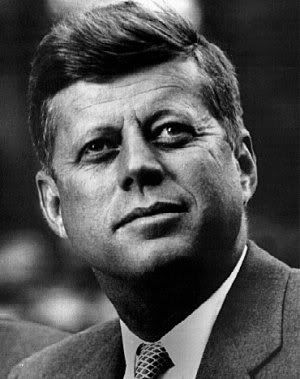
Lincoln and Kennedy are the bookends of presidential assassinations. There were attempts before and attempts since, as well as two other successful kills, but they are, so far, the alpha and omega of that story. Which is partly why their deaths attract the most attention. A quick google search for books on both topics will bring pages and pages of results, let alone web pages, papers, articles popular and academic, films, TV and yes, at least one musical, Sondheim's Assassins, which starts with Lincoln and ends with JFK. We probably don't need anymore - but here goes.


The Kennedy assassination is well-known, on film, and still controversial. How could a single gun-nut shoot down the president? Why was he killed himself while surrounded by policemen days later? Surely there is more to this than meets the eye. Coincidences, conflicting eye-witness reports, and inconsistencies all tend to prove there was a lie being told to the people.

Vincent Bugliosi would disagree. Bugliosi was a successful and experienced District Attorney in Los Angeles, prosecutor of the Manson Family, and the author of Helter Skelter. Having acted as prosecutor in a mock trial of Oswald, his professional curiosity was piqued, and the result is Reclaiming History: The assassination of President John F. Kennedy, a large (1600 pages)  ambitious book that aims to put to rest the idea that anyone but Oswald was responsible for Kennedy's death. (I didn't actually read this book, but instead listened to Edward Hermann reading it. Which was good, but I didn't get any illustrations - of which there are 32 pages!) As for the inconsistencies, the coincidences, Bugliosi will tell you that is part of any real-life murder, which rarely have a scriptwriter to neaten things up.

It would be pointless for me to reproduce Bugliosi's arguments, and more importantly evidence, as it would be tantamount to reproducing the book. The first section, available as a separate book, Four Days in November (which was made into a film, Parkland) details the assassination and what immediately followed, hour by hour, minute by minute, and during the assassination itself, second by second. It is as thorough a retelling of the events from Kennedy awaking on November 22 to Oswald's burial  on November 25 as you could ever find.

The second section goes through the main conspiracy theories and exposes their utter lack of evidence and their fantasist origins. Again, going into detail would be tedious, but in printed form Bulgiosi provided references and notes for you to follow. As an example, take the fourth shot. Oswald, as has been demonstrated several times, had plenty of time  and expertise to make his three shots. But when the House Selected Committee on Assassinations in 1976 , lead by a Senator who believed in the conspiracy theory, handed down their report, they said there was a fourth shot, hence a second gunman and a conspiracy. They could not name anyone who was part of that conspiracy and in fact explicitly ruled out the usual suspects - CIA, the mob, FBI etc. Their only evidence of a second shooter was an audio tape of a motorbike that was supposed to be part of the motorcade, allegedly recording a fourth shot. It was the only evidence for a fourth shot, and the expert who identified it as such said the tape could only be supportive evidence and not evidence in itself. Apart from technical problems with this tape, we are supposed to believe that a motorcycle policeman close enough to hear four shots, 150 meters behind the car, neither revved his engine to join the rush to the hospital, nor turned on his siren, but instead continued in the same fashion as he did before. Moreover, other acoustical evidence on the tape suggests the 'fourth shot' took place a minute after the first three. Far more likely then, it was a motorcycle in another part of town and the shot, static or some other innocent noise.

Not that evidence or lack thereof will put a conspiracist off their pet theory. Indeed, they will say people like myself are falling for the Big Lie, one told often enough so that people will believe it. But consider this: most people believe there was a conspiracy to kill Kennedy despite the utter lack of evidence. What then is the Big Lie and who is falling for it?

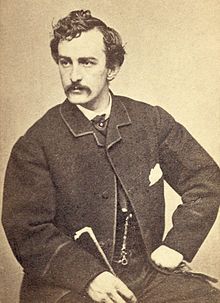
The image of John Wilkes Booth leaping from a theatre box to the stage, and breaking his leg in the process  is imprinted on the historical imagination. It may also be wrong. Having shouted something  - Sic semper tyranis? The South is avenged? A theatre full of witnesses disagree - he walked quickly from the stage through the wings to the stage door, mounted a difficult horse and rode off. The leg was broken, it seems, later on his ride. What else do we picture incorrectly?

Lincoln was only one of the victims on April 14 1865. His Secretary of State Francis Seward was also attacked that night, and left with horrific injuries, while the attacker assigned to Vice-President Andrew Johnson lost his nerve at the last minute. The conspiracy was ambitious in scope, months in planning, had different members coming and in and trying to get out, transformed from a single kidnapping to a planned triple-murder, and yet we only really know one name, that of Booth. And having read American Brutus: John Wilkes Booth and the Lincoln Conspiracies by Michael W Kauffman, I'm not entirely sure Booth would be unhappy about that.  What he would be deeply grieved by would be the high esteem Lincoln is held in today, and why: freeing the slaves, and prosecuting a successful war against the Confederacy. 


Like Bugliosi's book, this is a detailed account of the assassination. As this was a long conspiracy which started before November 1864, naturally the author can't go into hour by hour build up, but for the assassination itself and its immediate aftermath, Kauffman does just that. By the time the other conspirators were tried and hanged it was July 1865 so this book is covering a lot more time in a much more user-friendly length. It is a very readable book, wearing its deep research lightly. Clearly the emphasis is on Booth, his colourful family, his life and motivations. Again there are myths and misconceptions here that Kauffman is keen to clear up. Booth's career was not on the wane, nor was he losing his voice. His plan to kidnap Lincoln and take him to Richmond was a wild one, but not without possibility while the war was continuing. But he dithered so long, Robert E Lee surrendered and people were waiting for the other Southern armies to follow suit. Those who had heard of his plan mocked Booth and his grandiose scheme. The South was falling, Booth was losing face, so out of vanity and bitterness, he crept into the theatre box and shot the President at point blank range.

His other stated motivation was Lincoln's supposed tyranny. And he was not alone in that thought. Suspending habeas corpus and other sections of the Constitution for the duration had made Lincoln some bitter enemies, and more than one of them had wondered out loud and on the record where was the Brutus to stop this Caesar. Booth was consciously following in the Roman's footsteps to save a Republic. But even then he waited too long, by a day. As Kauffman so elegantly puts, it, "Booth had hoped to to kill Lincoln on the Ides and highlight his resemblance to Caesar; but instead he shot him on Good Friday, and the world compared him to Christ."

But Booth's victims went far beyond the President. Any hope of mercy for the defeated Confederacy was gone. Lincoln's wife was eventually committed. Henry Rathbone who was seriously injured trying to capture Booth in the theatre box, went mad with guilt years later, murdered his wife and saw out his days in an asylum. Seward  never fully recovered from his wounds. Booth would write to people with veiled hints, including Vice President Johnson, so as to implicate them in the conspiracy if it went wrong, to the point where lives and careers were damaged and destroyed, and people still ponder if Johnson was part of it. Booth was a vain, calculating and cunning man, who was a successful actor, and a successful assassin, whose actions brought more pain and trouble for the Southern states he was claiming to protect. Sic semper indeed.


Conflicting witness reports, inconsistencies, and coincidences are scattered throughout both the deaths of Lincoln and Kennedy. In one case we don't even consider them important, in the other we use them to create conspiracies to implicate the world. Lincoln died in a simpler time, we in the grip of the parochialism of the present would say, so his death was simpler. Kennedy was our hero, and heroes don't get killed by misfits. Extraordinary men get killed by extraordinary means, vast conspiracies, full of hundreds of evil men. But life is not neat nor well-written. A lone gun nut reaches for his moment, and the rest is history.

Wednesday, May 30, 2012

"The Unforgiveable Sin." Myra Hindley and the Moors Murders


It’s one of the more famous mugshots in the world – a sullen looking peroxide blonde with mascaraed eyes, glaring at the world, her eyes devoid of emotion. Or is she wearied, the lack of expression due to exhaustion? The woman is Myra Hindley, who with her boyfriend Ian Brady murdered at least five victims, including children, after torturing and raping some of them, between 1963 and 1965. At least one victim is yet to be found, still buried on the moors.

For many, Hindley was the picture of evil. We will never know to what extent she participated in the murders themselves – Brady and Hindley’s testimony conflicts on this point – but we know she lured the children into the car, was present at the torture of Lesley Ann Warren and watched while Brady swung a hatchet into the head of Edward Evans, their final victim. Brady never denied his activities, once convicted, but it was Hindley who received the lion’s share of the public oppobrium and hatred.

There are a number of reasons for this. That a woman could participate in such activity was much more shocking than a man. But as Carol Ann Lee discusses in her book One of your own: The life and death of Myra Hindley, it was Hindley who kept her name in the public eye, who claimed innnocence, who made public criticism of the parents of her victims, and who seemed to completely misunderstand the public conception of her and her crimes. Despite high profile supporters, her reception into Catholic Church and continued application for parole, Hindley died in prison, unforgiven by society. Ian Brady, who never applied for parole, is still in prison, currently fighting to prove himself sane, so as to give himself the capacity to suicide. The families of their victims still suffer, fifty years on.

What makes someone a genius is a mystery. So is what makes someone evil. There is no particular reason why Hindley turned out the way she did. She had a brutal childhood, but as even she admitted, no more brutal than that experienced by most children in her neighborhood. Brady’s upbringing too was uncoventional but provides no explanation. Both were intelligent and enjoyed poetry and classical music. They were aspirational, yearing to escape their working class origins. Look as you might, there is no clue, no ‘ah-hah’ moment, to explain Brady’s yearning to hurt children and Hindley’s willingness to help him.

It’s entirely possible that if Brady and Hindley had never met, then neither would have participated in any such activites. Hindley’s defenders claim she was under his spell, enthralled to a charismatic psycho. She claimed to be afraid he would hurt her family if he did not go along. But these explanations pale against her actiions both during the murders and after. She did not claim remorse, but rather innocence. Innocence! As if she bore no repsonsiblity for her actions. She wondered in public why the families of her victims were so unforgiving.  In a private letter, she suggested one mother should ‘get a brain transplant.’

This 2010 book is as dispassionate a book as you could hope to find on the subject. It tells the story clearly and investigates the murder and the mistreatement of the victims unsensationally. Lee presents Hindley’s version of events, but also Brady’s where they conflict and the story as suggested by the evidence. She captures the pain of the families and the police involved in the investigation, and its lasting effect. 

Was Hindley rehabilitated? Could this woman have been allowed back on the street without fear? But who would dare take that chance? It was Graham Greene who wrote of the strangeness of the mercy of God. Perhaps God forgave Myra Hindley, as she liked to think Being neither fundamentalist nor atheist, I don’t claim to know how God thinks. But I cannot blame those who could not bear the thought of Myra Hindley enjoying one day of freedom, after what she did to their brother, their sister, their daughter, their son. If there is an unforgiveable sin, it is hurting a child.

Tuesday, September 20, 2011

"A riddle, wrapped in a mystery, inside an enigma." Erast Fandorin


Detective novels are a nice trick to pull off. There are so many expectations and tropes and the readers can be so alert to tricks that the writer can have a tough time creating something new, different and at the same time, and in the best sense, generic. Part of their appeal is their familiarity, so the author is left walking the tight rope between doing everything as expected and making it different.

Erast Fandorin is the detective hero of a series of novels by Boris Akunin , a Russian essayist, novelist and translator. At the beginning of the series, he is a young man on the lowest rung of the Russian police in the 19th century. He is young, thin and keen. It is his enthusiasm that leads him to discover the truth in the first novel, The Winter Queen, which also sees him leap several ranks in the Russian bureaurocracy.

Akunin has said his aim is to write a detective novel in every subgenre available. He has identified sixteen and so intends to write sixteen Fandorin novels. The Winter Queen is a conspiracy mystery. Now here comes a bit of a trick for English readers. I tried to then read the second novel, so I picked out Leviathan, a Agatha Christie type novel – exotic setting, the world’s biggest boat, a closed set of suspects, and a bizarre murder to kick the plot off. However, while this was the second novel translated into English, it is in fact the third novel in the series, after Turkish Gambit. Apparently that ends in Fandorin being appointed ambassador to Japan, which explains his presence on the boat in the first place. But you read the publishers list, and the positions are reversed. It’s not a huge deal, the stories are self-contained, but it is just a little annoying.

Akunin is a prolific writer with one series involving Fandorin’s son Nicholas, another with a crime-solving nun, a third series with every book in a different genre, and a fourth based on the political rivalry between Tsarist Russian and Imperial Germany, but Fandorin is his biggest success. The Fandorin novels are huge in Russia, selling in their many millions and three of them have been adapted into movies. Like Christie’s Poirot and so many other detectives, Fandorin has distinct characteristics. He is expert at reading people, and likes to list his findings and number them. In gambling he is invariably lucky, so finds it dull. Despite his luck, his life is marked by tragedy, giving him a sadness that along with his good looks and slim build makes him attractive to women, even if he is largely self-contained. His other feature is his vanity, shown by his fastidious dress and wearing a corset.

Akunin delineates the difference between the naïve Fandorin of the first novel and this more experienced character in Leviathan very well.  While the stories are self-contained, we seem to follow the life path of Fandorin much more realistically than Poirot or Holmes. I think this is a more modern take on the series novel. Now characters get older, their lives changed, and some of them even die – Inspector Morse for example – and they now longer exist in a mysteriously extended now, such as James Bond.

These are enjoyable books, the mysteries are good, and solutions satisfying. A couple of times I thought I was a bit ahead of the game in The Winter Queen but mainly by focussing on the least likely suspect rather than anything intelligent or insightful. This is part of the appeal of the detective novel, the reader can feel a little bit clever but the author, or the detective, is a little cleverer still.  Leviathan meanwhile had me flummoxed. Now I’ve skipped ahead to The State Councillor, where Fandorin is framed for murder and has to solve it while keeping ahead of the police. The period detail in the novels is fascinating, the other characters well-delineated, much better than Christie, and the writing, even in translation, literate and readable.  I look forward to reading more.

Monday, July 25, 2011

"Every day when I make my way to the tubby." The Brides in the Bath murders

Everyone likes a good murder. So much of our TV still depends on whodunit, and in shows like 'NCIS', 'CSI:Somewhere' and 'Law and Order: Cops and a Lawyer', the forensic evidence is always a key part of the case. This science has come a long way since police photographers took a shot of the eyeballs of one of Jack the Ripper’s victims, hoping an imprint of the killer would still be there. One of the key figures in this transformation was Sir Bernard Spilsbury.

Spilsbury was a pioneer of forensic medicine in the first half of the 20th Century. Indeed, he became a superstar, his appearances making headlines and his pronouncements accepted as fact. Two cases that made his name were the cases of Dr Frederick Crippen and George Joseph Smith, the Brides in the Bath murderer. Jane Robins’ new book, The Magnificent Spilsbury and the Case of the Brides in the Bath, examines Spilsbury’s early career, which covers both these cases and another, all of which depended on Spilsbury’s evidence to hang murderers.

George Joseph Smith it seems was charismatic and dominating. He would marry women after a whirlwind romance. Then, within weeks, he would then have them make wills with him as beneficiary, get any money from their family that they were entitled to, and murder them by drowning them in a bathtub. He did it three times (meanwhile conning other women out of their money) before he was caught. He used false names so it took a while before anyone noticed the similarities. Spilsbury’s evidence was crucial to the conviction.

Robins in actually far more interested in the women who were the brides than Spilsbury or Smith. She examines their lives, and more broadly the roles of women in Edwardian society, to find what led them to marry and be killed by George Smith.  It’s an interesting and worthy idea and I wish she or her publisher had more courage to back this idea than pretend the main focus is Spilsbury. Why not “The Brides in the Baths”? It is always good to give the victims of famous murderers their due as human beings, and Robins does this well.

There are some odd aspects to the book. In examining the human remains in Crippen’s house, Spilsbury identified some skin as scar tissue, thus identifying the body with Crippen’s wife, while his colleague found traces the poison with which she was killed. In both cases they were looking for what they found. In other words, their findings could well have been coloured by their expectations. But Robins says this didn’t seem to bother anyone. Yet within two pages, she reports the defence barrister asking if they had been told what they were looking for. It seemed to bother him.

And in her conclusion to the Crippen trial, she reveals an alternate defence that was mooted at the time by another lawyer but never presented, which incorporated all the scientific evidence but put a different spin on circumstances and motivation. Then she says the lawyer was suggesting the scientific evidence could not be relied upon. But there is no such suggestion in the theory, quite the contrary. Why say this? I can only conclude that she was so keen to demonstrate that Spilsbury’s work was not as infallible as he, and the courts, liked to think, that she too was seeing what she wanted to see.

And it seems Spilsbury’s work was not as good as was thought. As he got older and more famous, the acclaim went to his head and he was not as careful as he should have been, and his pronouncements made with more certainty than was proper, and accepted by courts too readily. Late in his career, during World War Two, he was asked to assist with Operation Mincemeat, when a dead body was floated ashore in Spain with false plans for an invasion of Sicily. When a suitable body was found, they asked Spilsbury to examine it to see if it were possible to know that the man had not drowned. Spilsbury said there was nothing to worry about but he was wrong. The man had died by taking poison and there were burns in his mouth and throat and any worthwhile pathologist would have spotted this relatively easy. Wrong or arrogant? Did Spilsbury make a mistake, or just assume that a Spanish doctor would not have spotted it? Either way, this error, which was documented in an earlier book, does not make its way into Robins book, though she it suits her argument and she specifically mentions Operation Mincemeat. And to be fair, the ruse was not discovered; maybe Spilsbury was right all along. But Robins doesn’t give herself space to examine the later career of Spilsbury, when his flaws became more apparent. Instead she whips through the latter part of his career in a chapter, and her conclusion is weak from lack of detailed argument.

Spilsbury himself eventually realised his work was deteriorating, and the idea broke him. He gassed himself in his laboratory soon after the war.

This book is worth reading, particularly if you like a good true crime story. However, with a clearer focus and a more open approach, it could have been better.