Showing posts with label Fiction. Show all posts

Tuesday, May 9, 2017

The old sow that eats her young: surviving Ireland

The history of twentieth century Ireland is a complex one, with wars, terrorism, partition, combined with strong social conservatism, religious oppression and economic depression, yet coupled with a strong and vibrant culture and economic revivals, all culminating in a peace process that is still playing out.

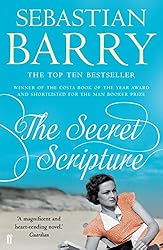
Sebastian Barry is fascinated with this history, particularly the turnaround from 1916-1921, when via wars, terrorism and negotiation, a British Colony became a divided country and loyalties were overturned and vilified. Barry’s McNulty brothers of Sligo, Eneas, Jack and Tom, all live through these times and later decades. How they do so, the effects on their lives and the lives of those around them, form the core of three of Barry’s novels, The Whereabouts of Eneas McNulty (1998), The Secret Scripture (2008), and The Temporary Gentleman (2014).
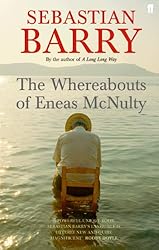
The three novels do not operate as a trilogy in the traditional sense of telling one story in chronological order. Rather we get stories that by their nature overlap, sometimes illuminating each other. It’s more a mesh than a thread. I read them in reverse order of publishing. In reading The Temporary Gentleman, there was a reference to his sister-in-law being confined to an isolated hut and I thought, what’s that story? I was delighted to discover there was a novel that told it: The Secret Scripture. Having read that, I wanted to learn more about the oldest brother Eneas who could only visit his family furtively. So they can be read in any order. And they encourage rereading of each other. We know people remember the same events differently and Barry has captured that very well. 

The narrative style of each book is different.  Eneas’s story is told in third-person. The Temporary Gentlemen is told as a journal, middle brother Jack trying to work out the steps whereby he ends up a remnant of the British Empire living in Africa’s Gold Coast. The Secret Scripture is two journals, one from Tom’s wife, Rosemary, now around a century old and living in an asylum, and that of her doctor, William Grene. 
Both Eneas and Tom suffer from having taken ‘the king’s shilling’. A stint in the British Merchant Marine during the WWI sees Eneas ostracised on his return home. With little other option, he takes a job in the Royal Irish Constabulary and that puts him on an IRA death list. It is his best friend from childhood who is designated to warn him off. For the rest of his life, Eneas is on the run, a wanderer like his namesake. 

Glamorous Jack ends up in the British Navy in WWII, but his main problem is his drinking, which affects not only him and his career but has a devastating affect on his wife Mai and their children. Only in exile, writing his journal, does he start to realise that he may be the bad guy, the person responsible for all that has gone wrong in his life - and his beloved wife's.

Tom also marries a beautiful woman (Barry thinks being beautiful in Ireland is a forerunner of tragedy). Haunted by memories of her childhood, her father, rebels and soldiers of the civil war, Rosemary breaks the social mores of Sligo and ends up rejected by her husband and condemned by the local priest. She is imprisoned first in a lonely shack then the asylum. As she tries to remember events from nearly a century ago, her doctor is trying to do the same, finding old records and piecing together her story. With mental illness in her family, plus decades of confinement, Rosemary is not a reliable narrator, but then, neither is her doctor or priest.

Barry has taken fragments of his family’s history, and turned them into gripping narratives. I would be interested to know how much detail of the other stories Barry had worked out when he wrote the first in 1998, as they work together well. His writing is poetic and lyrical. The endings of all three tend towards the sudden, and I’m not convinced they entirely work, but these are still three excellent novels.

And the mesh is widening. In New Orleans, Eneas wonders if he should stay in the States, perhaps find his great uncle who emigrated there. That uncle's story has now been told in Days without End (2016), a novel set in the US Civil War. Like The Secret Scripture, it has been awarded the Costa Book of the Year. Another visit to the McNulty family beckons.


Wednesday, January 18, 2017

Let the Trumpfish sound? The history of Huey P Long

It starts with a Democratic Party running a primary where 'the powerful politicos decided the results beforehand and controlled the voting by means both fair and foul", and whose candidate "ignored the rural and impoverished areas." It went into a campaign described "as amusing as it was depressing", and ended up elevating into public office "a man possessing neither culture nor refinement, a man whose every public or private act is offensive to good taste", a man "without a scintilla of respect for worthy womanhood."*

Louisiana state politics from 1928 to 1936 is not exactly a world away.

The man then was Huey P Long, Governor, Senator and Presidential candidate. He called himself the Kingfish, and the nickname stuck. For his admirers, and they ran into the tens of thousands in his home state and through the country, it spoke to his down to earth manner, his humour, his preparedness to get down and dirty if he needed to, and his slogan, Every man a king. To his enemies, who numbered about the same, it suggested a bottom feeder in a swamp, dangerous and difficult to catch.

He took Louisiana out of the dark ages in many ways. He built thousands of miles of roads, bridges over the Mississippi, gave free textbooks to all school children, expanded and improved the state university, and instituted literacy classes for adults. He did so through coercion, a wide system of patronage, extortion, bullying, kidnapping, nepotism (which didn't always work - his brother was one of his greatest opponents), almost bankrupting the state and making himself very rich indeed. He took control of the powerful Democratic Party machine, that tried and tried again to stop him for their preferred candidates, and made it his own. When he died he held operating power in almost every government institution the state of Louisiana had to offer. He was the nearest thing the United States so far has had to a fascist leader.

Huey P Long inspired art, Sinclair Lewis's "It can't happen here," the story of a home-grown American fascist leader, and Robert Penn Warren's "All the king's men" the story of a backwoods politician who turns from idealist to demagogue. Both novels have been turned into plays and Warren's twice into a film, once in 1949 to Academy-Award-winning effect, and again in 2006 to lesser effect. (Some acting is so bad, someone once said, only a great actor is capable of it; hello Sean Penn.) The art, it must be said, had no effect on him. (To be fair, he was mostly dead at the time.)

I first came across the Kingfish when I saw the second half of a Ken Burns documentary. At the time he reminded me of Queensland Premier Joh Bjelke-Petersen who likewise took an economically backward state into the twentieth century by fair means and foul. But the Kingfish was Joh only more so. Both used the elite branches of the police service for political purposes, but Joh never set them on political opponents, brandishing their machine guns, forcing them out of buildings. Nor did Joh ever get into fistfights on the floor of parliament. Or kidnap anyone.

Long came to mind more recently for obvious reasons. People want to compare Trump to Hitler, largely because Hitler is one of the few people from history who is generally known. If you don't like someone's politics, there's no-one else to compare him to. It's easy, and generally unhelpful. But he reminded me of Long - the vitriolic attacks on opponents, the disdain for the press, the hatred by his enemies, the worship by his admirers, playing to the crowds, and the strong appeal to people who felt forgotten by a complacent government. And the abuse by his opponents of his followers. In Burns's documentary there is footage of a politician dismissing Long's appeal as merely to "the ignorant in distress", as if dismissing them with the former epithet meant you could ignore the latter. And in the end, Long was assassinated. People are already hoping the same will happen with Trump. Too often people opposed to violence and hate find both quite acceptable if aimed at someone they don't like. 

Long also built an enormous tower to his own memory. It's the Louisiana State Capitol and you can see it for miles as you drive towards Baton Rouge. It's ludicrous, 36 stories high, looking as though it's a New York skyscraper that got lost, 48 steps leading to the front door, each engraved with the name of a state in order of admittance to the union (Alaska and Hawaii since added to the top step), and marble sourced from around the world in the foyer. It cost $5 million dollars in Depression dollars. God knows what it would cost today. Facing it across the lawn is Long's grave, topped with a large monument, featuring a statue of Long staring at his Capitol. The guides like to tell you that the concrete monument was paid for by his opponents, to make sure he couldn't get out. (Worth doing the tour if you're in the area) So vanity - there's another common feature to the two men. (Also, as self-given nicknames go, 'The Kingfish' is much better than 'The Donald'. What does that even mean?)

But there are big differences between the two, and they're in Long's favour. Long was a dynamic speaker, both with prepared speeches and off the cuff. An opponent tried to appeal to the poor by talking about his childhood in bare feet. Long responded "I can go one better than that! I was born in bare feet!" Long was also extremely intelligent. He studied law for one year (of a three year course), missed most of his classes and failed his subjects. He insisted on sitting the bar exam however, and due to his own hard work and private study, passed. He later argued in the Supreme Court, where noted jurist Oliver Wendell Holmes praised his legal mind. (He often appointed himself state counsel while Governor, another way to line his own pocket.) This was also a product of his prodigious memory, which meant he remembered clients from his days as a salesman when campaigning, nor never let a slight go or an enemy unpunished. (Pettiness - that's something else they do have in common.) He worked fantastically hard travelling thousands of miles (even before he had improved the roads) into the poor and rural areas of the state and made them his own. James Thurber, the novelist, cartoonist and humorist, remembered his almost constant state of movement, even when 'relaxing' in his hotel room.

But the biggest difference is that Long knew how to run a party machine, government departments, and both houses of a legislature. Yes he did so corruptly, but as more than one enquiry found, that was business as usual in Louisiana, taken to the nth degree. Trump has no experience in this area at all. Even the General presidents, Grant and Eisenhower, who had never held public office, knew how to deal with massive organisations under astonishingly adverse conditions, while dealing with the quirks, varying skill levels and interpersonal squabbles of subordinates. I'm not sure what Trump brings to the table, except enormous self-belief. His own party don't like him and he has no legislative experience. He keeps talking of his business nous, but this seems spotty at best. Imagine a general arguing "I won a number of battles to be fair. Not the war, sure, and some of the other battles were pretty grim if I'm honest, but you know, some." So whatever he may want to do or not to do,  you have to query his ability to do so.

Huey P Long for all his considerable faults was fighting for the poor of his state, and did improve infrastructure and education. He lost sight of his ideals, and confused the means, acquiring all the power he could, for the end.   What is Donald Trump fighting for?  Most of the leading political analysts knew he could never win the election, so they can't tell us. We're getting four years to find out together.


Tuesday, July 2, 2013

"Where's Eddie?" - Eddie and the Cruisers


Some excellent films have been made of B-grade novels, while some truly terrible films have come from excellent novels.  Truffaut said something like a work of genius is an idea that has found its ideal form of expression. Which may explain why good novels make average films and vice versa.

Eddie and the Cruisers was a failure at the box office but has become something of a cult classic. My brother introduced me to it many years ago. It features Michael Pare as Eddie Wilson, a combination of Jim Morrison, young Elvis Presely and Brian Wilson, and Tom Berenger as Frank Ridgeway, or Wordman, a college kid who ends up the band’s lyricist and keyboard player. After the Cruisers hit the big time with their first album, Eddie is killed in a car crash. The story takes place two decades later, when interest in the Cruisers is revived and someone is tracking down Eddie’s lost tapes, the rumoured second album, and isn’t afraid to kill to get them. It’s a good movie and the music is good even if it rather sounds like what Bruce Springsteen was doing in the 80s rather than rock of the 1960s. (Do us all a favour and avoid the sequel, Eddie and the Crusiers II: Eddie lives! That exclamation mark is a shriek of disappointment.)

I was surprised the other day to walk into a library and see a new edition of the novel, by P F Kluge, sitting on the shelves. One, I didn’t know it was a novel and two, it seemed a bit odd to bring it back. So I borrowed it and have come back to tell you all about it.  It’s not a bad read. The movie kept pretty close to the story, although they have softened it somewhat. The novel is darker and more violent, but I think the scriptwriters made the right call there. I don’t think the tone of the novel and the stakes quite justify the violent ending of the novel, and suit better the pathetic villainy of the movie. But the novel is a loving tribute to the music and the power of the music of the early 1960s, and the terrible power of youthful dreams. The Maguffin of the lost tapes, with the surname, makes me fairly certain that Brian Wilson and the long lost Smile album form part of the inspiration for the Eddie Wilson character, while his sexy onstage persona and reaching for philosophical insight brings to mind the lost Jim Morrison. Perhaps it’s all a bit of anachronistic jumble of rock heroes but it seems to me that’s the nature of popular music, someone new who reminds you of someone else.

Anyway, I had an enjoyable few days reading the book and even ordered a copy to be sent to my brother for his birthday. If he hasn’t got it yet, and this is the first he knows about it – happy birthday AB!

Saturday, May 18, 2013

"You can't go home again." - The fourth book of Gormenghast


Some years ago when I was touring with a show to Melbourne, my friend Eugene Gilfedder and I were browsing in a second-hand-bookstore when he pointed out a book Gormenghast by Mervyn Peake and asked if I had ever read it. I said I hadn’t and he urged me to. The first book of the series was not there though so I didn’t buy it that day. When later I moved to Melbourne to live, I went to the same bookstore and bought the trilogy. And I’m glad I did. Thanks Eugene!

The current big buzz in fantasy is ‘Game of Thrones’ which also tells the story of old families. But whereas the Seven Kingdoms is a country in flux, to say the least, Gormenghast is a massive castle where the Groans and the people that serve them have lived in a manner unchanged for countless centuries. The protagonist, Titus Groan, is born to be the 77th Earl of Groan, and live his life exactly as his ancestors did, dictated by rituals and tradition, the purpose of which have been lost in time.  Outside the castle, a small town surrounds the walls and beyond that, is forest. The world Peake creates is astonishing – gothic, baroque, fantastic without magic or dragons, and the characters are as vivid and memorable as any Dickens came up with. The language is rich and dense, like a thick woolen tapestry of exquisite design.

In the first book, Titus Groan, we follow the inhabitants of Gormenghast from the moment of Titus’ birth through to his ceremonial naming as heir seven months later. The creepy spine though this story is Steerpike, a young man working in the kitchen who connives and murders his way towards power and freedom.

The second book Gormenghast follows Titus from age seven to seventeen, and culminates in confrontation with Steerpike. Both are young men suffering under and fighting the weight of meaningless tradition. But Steerpike’s methods are underhand and violent, whereas Titus simply, at the end, walks out.

Which takes us into the third novel, Titus alone. This is often considered the least of the trilogy and I have to agree. Where we might have thought we were in a medieval castle somewhere, it turns out the world is much more modern. Outside Gormenghast is a steampunk world of cities and cars. Titus’ adventures here are episodic, and while the characters he meets are still memorable, the book never achieves the solid world of its predecessors. Peake himself was already suffering from the neurological diseases that would kill him in his fifties, so perhaps that affected his writing, or perhaps he was striking out in a new direction. The book it seems was never quite finished by Peake though, and that’s how it feels. Indeed, when the BBC made the television series in 2000, they only used the first two books.

Part of the problem is Titus himself. In Gormenghast he is surrounded by richly eccentric characters. Just their names gives you something of their flavour; his father Sepulchrave, his sister Fuchsia, the minister Flay, the cook Swelter, Dr Prunesquallor, Nanny Slag and Sourdust, the Master of Ritual, and on and on. Titus himself is something of a cypher, which works in the first two books but leaves him exposed in the third. Peake had intended two more novels in the sequence, Titus Awakes and Gormenghast revisited as their working titles. But early death, as I say, prevented that. So we are left with two excellent novels and third which though flawed is certainly worth your time in reading.

His widow, Maeve Gilmour, an artist in her own right, found some of Peake’s notes for his fourth planned novel, along with a few fragments of the opening chapter. From this, she wrote fourth Gormenghast novel, which continued Titus’ adventures in the outside world. Whether she ever intended this to be published, or whether she did it as a means of keeping a connection with her dead husband, we don’t know. But her granddaughter found the manuscript in the proverbial attic, and it was published in 2011 under Peake’s original title, Titus Awakes.

Sadly it’s not very good. Titus moves through this story without purpose, consciously letting himself drift where the tides of life take him. He doesn’t ever seem to be in that much danger, and never really in a situation where he cannot extricate himself without too much trouble. You can’t feel too much for this character or what happens to him.

The ending however is quite moving. Titus meets a man three times, in a hospice, in a monastery and finally on an island with his family. The man is clearly an artist and each time Titus meets him, he feels a deep connection with him. And each time, the man is healthier and happier than before. Clearly, even without knowing too much about him, this is Gilmour’s portrayal of her husband, his journey in reverse order to the one that led from Peake’s house on the island of Sark to the hospital where he died. In the end, Titus stays with the artist and his family on their island home. Whether Peake ever would have had Titus come home to Gormenghast, Gilmour did bring him home to his creator.

As a novel, it’s negligible. As an act of catharsis or connection for a grieving widow, it acquires an odd power. I’m glad I read it.

Saturday, October 13, 2012

"Quis custodiet ipsos custodes?" John Le Carre's world


John le Carre’s name is always associated with a specific genre, the spy novel. But this has not stopped him from writing some of the great novels of the twentieth century. Given he was writing about one of the great facts of the twentieth century, the cold War, the clash between civilisations, the West, the Communists, the Terrorists, his books give an insight and ponder they way we were living in that era – and indeed, still live.

His greatest creation is undoubtedly George Smiley. Fat, short, old, academic, intellectual, and cuckolded he is indeed the anti-Bond. But as a Bond novel or a movie is an entertainment for a few hours, time spent with Smiley is time spent considering the nature of our society, its flaws, its strengths and what we will do to defend it, or what we will not do. Which are not ideas that evaporate quickly.

While le Carre’s plots are byzantine, the power of his novels come from what Graham Greene, in one of his spy novels, called the human factor. Who are these people who put themselves on a shadowy front line, commit themselves to a life which means that they can never be truly secure even in their own home, or competely honest with anyone? Which is why a story like Tinker Tailor Soldier Spy can be re-read even when you know already who that spy is. Le Carre loves watching the watchers, and he shares that fascination with us.

I have recently re-read what is known as the Karla trilogy (aka The Quest for Karla or in its latest incarnation Smiley versus Karla): Tinker Tailor Soldier Spy, The Honourable Schoolboy and Smiley’s People. The first is easy found in bookstores and libraries due to the recent, very good film. The latter two it seems are either found in second-hand bookstores or in bulky volumes carrying all three novels.
I borrowed one of these from my local library, and it has two disadvantages. One, its bulk makes it uncomfortable to read on the couch or in bed, and too large to sit in your backpack all day if you want to make it your commute read. Secondly, one feels compelled to read them through one after the other which may become like having too much of anything, slightly sickening and leaves one, as Basil Fawly remarked, wanting less. This compulsion is exacerbated when you have access to the book for only three weeks.

Luckily, I was only reading two novels, and the tone changes between both. The Honourable Schoolboy ranges from London to Hong Kong and is mainly concerned with Jerry Westerby who is a part-time agent chosen by Smiley to follow a lead of Karla’s money being funnelled to a Hong Kong bank.  (Le Carre has said it would have been a better story if he had not made it a Smiley novel. Perhaps he is right.) Smiley’s People is a more intimate story, Smiley following up on the murder of an old agent, which leads to his second direct confrontation with his nemesis Karla. It does form a satisfying trilogy, all the more so because Karla remains unknowable, even to Smiley, and so the strongest conflicts remain those between friends and colleagues.

In the 70s, the BBC televised Tinker Tailor and Smiley’s People, but The Honourable Schoolboy was too expensive to film, and though important was not essential to the duel between Smiley and Karla. The producers of 2011’s Tinker Tailor look like going down the same route. And I have to say, Alec Guiness is still the essential Smiley to me. While Gary Oldman gave a great performance, physically he is all wrong. Still I don’t suppose this keeps him or his producers up at night.

Le Carre’s novels revel in the moral murkiness of espionage, where the good man may have to do bad things for a noble purpose. And ultimately that man’s soul is a casualty of the conflict. In The Honourable Schoolboy, Smiley states his faith:

          To be inhuman in defence of our humanity he had said, harsh in our defense 
          of compassion. To be single-minded in defense of our disparity.  
  
His political masters find this distasteful, and it contributes to his precarious position within the Secret Service. But if we can conjure with the idea of a just war, we may have to accept this as part of the price we pay for our freedom. And hope that there is always someone else who is prepared to pay it.

Sunday, November 6, 2011

"Denizens of the Deep." Kraken


I don’t know about you, but Squiddly-Diddly used to irritate the hell out of me. He was quite clearly not a squid, but an octopus. Actually, he was a hexapus, as he had only six arms. He was some sort of deformed hag-born cephalapod, and they kept pretending he was a squid.  I mean – bloody Nora!

Normally, anything with a cephalapod is enough to rope me in. Twenty-thousand Leagues Under the Sea, The Little Mermaid, any number of documentaries. Not only did I read Peter Benchley’s Beast, I watched the mini-series. It made Jaws look like North by Northwest. Actually, put an octopus and a hunchback into one book and you couldn’t stop me. I’d even pay to see a Nicole Kidman film if there were tentacles and a hunchback. (Now I feel I’ve just described a rather distateful Japanese porn film.) The lastest book to rope me in with promise of many-armed action is Kraken by China Mielville.

(And while we’re on krakens, what the hell was a beast from Scandinavian mythology doing in ancient Greece? And what the hell was it? I know cephalapods. Cephalopods are friends of mine. You, sir, are no cephalopod. )

Anyway, Kraken takes place in modern-day London but we almost immediately shift into an alternate London almost entirely unfamiliar. If it’s ringing bells chiming Neverwhere for you, I was almost deafened by them, right down to a ruthless pair of timeless killers.  A giant squid is stolen from the Natural History Museum, which is impossible, but it’s gone. Its curator, one Billy Harrow, soon finds himself in a world of alternative religions, cults, crime gangs, and magic.  There is a policewoman who is a witch, a talking tattoo rules the underworld with terror, oral messages are sent by post and delivered by street lights. People worship squids and badgers, bullets and the ocean. And somehow, at the centre of it all, is a dead squid in a very large glass case and a fast approaching apocolypse.

Mielville’s alternate London is very different to Gaiman’s. Gaiman’s is on an alternate plane, Mielville’s is here, we just don’t notice it. And Gaiman creates a magical place that I imagine thousands of readers have yearned to experience, while with Mielville, you feel rather glad you don’t know about it. With Mielville, the threatened apocolypse may occur.

My biggest trouble is I was trying to read a Gaiman book while reading a Mielville book. Here is a picture of Neil Gaiman:

Here is a picture of China Mielville:

You’d think their imaginary worlds are quite different, and you’d be quite right.  Miellville’s world is more brutal, more punk, harder and meaner. Characters die painfully and stay dead, no magic rebirths. The world at the end of the book is a very different one from the start, and the main character, and many of his friends and allies, have lost much.

Kraken, apart from being a fantasy novel, seems to be examining the power of faith, in having it, in learning it, and in losing it, what good it can do, and what harm. It being a fantasy, of course some of these effects are more literal than you would expect in realism, but the ideas provoked are interesting and worthwhile.

Mielville‘s greatest weakness, for mine, is his characters. They fail to come alive, which is a pity for they have great potential. I wanted to love them, but it didn’t happen. He also seemed to get lost in the world he was creating, losing narrative pace. There seemed to be a lot of wandering about searching for answers without a sense of the characters getting somewhere.

Still I did enjoy the book and it kept me reading. I may read it again, and read it as a Mieville book from the beginning. I will try another of his novels. He certainly knows more about squids than Hanna-Barbera ever did.

Friday, October 28, 2011

"Get up and go!" A prayer for Owen Meany


The Modern Novel worries me, as I think I’ve mentioned before. Creative writing courses and modern criticism have come together in an unholy alliance to produce unreadable novels we are told are brilliant. However, to be fair, I now think this only applies to a small number of books. Many modern novelists are still holding to E M Forster’s dictum: “Yes – oh dear yes – the novel tells a story.” Not that a novel has to be easy reading. Great writing, like any great art, needs the audience to take the time and the concentration to appreciate it. The novelist didn’t toss off the book while watching TV and eating dinner at the same time. The least you can do is afford the reading a commensurate level of focus.

My own theory of the difference between a popular novel and a literary novel is the quality of the subsequent reading. Many people like to re-read their favourite books, like they like to re-watch their favourite films. But on the revisits, it is the quality books and films that reveal new facets, provoke new ideas where as the popular type let us revel in the comfort of the familiar. To take a film as an example, Where Eagles Dare is a piece of tosh but I love it. If I come across it on TV, I watch it through to the end. I have the same reaction to Citizen Kane but I keep questioning Citizen Kane, the characters, their motivations, and what they do, whereas Richard Burton and Clint Eastwood can keep shooting the Germans till the cows come home and I don’t care. I engage with Citizen Kane, I watch Where Eagles Dare; and enjoy the heck out of both.

I’ve just reread, for the first time, John Irving’s 1987 book, A prayer for Owen Meany. This book knocked me out of my socks the first time I read it, and it did the same again. Even though I could remember the ending (I defy anyone to forget it) this in no way detracted from the journey. If anything, it enhanced it – another mark of a great novel. (No-one goes to Macbeth to see how it ends, someone once remarked to me. On the other hand, friends of mine had never read or seen Hamlet till they saw Brannagh’s version. I was somewhat envious.) It’s been a long time between reads. I suspect I was worried it wouldn’t be as good as I remembered it. A baseless worry as it turned out.

Irving is one of my favourite writers and this of his my favourite work. His books are wonderfully readable, his characters vivid, and his stories are strong. One thing that struck me in this reading was how angry he can be. A prayer for Owen Meany is the story of the friendship between John Wheelwright, the narrator, and Owen Meany, a boy of short stature whose voicebox is stuck in a permanent scream, through the 1950s to 60s, culminating in the Vietnam War. Owen is an extraordinary character.  A tragic accident that marks both their lives convinces Owen he is the hand of God, on earth for a special purpose, a purpose that makes his height and voice necessary. This leads to an exploration of religion, spirituality, fate and belief, not light subjects. Owen’s belief sometimes seems ludicrous, at other time wondrous. While he tells this story, Wheelwright, who now lives in Canada, keeps turning to the contemporary Iran-Contra scandal. This is where the author’s anger is palpable. Yet amid the anger and the seriousness, this is a funny novel, a wonderful achievement. Too often both politics and religion can make people so angry and so serious they are off-putting. Irving avoids that trap with joy and verve.

Irving is openly influenced by Dickens, who shares this gift of turning anger to humour without losing its power. Irving also creates outlandish yet believable characters and byzantine plots.  (I’ve also read this book is influenced by Gunther Grass’ The Tin Drum, but I’ll have to take their word for it. The Tin Drum has long been on my to-read list. Perhaps it’s time.) Nor is he afraid to take on big issues. Here’s a few I can think of just looking at the novel titles: abortion, family, feminism, incest, sexuality, and paedophilia. Sudden violent death is a common trope. And yet, all his books are richly comic. And full of life; funny, bizarre, sad, rich, and wonderful.

A prayer for Owen Meany is now over twenty years old and is still a fresh, entertaining and provoking read. The Iran-Contra scandal may fade in our memory, which is part of the point of the novel, but other government scandals will arise to take its place. What abides, what remains, what endures is what is important. I think that’s also part of the idea of this book. I try to think of why I write about the books I do (not every book gets an entry) so as to attempt to give each entry some sort of theme or spine. I love this book. That’s all.

Wednesday, October 19, 2011

"Tea and sympathy." Alexander McCall Smith


Barbara Cartland wrote 723 books in her lifetime. Can Alexander McCall Smith be far behind? I exaggerate of course, but McCall Smith is a prolific writer. He has five series he is writing concurrently, as well as other stand-alone novels. One series, 44 Scotland St, first appears in print in The Scotsman, before being published as novels. Another is published online in serial form. As far as I can tell, he has written at least sixty fictional works, as well as twelve works on law. So he’s a long way behind Cartland but considering his first work was published in 1978 (and his first novel in 1999), he’s doing okay.

I haven’t read Barbara Cartland’s work, but I have read several of McCall Smith’s. I started reading Espresso Tales, the second in the 44 Scotland St series. This series revolves around residents of the eponymous building, which includes a painter and his dog, a family driven by an ambitious mother, much to the consternation of her 6-year-old son Bertie, a rich but unambitious art dealer, and more, as well as their friends and relations. While the mode of publication is inspired by Dickens’ model of writing his chapters in newspapers, the stories lack any sense of an overarching plot. Instead we follow the doings and misadventures of these people, who are very loveable, knowable and plausible. I was hooked before finishing the novel, and have read all now except the latest. I realised on finishing the second-latest novel, The Importance of Being Seven” these books could keep going forever, if the author so desired. Each short little plot is entertaining, and there are many strands to keep us going.

The other series I have followed is The Sunday Philosophy Club featuring philosopher-amateur detective Isabel Dalhousie, who solves problems both real and esoteric. Each of these novels are self-contained, while there are continuing arcs involving her, her niece, her partner Jamie and so on. In The Importance of Being Seven, there is a reference to Isabel’s baby, so both these stories take place in the same Edinburgh.

So I assume it is the same world as the Botswana of Precious Ramotswe, the lady detective of his most successful series The No. 1 Ladies’ Detective Agency. I resisted this series as I was already hooked to two and I didn’t want to embark on a third. I saw the television adaptation of the first novel, and was so charmed I finally read one of them, Miracle at Speedy Motors. I enjoyed it too, but thankfully have not been pulled into the lure of the whole series. This may be pure contrariness on my part.

The key to his appeal is the word I used, charm. These are charming books, the characters are likeable (except the few we are not meant to like) and they have a wonderful warm quality, and feature small communities of people who know and care about each other. Even the difficult and unlikeable characters are viewed by their neighbours with sympathy and an attempt at understanding. I have written elsewhere of our focus on dark and awful subjects. McCall Smith writes humane, gentle, empathetic stories and they sell like hotcakes. His popularity is evidence to me of a world that craves connection and civility. Barbara Cartland appealed to our dreams of true love, McCall Smith to our dreams for humanity. Perhaps they are as idealistic and unrealistic as each other. I hope not, and I hope he keeps writing.

Tuesday, September 20, 2011

"A riddle, wrapped in a mystery, inside an enigma." Erast Fandorin


Detective novels are a nice trick to pull off. There are so many expectations and tropes and the readers can be so alert to tricks that the writer can have a tough time creating something new, different and at the same time, and in the best sense, generic. Part of their appeal is their familiarity, so the author is left walking the tight rope between doing everything as expected and making it different.

Erast Fandorin is the detective hero of a series of novels by Boris Akunin , a Russian essayist, novelist and translator. At the beginning of the series, he is a young man on the lowest rung of the Russian police in the 19th century. He is young, thin and keen. It is his enthusiasm that leads him to discover the truth in the first novel, The Winter Queen, which also sees him leap several ranks in the Russian bureaurocracy.

Akunin has said his aim is to write a detective novel in every subgenre available. He has identified sixteen and so intends to write sixteen Fandorin novels. The Winter Queen is a conspiracy mystery. Now here comes a bit of a trick for English readers. I tried to then read the second novel, so I picked out Leviathan, a Agatha Christie type novel – exotic setting, the world’s biggest boat, a closed set of suspects, and a bizarre murder to kick the plot off. However, while this was the second novel translated into English, it is in fact the third novel in the series, after Turkish Gambit. Apparently that ends in Fandorin being appointed ambassador to Japan, which explains his presence on the boat in the first place. But you read the publishers list, and the positions are reversed. It’s not a huge deal, the stories are self-contained, but it is just a little annoying.

Akunin is a prolific writer with one series involving Fandorin’s son Nicholas, another with a crime-solving nun, a third series with every book in a different genre, and a fourth based on the political rivalry between Tsarist Russian and Imperial Germany, but Fandorin is his biggest success. The Fandorin novels are huge in Russia, selling in their many millions and three of them have been adapted into movies. Like Christie’s Poirot and so many other detectives, Fandorin has distinct characteristics. He is expert at reading people, and likes to list his findings and number them. In gambling he is invariably lucky, so finds it dull. Despite his luck, his life is marked by tragedy, giving him a sadness that along with his good looks and slim build makes him attractive to women, even if he is largely self-contained. His other feature is his vanity, shown by his fastidious dress and wearing a corset.

Akunin delineates the difference between the naïve Fandorin of the first novel and this more experienced character in Leviathan very well.  While the stories are self-contained, we seem to follow the life path of Fandorin much more realistically than Poirot or Holmes. I think this is a more modern take on the series novel. Now characters get older, their lives changed, and some of them even die – Inspector Morse for example – and they now longer exist in a mysteriously extended now, such as James Bond.

These are enjoyable books, the mysteries are good, and solutions satisfying. A couple of times I thought I was a bit ahead of the game in The Winter Queen but mainly by focussing on the least likely suspect rather than anything intelligent or insightful. This is part of the appeal of the detective novel, the reader can feel a little bit clever but the author, or the detective, is a little cleverer still.  Leviathan meanwhile had me flummoxed. Now I’ve skipped ahead to The State Councillor, where Fandorin is framed for murder and has to solve it while keeping ahead of the police. The period detail in the novels is fascinating, the other characters well-delineated, much better than Christie, and the writing, even in translation, literate and readable.  I look forward to reading more.

Friday, July 15, 2011

"I'm not dead yet." Neil Gaiman and (kinda) Douglas Adams


Phew! After two world wars and the Holocaust – not to mention one of the angriest men to get on a playing field – I was happy to find lighter reading: two novels of fantasy. Both have enormous popular and critical followings, and both bridge the popular and literary genres. They like killing off characters who sometimes aren’t nearly as dead as they appear to be - sometimes. They have something else in common.

Television and film are not the only areas happy to trade on past glories, remaking classics and relabelling old material and presenting it to us as new. They are all after money and a market and the easiest way to sell something is to sell something the buyer already knows and likes and wants more of. And it’s a lot easier than thinking of something new.

However, literature is not immune from this concept. For a while there, it looked as if we were under attack from the League of Living Dead Writers. Virginia Andrews would not lie down, Alistair McLean kept publishing, and Desmond Bagley apparently took his typewriter to the grave, sending his agents new manuscripts.  Closer inspection of the covers of these would reveal other authors “from an idea by” or “based on the characters of”.  To be honest, I’m not sure how many ideas Virginia Andrews had before she died but they seemed to be awfully similar. And these were all genre writers and one could argue how distinctive they were in the first place. Still, one is tempted to brand all this as somewhat cynical.

Douglas Adams however seems a different case. A beloved writer, almost to the point of cult worship in some cases, he had a distinctive voice and worldview. It would seem almost blasphemous to attempt to write more of his material, yet it was his widow Jane Belsen who let Eoin Colfer do just that. In 2009, he released ...and another thing, the sixth book in the Hitchhiker’s Guide to the Galaxy trilogy.

Adams’ last book Mostly Harmless was in his own estimation a bitter and dark book, written during a bitter and dark period of his life. He killed off everyone of his beloved characters. And he often said he wanted to write a sixth book, but his early death circumvented that. So on the 30th anniversary of the publication of his first novel, Colfer’s addition was published, as a commemoration and celebration. There is no attempt to fool us even briefly that this is Adam’s work. The title and the author’s name are the largest print on the cover by far. The series and Adam’s name appear at the top of the dust jacket. It is Colfer, author of the Artemis Fowl series, writing a story using Douglas’ characters.

This was a big risk for the Belsen and Colfer. If it failed, they would look at best ridiculous, at worst greedy and cynical. Happily, it does not fail. (I’ve no idea how well it sold.) It comes across as a solid Adams book, laugh out loud in parts, but perhaps lacking those moments that Adams could do. Like his hero Lewis Carroll, Adams would include throw-away jokes or stories that would suddenly suggest enormous ideas about life, the universe, and well, everything. But it’s great to be back with Dentarthurdent, Ford Prefect, Zaphod Breeblebox, and Trillian. To add a cherry to the cake, the god Thor appears, but sadly, Marvin the Paranoid Android does not. The book has an open ending with Arthur seeing familiar yellow ship appear in the sky. This is of course where we came in, and I suspect this is where we say goodbye – for the last time.

Neil Gaiman is far from dead – I hope. But he is also a man who likes to recycle and revisit old stories and old characters, his own as well as myth, legend and fairy tale,  and fashion something new from it. His novel Neverwhere is based on the TV series he wrote for the BBC, which was televised in 1996, the same year the book was published. I have not seen the series, but I am assured the book contains much that was cut from the series for time, budget and other considerations.  I often find that stories are best encountered in the format the creator first envisioned for it ie the novel is better than the movie, unless the movie came first in which case the novel is dire. Gaiman seems to have been writing the novel and series concurrently so each is the original version – a situation that seems appropriate to the author.

Neverwhere is story of a man who falls through an act of kindness into London Below, a mysterious world with odd parallels and enormous differences to the city above. There are black friars under Blackfriars, an Earl and a Raven in their respective courts, an angel named Islington, and more. We meet some of these characters, others we only hear of, but it is a world that is magical, frightening, both alluring and forbidding. And our hero, with a dream of being killed by a great beast, may or may not survive to return to his safe life in London Above.

I love Gaiman’s writing, and this book lived up to my expectations. I read it in hours. It doesn’t have the scope of his later novel, American Gods, but has the imaginative dazzle of Gaiman’s best work. It’s also had another life as a graphic novel, adapted by another writer. I preferred the book. None of the pictures from the TV or the comic have lived up to the ones in my head. I guess that’s why we keep returning to words, words, words.

Sunday, May 15, 2011

"Varsity Blues." Lucky Jim

The AV Club’ is a pop culture website which I enjoy. One of its irregular features is ‘Better late than never?’ in which a writer takes on a piece of culture that was hugely popular or acclaimed in its day but which the writer has never experienced till now. Usually they focus on films, but sometimes music or even more rarely novels.  The writer is coming to the work weighed down with expectation and preconceptions or even just the awareness of what they are taking on has the reputation of being ‘great.’

It can be a problem when reading classic literature, and maybe what puts people off: the fear they won’t like the work, and if so, the problem must be with them. On the other hand, finding you like a famous novel can be a relief. I didn’t like Bleak House as much as I hoped I would, though I still found it rewarding to read. On the other hand, Kingsley Amis’ Lucky Jim, with the reputation of one of the funniest novels of the 20th century, was as enjoyable as promised.

The introductory essay (I had one of the new Penguin editions with the old white and orange covers) was off-putting when it said the novel wasn’t as continuously funny as remembered. I stopped reading then and went straight to the text. I have toyed with this idea before and now I recommend it: with Penguin editions (or any with a helpful introductory essay) of books you have not read before, skip the introduction, read the book and come back to the introduction afterwards.

Lucky Jim is James Dixon a junior lecturer in the history department of a provincial university in Britain in the early 50s. He is trying to hold on to his job and work out his romantic life. Working with and against him are his Head of Department Professor Welch, a classic eccentric and vague don, Welch’s wife, their egregious and pretentious son Bertrand, Jim’s neurotic girlfriend Margaret, and other colleagues in the History Department.

This is a funny novel, a combination of situation and character-driven comedy. One of the best laughs I had was from a throw-away phrase, slightly funny in itself, made hilarious as a culmination of a minor subplot. That’s genius comedy writing, not the relentless rhythm of set-up and punchline, but revealing humour you didn’t see coming even while the details were being prepared in front of you. The novel also contains the single best description of a hangover ever committed to paper

Amis’ has been criticised for his female characters. Christine, the object of Jim’s affection is a fairly shallow creation. She did come to life for one scene, when helping Jim cover up his indiscretions after a drunken night at the Welch’s. Jim’s other love interest, Margaret, was a richer character. Perhaps I’ve just known more Margarets than Christines. Worse luck for me.

Amis was counted as one of the Angry Young Men, attacking the suffocating complacency of post-war England, a label he rejected. Lucky Jim is not angry in the way Look back in anger is. Nor, oddly, as dated. Stories about young men desperate for jobs, caught in impossible relationships, yearning for something, and someone better, while battling pretentious artists, hopeless bosses, and a sense of being trapped are always going to resonate. Perhaps Amis wasn’t satisfied with the state of the world, but then what thinking person ever is?  However, I don’t think he was going for a comment on the state of the nation.

And so another classic novel read. Another drop of water from the sea, another grain of sand from the beach, examined. What do we hope to achieve, we readers? What vast mosaic will we one day step back from and finally see?

[PS I realise now I've misinterpreted this novel. But going to uni in the late 80s and early 90s in Australia meant your tedious self-important lecturers were inevitably left-wing. Hence my mistake!]

Tuesday, May 3, 2011

"Thursday's Child." Thurday Next's next.


For some reason I have not written about Jasper Fforde’s latest Thursday Next novel, One of our Thursdays is missing. My regular readers must be quite lost for guidance. I apologise to both of them.  I’ve already confessed my love of Fforde’s writing so I will surprise no-one when I say I really enjoyed this one. BookWorld is recreated, there are some fun new characters, and the climax takes place on a riverboat heading upstream to meet a mysterious renegade. Who could not love a book that contains the Mediocre Gatsby and a dangerous mimefield?

In brief: the real Thursday Next is missing and the written Thursday Next has to find her. To explain: the real Thursday Next is the one we read about. The written Thursday Next is the Thursday Next in a series of novels written in the real Thursday Next’s world, based on the real Thursday Next, so she is a similar character, but not real, although both Thursday Nexts can exist in each other’s worlds, can meet, and indeed have worked together before. Neither of them seem aware of us, so I don’t think we exist in their world. Clear?

The Thursday Next world created by Jasper Fforde is a world of books within books and worlds within worlds, sort of fan-fic meets fantasy meets detective meets intellectual meets Douglas Adams meets – oh I could go on and on. Woody Allen had a character travel into a classic novel in The Kugelmass Episode. This was but a paddle on the beach compared to the Pacific Ocean of Thursday Next’s world. If you are new to this series of novels, this is not the place to start! I’ve read every one of these novels and I got confused.  Start with The Eyre Affair and move on from there.

Fforde plays with a lot of ideas and stories within these books, mixed with parody and lit crit. I’m sure many of the references and jokes go over my head or through to the keeper unnoticed. But one idea that struck me forcibly was the nature of the revenge that Aornis Hades, one of Thursday’s many enemies, took on her. She gave her the memory of daughter that doesn’t exist. So she spends a lot of time worried about where her child is, because she never sees her. I’m not a parent but I can’t imagine how hard it would be not knowing where your small child is. A more subtle revenge I cannot imagine.

Thursday Next, despite the fantastic world she lives in, is a very believable character. She dresses for comfort and convenience, spends most of the time with her hair pulled pack into a pony-tail, has too much to do and not enough time to do it. Add to this her intelligence, toughness and love of books – heck I’d like to meet her sometime. If not her, someone quite like her.

Hmmm. I may be in love with Thursday Next. This could be awkward.