Showing posts with label Irish literature. Show all posts

Tuesday, May 9, 2017

The old sow that eats her young: surviving Ireland

The history of twentieth century Ireland is a complex one, with wars, terrorism, partition, combined with strong social conservatism, religious oppression and economic depression, yet coupled with a strong and vibrant culture and economic revivals, all culminating in a peace process that is still playing out.

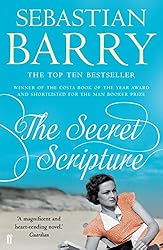
Sebastian Barry is fascinated with this history, particularly the turnaround from 1916-1921, when via wars, terrorism and negotiation, a British Colony became a divided country and loyalties were overturned and vilified. Barry’s McNulty brothers of Sligo, Eneas, Jack and Tom, all live through these times and later decades. How they do so, the effects on their lives and the lives of those around them, form the core of three of Barry’s novels, The Whereabouts of Eneas McNulty (1998), The Secret Scripture (2008), and The Temporary Gentleman (2014).
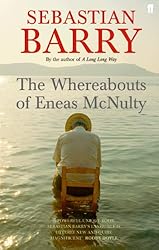
The three novels do not operate as a trilogy in the traditional sense of telling one story in chronological order. Rather we get stories that by their nature overlap, sometimes illuminating each other. It’s more a mesh than a thread. I read them in reverse order of publishing. In reading The Temporary Gentleman, there was a reference to his sister-in-law being confined to an isolated hut and I thought, what’s that story? I was delighted to discover there was a novel that told it: The Secret Scripture. Having read that, I wanted to learn more about the oldest brother Eneas who could only visit his family furtively. So they can be read in any order. And they encourage rereading of each other. We know people remember the same events differently and Barry has captured that very well. 

The narrative style of each book is different.  Eneas’s story is told in third-person. The Temporary Gentlemen is told as a journal, middle brother Jack trying to work out the steps whereby he ends up a remnant of the British Empire living in Africa’s Gold Coast. The Secret Scripture is two journals, one from Tom’s wife, Rosemary, now around a century old and living in an asylum, and that of her doctor, William Grene. 
Both Eneas and Tom suffer from having taken ‘the king’s shilling’. A stint in the British Merchant Marine during the WWI sees Eneas ostracised on his return home. With little other option, he takes a job in the Royal Irish Constabulary and that puts him on an IRA death list. It is his best friend from childhood who is designated to warn him off. For the rest of his life, Eneas is on the run, a wanderer like his namesake. 

Glamorous Jack ends up in the British Navy in WWII, but his main problem is his drinking, which affects not only him and his career but has a devastating affect on his wife Mai and their children. Only in exile, writing his journal, does he start to realise that he may be the bad guy, the person responsible for all that has gone wrong in his life - and his beloved wife's.

Tom also marries a beautiful woman (Barry thinks being beautiful in Ireland is a forerunner of tragedy). Haunted by memories of her childhood, her father, rebels and soldiers of the civil war, Rosemary breaks the social mores of Sligo and ends up rejected by her husband and condemned by the local priest. She is imprisoned first in a lonely shack then the asylum. As she tries to remember events from nearly a century ago, her doctor is trying to do the same, finding old records and piecing together her story. With mental illness in her family, plus decades of confinement, Rosemary is not a reliable narrator, but then, neither is her doctor or priest.

Barry has taken fragments of his family’s history, and turned them into gripping narratives. I would be interested to know how much detail of the other stories Barry had worked out when he wrote the first in 1998, as they work together well. His writing is poetic and lyrical. The endings of all three tend towards the sudden, and I’m not convinced they entirely work, but these are still three excellent novels.

And the mesh is widening. In New Orleans, Eneas wonders if he should stay in the States, perhaps find his great uncle who emigrated there. That uncle's story has now been told in Days without End (2016), a novel set in the US Civil War. Like The Secret Scripture, it has been awarded the Costa Book of the Year. Another visit to the McNulty family beckons.


Monday, August 8, 2011

"Eve of destruction." Oscar Wilde on trial


Oscar Wilde was the first modern celebrity. He made his name in London without actually doing anything by dressing outrageously and saying outrageous things and being seen in the right places at the right times. Unlike most of those who follow in his footsteps, he followed this up with conversation, lectures, essays, poetry, fairy tales, a novel and most famously his four great plays, the last of which “The Importance of Being Earnest” is still acclaimed as one of the greatest comedies in the language, which revealed his wit, his philosophy and, dare I say it, his genius. He was in his prime, forty-one years old, on the brink of who knows what, when he landed in prison for two years of hard labour, a sentence which broke him, leaving him to produce only two more major works, a poem and a letter, both produced largely while in prison, before he died at the age of forty-six, homeless, broke and exiled. Most astonishly, Wilde was largely the most responsible for bringing this disaster on. How someone so intelligent and perspicacious could do something so stupid is the subject of much speculation.

Wilde was convicted of “Gross Indecency” a euphemism in law for homosexual sex. The evidence against him, perhaps procured unethically and illegally, was overwhelming. Only one of his partners, Alfred Wood, ever stood in the dock for the same charge. To his credit, he never gave evidence against Wilde, and suffered the same sentence. But it was Wilde who started the majesty of English Law on its path when he sued The Marquess of Queensbury for Libel.

John Sholto Douglas was the father of Wilde’s lover Alfred ‘Bosie’ Douglas, and it was his attempts to break up their relationship that made him send letters and make scenes and write the fateful postcard. The argument has been made that one could almost sympathise with him – his oldest son had died in doubtful circumstances, possibly as a result of a homosexual affair, and so he did not want to lose another. But his paternal concern was limited at best. Queensberry was abusive to his wife and children, a philanderer, violent and a drunkard. He sanity was often in question, and his mania for pursuing his aims was frightening. Bosie too was capable of violence and madness, threatening to shoot his father, sending provoking letters telegrams and cards, meanwhile treating his lover as convenient source of funds. To a modern eye, the relationship between Wilde and Douglas, despite both their protestations, looks an abusive one, one man debasing himself entirely to the whims of the other who might respond with love or hate, kindness or fury, depending on his mood. In this maelstrom of emotion, fear and family, driven by so many factors, Wilde sued Queensberry over an almost illegible card left at Wilde’s Club which said, “For Oscar Wilde – posing somdomite” or “posing as somdomite” depending on who you read.

Wilde’s grandson, Merlin Holland, has published Irish Peacock and the Scarlet Marquess: The real trial of Oscar Wilde, the first unexpurgated publication of the transcript of the libel trial.  The famous exchanges between Wilde and Queensberry’s barrister, Edward Carson are here in full and we can almost hear Wilde’s voice, witty and precise. Wilde was always said to be even more dazzling in conversation than in print, and this is the nearest we will ever get to hearing that.

We also hear Edward Carson, a brilliant barrister . In cross-examining Wilde, he often seems obtuse and flat-footed, yet he draws Wilde into one of the most notorious missteps in legal history:  “He was a particularly plain boy.” Read that in context, and you can almost feel the shudder through the public benches. Then Carson’s opening speech for the Defence is devastating. Where you think Wilde has been scoring points off him, Carson has been paying close attention and he marshalls revealed facts, large and small, into a damning indictment. Is it any wonder Wilde agreed to drop the suit before the speech had even finished?

But we get no nearer to the central mystery of Wilde, why he embarked on this predictably disastrous course. Indeed, Holland in his excellent introduction to the book says the one question he wants to ask his grandfather would be “Why?” W. A Auden, in an essay on Wilde’s De Profundis brings it down to Wilde’s unadmitted, perhaps unknown weakness, his need to be accepted by London society. He loved outraging society but as an insider, and Queensberry’s continued provocation meant that members of society could no longer pretend not to see. And once they all admitted what they knew, they would be forced into one of their “periodic fits of morality.” Perhaps his doom in one way or another was unavoidable, as the best dooms are.

There is a website devoted to the poetry of Lord Alfred Douglas, relieved that at last his poetry is emerging from the shadows of his role in Wilde’s downfall, and saying his poetry will be remembered long after his other role is forgotten. Fat chance. Douglas is at best a minor poet, mannered and arch. (To be fair, Wilde’s poetry is not much better.) His role as the instrument of Wilde’s fate was ongoing, one neither he nor the public were prepared to forget. In one trial (he was a serial litigant) he called Oscar Wilde the most evil influence in Europe on the young for the last hundred years. Yet one biographer called his love for Oscar truer than Oscar’s for him.

No, we remember Douglas only because of his role as Dark Angel in Wilde’s life. Would we remember Wilde as much if not for his downfall? Possibly not but he would not be forgotten. “Earnest” would still be playing, and his fairy tales at their best are beautiful. (My first Wilde was an LP recording of ‘The Happy Prince’ with Orson Welles narrating and Bing Crosby as the Prince, music by Bernard Hermann. You can start enjoying it below. My copy is still at Mum and Dad’s and I still love it.) Perhaps Wildean scholars and enthusiasts only would know his epigrams and essays and earlier plays. As it turned out, they found a wider and continuing audience. Aren’t we lucky then he suffered such a thunderous fall?

Wednesday, December 8, 2010

"What is a man but his old stories?" Roddy Doyle's Henry Smart trilogy

The other day, I read in The Age one commentator describe the current Irish financial crisis as a betrayal of the men who fought for the Republic. There is very little in Irish history that isn’t.  The cool winds of Ireland are not produced by differences in air pressure over different parts of the earth’s surface but by the untold millions of betrayed men spinning in their graves.

I don’t mean to sound cynical; Ireland’s history to me has always seemed astonishingly sad. The sadness derives from the cyclical nature of the violence and tragedy; men risking their lives left waiting on beaches for promised support that never comes, again and again; children being indoctrinated to share their parents’ hatred; the country finally winning some independence in the Anglo-Irish War then turning on itself in civil war; people imagining that this time, this violence, this shooting, this bomb will change things, that this promise, this assurance, this treaty will bring peace.

Nor do I want to romanticise it. The bombings, the shootings were all too often pointless, petty, motivated not by high ideals but by a lust for money, power or violence for its own sake. At long last, peace may well be coming to Ireland. Bombings still happen, but not nearly with the frequency they once did. (The Irish always maintained a sense of humour: a shop in Belfast that lost its front kept in business and put up a sign ‘More open than usual’.) In the long contest between the bullet and the ballot box, the ballot box has won, as it usually does – but the bullets keep coming.

If you want to read about the Irish experience of the 20th and 21st centuries, you could do a lot worse than starting with Roddy Doyle’s wonderful The Last Roundup trilogy: A Star Called Henry (1999), Oh, Play That Thing (2004) and The Dead Republic (2010). The three novels tell the story of Henry Smart from his birth in Dublin in 1901 through to his old age in 2010. Born into a world of poverty and violence, he never entirely escapes it. Even as a child, his eyes have a force than intimidates men and attracts women. In the first book, he survives a miserable Irish childhood to fight the Easter Rebellion, the Anglo-Irish War, the Civil War, and marries before he has to flee the country, just ahead of his former allies.  In the second, he finds England isn’t far enough and runs again to America where he falls foul of a whole new type of gunman. There he also has jazz, bootlegging, American-style evangelism, and the Depression to occupy him before middle-age takes him in the third book back to Ireland where his past and Ireland’s are still waiting for him.

He brushes against some big names - that’s his elbow in the photo of de Valera under arrest.  He works with people such as Michael Collins, John Wayne and in Oh, Play That Thing, he works for a very young Louis Armstrong, before the jazzman even has the nickname Satchmo. James Connolly teaches him to read. Gerry Adams wants to be seen shaking his hand. John Ford wants to make his story and makes The Quiet Man instead. This is not Forrest Gump reassuring us everything is fine. We keep being reminded of what’s going on behind, or underneath, the stories we know, the violence, the money, the ideals, the deals, the sweat, the blood, the dreams, the sex, the whim of chance and the drive of fear. 

These are rich, entertaining, novels, full of humour, great characters, incident, and dialogue. Henry’s wife, Miss O’Shea, could carry a novel herself.  I actually gasped out loud during moments (I’m not much of a one for gasping.) Some characters are created in a dash of words, and can disappear in fewer, yet stay with you, like they stay with Henry. Doyle’s language is a pleasure to read and he is a wonderful storyteller. I found myself reaching for this novel even if I only had five minutes to spare. Then as they drew to a close, I would try to make the remaining pages last as long as I could. This is a subversive look at Irish history, driven by a great love story.

It is also a story about stories. Henry is made and trapped by his own story, even the bits that aren’t true, even the parts he made up.  The stories he knows about other people make him a hero and a target. He and his missing wife (or is he the one missing?) track each other by the stories they tell and hear. He and John Ford fight over how to tell his story to an American audience, through a Hollywood film. The fight for Ireland may well simply be a fight for the story of Ireland, how it is told, and who gets to tell it. And stories are nothing without an audience. This is where you and I come in.

All the strands of Henry Smart’s long life tie together beautifully by the end of the third novel. I could not say if each book stands alone as I read them in order within a few months of each other.  I would urge you to read them in order too, although there's no need to rush – they were published over eleven years. The humour, vitality and sadness of Irish history are here and Henry Smart is a memorable entertaining narrator. His brother Victor will haunt me for a long time.