Showing posts with label Poetry. Show all posts

Thursday, May 4, 2017

"Will I look back and say that I wish I hadn't done what I did?": Lives of the Beach Boys

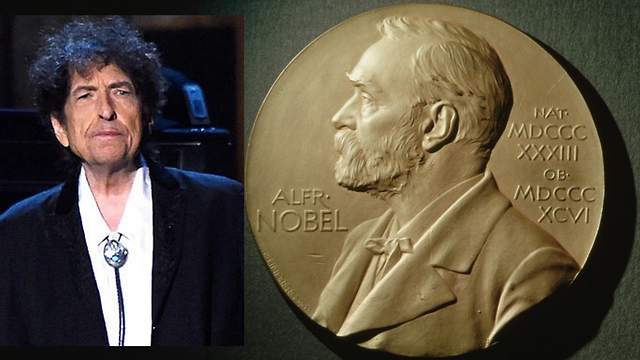
Did you hear? Bob Dylan won the Nobel Prize for Literature, for his lyrics, a decision I’m still not convinced by. I’m not sure how comfortable Bob is with it either, given his reluctance to go and collect the thing. I know a trip to Sweden with a dinner, gold medal and a lot of money sounds horrid but it can’t be that bad.

But I suspect part of his reluctance is part of my discomfort; lyrics aren’t poetry, and don’t operate on their own. They aren’t written to be read or recited but rather sung or listened to. Which isn’t to say a good lyricist isn’t as skilful or artistic wordsmith as any other writer. But for a lyricist words and music, as the old Jo Jo Zep song said, go together. There have been a number of books about music or lyricists that have the words printed but the only way you can really read them is to have the tune in your head as you do so. Otherwise they lose a lot of their life. And while there is no Nobel Prize for music, there’s none for mathematics, art, architecture, engineering, and a whole lot of other human endeavours as well, and it doesn't make them less important.

The interplay between lyric and melody is crucial.  Tim Rice in his autobiography quotes the first verse of his lyric for the tune that became “I don’t know how to love him,” which he maintains would have killed that song dead had it ever been released, despite the melody.  All together now: 

I love the Kansas morning
Kansas dawn comes to greet me
Kansas winds
Shift and sigh
I can see you now, we’re flying high
Kansas love of mine

(It’s a prison song, a man in a jail cell in Maine lamenting his girl back home. Really.) On a more worrying note, George Gershwin’s songs are sung less and less, due largely to his brother Ira’s sometimes twee lyrics, despite the beauty of the melodies. Words and music go together.

Which brings me in a very roundabout way to two autobiographies I have read lately from two of the founding Beach Boys, Mike Love and Brian Wilson, both released in 2016 within weeks of each other. Mike Love is the front man of the band, one of their lyricists, and still goes about with a band called ‘The Beach Boys’, although he is only original one there.
Brian Wilson who wrote, arranged and produced the Beach Boys music, also tours but with ‘The Brian Wilson Band’ as Love has the legal rights to the name. It’s a long story.

The two books couldn’t display a greater contrast. Love’s is chronological, detailed, sometimes to the point of tedium, and I have to say, aimed at scoring and settling points. He feels his part of the Beach Boys’ success has been undervalued both financially and artistically. And to be fair to the man, he’s right. His lyrics on surf and girls was one of the features of their early albums and a big part of their appeal to people who had never seen the beach, leading to their worldwide success. As lead vocalist and front man, he was a dynamic performer. His name was kept off many of the singles for which he was lyricist (by Murray Wilson) and he had to sue to get his rightful recognition and money. Despite his practice and championing of transcendental meditation, he clearly has trouble letting go of years of resentment and anger and it seeps throughout the book.

Wilson’s books is more amorphous, drifting from present to past, in no particular order.  He can go from a description of his current family life to a session of Pet Sounds almost in a sentence. The oldest son of an abusive father, he has famously struggled with mental health and substance abuse issues, and these things affect him still. He finds it difficult to talk about his father Murray, the man who gave him music, who was crucial to the band's early years, but who also beat him and belittled him. His therapist Gene Landy saved his life, but also drugged him, abused him and exploited him. Yet here Wilson is, still writing, still performing but also aware of what his survival has cost. The book can be generalised at times, but at others picks up details and stories that may otherwise have been overlooked. He’s not the most reliable narrator, which he is aware of, but the writing is never confusing, and throughout displays a generosity of spirit that is lacking in Love’s work. 

Love is defensive. Although he is open about his own shortcomings as husband and as a father, as a band member he did no wrong. All those stories you heard about his criticisms of Pet Sounds or SMiLE? “Don’t fuck with the formula”? Never happened. Not one of them. Ever. And so much of the Beach Boys music would never have happened without his magic touch. Just a word, a minor suggestion and near disaster turns into commercial magic. I think he is overplaying his hand. He is also trapped in that idea that good work is commercial work, otherwise it's not good. He's not alone there.

Love’s greatest problem is that he is a classic Alpha male in a situation where he must play second fiddle. While his lyrics work in the main part, that is all they do. They don’t get taken out of the song and quoted, they way Dylan’s do. Or The Beatles. He is a workaday lyricist, successful for sure but no more. Nor as he got older did he ever really attempt to move on from his milieu of beaches and girls. Sometimes it worked - “Do it again”, “Kokomo” - other times it was embarrassing, tending towards creepy - “Hey little tomboy”. Love’s attempt at being political , “Student Demonstration Time”, is likewise painful to listen to, and his song about transcendental mediation oddly jarring. I have read some of his solo work is quite good but I haven’t listened to it.

The greater talent in the band was of course Brian Wilson. His melodies, his harmonies, and his arrangements are some of the greatest in the pop era. What still draws people to the Beach Boys is this music, sometimes in spite of the lyrics. “Don’t Worry Baby” is a stunningly beautiful song - about drag racing. They lyrics here are by Roger Christian, who wrote all the car song lyrics. Other lyricists include Tony Asher (Pet Sounds), Van dyke Parks (SMiLE), himself and other band members. Another big hit "Sloop John B" was a cover of a folk song. As he got older, he pushed himself as a musician, which lead to seeking out new collaborators. Some of his most beautiful work was not commercial but was genuine artistic expression.

In short, Brian Wilson’s successes were not limited to his work with Mike Love. But Mike Love’s success is limited to his work with Brian Wilson, and he resents it.  (Another exception here: "Kokomo" was the Beach Boys’ only number one hit for which Brian Wilson neither wrote or produced.) But at their height of commercial success, Wilson and Love were the core of the Beach Boy's writing. The biggest hit for the band, "Good Vibrations", was a Love lyric to Wilson's music and arrangement. Mike Love has been undervalued for his contribution to the band, and unfairly characterised as the Villain to Wilson' Hero. That said, I think the main difference between these two autobiographies is instructive:  Love admits to Wilson’s talents, while Wilson champions Love’s.

Wednesday, September 7, 2011

"The #!@ing words are awfully strong." Stephen Sondheim

The Canadian political writer Mark Steyn, who has a background as a theatre critic, says Stephen Sondheim doesn’t fit into the great American songbook tradition, as it is impossible to sing his songs in any other way that the way he wrote them. And when you see singers doing Sondheim songs, they always do them with the same tempi and in the same style as he wrote them.  You rarely hear jazz singers toy with the melody and pace of a Sondheim song as they do with, say, a Cole Porter.

Sondheim I suspect would take this as a compliment. Whereas Porter, Berlin, the Gershwins were by and large writing for the hit parade, with the particular show the means of delivery, Sondheim is very much writing for the moment and the character in the show. This is as much because of his aesthetic as it is because of changing times and expectations. So if his songs are difficult to understand out of context, and difficult to ‘re-interpret’, Sondheim would say he is doing his job.

(While I’ve got you here, I do find the habit of jazz singers of taking a classic song that we all love and thinking ‘You know, I think this would be improved with a different melody and a different rhythm and hell, a few extra lyrics. What did Porter know?” a bit odd, to say the least. Perhaps I am yet to hear a superb jazz singer, which is entirely possible.)

While Sondheim is currently a gold standard of modern Broadway, he is, like the gold standard, getting on. There have just been celebrations for his 80th birthday, and as someone said, one feature of old age is a tendency to reminisce, what has also been called our anecdotage. When someone like Sondheim starts to reminisce, the best thing to do is encourage him.

And so we have Finishing the Hat: Collected Lyrics (1954–1981) with Attendant Comments, Principles, Heresies, Grudges, Whines and Anecdotes by Stephen Sondheim. This covers Sondheim’s career up to ‘Merrily we roll along’. Each chapter begins with a short essay on the provenance and history of each show. Then we have the complete lyrics, often with deleted lines, cut songs, and alternate materials included. And this is all sprinkled with commentary and anecdotes about performers and collaborators, as the title suggests. A second volume, Look I made a hat, taking the story up to 2011, is in the pipeline.

The endpapers are decorated with Sondheim’s three great principles: less is more, God is in the details, and content dictates form. All of which he explores in the body of the book.

Lyrics, Sondheim insists, are not poetry. This will find disagreement in those who want to push the likes of Paul Kelly, or (God forbid) Jim Morrison as poets. But, as Sondheim discusses, poetry is read at one’s own leisure whereas lyrics work with music defining the timing, pace and time you have to take the words in. If your songs are part of a show, there are even more constrictions. Therefore, the demands on the words are very different. Putting poetry to music is fraught with peril, you either work against the rhythm of the poet, or are trapped by it. By the same token, lyrics without music can be a bit flat and uninvolving. It is the relationship between the words and the music that gives lyrics their power.

And he is very particular about what makes a good lyric. Whatever else Sondheim does with words, he does not mince them. In sidebars on other lyricists, he is not afraid to criticise the greats, from Ira Gershwin to Alan Jay Learner to even his own mentor, Oscar Hammerstein.  He believes his pastiche of W S Gilbert’s lyrics in ‘Pacific Overtures’ is better than Gilbert. He praises too, often the same writer. Sometimes these are an aesthetic judgement, other times technical, sometimes bordering on the pedantic, but always well-argued and based on principle. And he is not averse to bringing this judgement on his own work.

His dislike for his work on ‘West Side Story’ is fairly well known. “Somewhere” he recalls as the “a” song, as that’s the word given an entire bar on the highest point of the melody as if it meant something. “I feel pretty” has a Puerto Rican Girl making sub-Cowardian internal rhymes. (He doesn’t like Coward’s lyrics too much either, for that matter.) But his self-criticism lasts into later and more mature work. So if you’ve picked a flaw or two in a Sondheim lyric, I suspect he got there first.

If you’re interested in musicals or writing, this is definitely worth a look. It’s an expensive book (I bought mine online, again a LOT cheaper) but it’s a book I can see myself going into over and over. What can I say? God knows how fond I'm of Sondheim.

Monday, August 8, 2011

"Eve of destruction." Oscar Wilde on trial


Oscar Wilde was the first modern celebrity. He made his name in London without actually doing anything by dressing outrageously and saying outrageous things and being seen in the right places at the right times. Unlike most of those who follow in his footsteps, he followed this up with conversation, lectures, essays, poetry, fairy tales, a novel and most famously his four great plays, the last of which “The Importance of Being Earnest” is still acclaimed as one of the greatest comedies in the language, which revealed his wit, his philosophy and, dare I say it, his genius. He was in his prime, forty-one years old, on the brink of who knows what, when he landed in prison for two years of hard labour, a sentence which broke him, leaving him to produce only two more major works, a poem and a letter, both produced largely while in prison, before he died at the age of forty-six, homeless, broke and exiled. Most astonishly, Wilde was largely the most responsible for bringing this disaster on. How someone so intelligent and perspicacious could do something so stupid is the subject of much speculation.

Wilde was convicted of “Gross Indecency” a euphemism in law for homosexual sex. The evidence against him, perhaps procured unethically and illegally, was overwhelming. Only one of his partners, Alfred Wood, ever stood in the dock for the same charge. To his credit, he never gave evidence against Wilde, and suffered the same sentence. But it was Wilde who started the majesty of English Law on its path when he sued The Marquess of Queensbury for Libel.

John Sholto Douglas was the father of Wilde’s lover Alfred ‘Bosie’ Douglas, and it was his attempts to break up their relationship that made him send letters and make scenes and write the fateful postcard. The argument has been made that one could almost sympathise with him – his oldest son had died in doubtful circumstances, possibly as a result of a homosexual affair, and so he did not want to lose another. But his paternal concern was limited at best. Queensberry was abusive to his wife and children, a philanderer, violent and a drunkard. He sanity was often in question, and his mania for pursuing his aims was frightening. Bosie too was capable of violence and madness, threatening to shoot his father, sending provoking letters telegrams and cards, meanwhile treating his lover as convenient source of funds. To a modern eye, the relationship between Wilde and Douglas, despite both their protestations, looks an abusive one, one man debasing himself entirely to the whims of the other who might respond with love or hate, kindness or fury, depending on his mood. In this maelstrom of emotion, fear and family, driven by so many factors, Wilde sued Queensberry over an almost illegible card left at Wilde’s Club which said, “For Oscar Wilde – posing somdomite” or “posing as somdomite” depending on who you read.

Wilde’s grandson, Merlin Holland, has published Irish Peacock and the Scarlet Marquess: The real trial of Oscar Wilde, the first unexpurgated publication of the transcript of the libel trial.  The famous exchanges between Wilde and Queensberry’s barrister, Edward Carson are here in full and we can almost hear Wilde’s voice, witty and precise. Wilde was always said to be even more dazzling in conversation than in print, and this is the nearest we will ever get to hearing that.

We also hear Edward Carson, a brilliant barrister . In cross-examining Wilde, he often seems obtuse and flat-footed, yet he draws Wilde into one of the most notorious missteps in legal history:  “He was a particularly plain boy.” Read that in context, and you can almost feel the shudder through the public benches. Then Carson’s opening speech for the Defence is devastating. Where you think Wilde has been scoring points off him, Carson has been paying close attention and he marshalls revealed facts, large and small, into a damning indictment. Is it any wonder Wilde agreed to drop the suit before the speech had even finished?

But we get no nearer to the central mystery of Wilde, why he embarked on this predictably disastrous course. Indeed, Holland in his excellent introduction to the book says the one question he wants to ask his grandfather would be “Why?” W. A Auden, in an essay on Wilde’s De Profundis brings it down to Wilde’s unadmitted, perhaps unknown weakness, his need to be accepted by London society. He loved outraging society but as an insider, and Queensberry’s continued provocation meant that members of society could no longer pretend not to see. And once they all admitted what they knew, they would be forced into one of their “periodic fits of morality.” Perhaps his doom in one way or another was unavoidable, as the best dooms are.

There is a website devoted to the poetry of Lord Alfred Douglas, relieved that at last his poetry is emerging from the shadows of his role in Wilde’s downfall, and saying his poetry will be remembered long after his other role is forgotten. Fat chance. Douglas is at best a minor poet, mannered and arch. (To be fair, Wilde’s poetry is not much better.) His role as the instrument of Wilde’s fate was ongoing, one neither he nor the public were prepared to forget. In one trial (he was a serial litigant) he called Oscar Wilde the most evil influence in Europe on the young for the last hundred years. Yet one biographer called his love for Oscar truer than Oscar’s for him.

No, we remember Douglas only because of his role as Dark Angel in Wilde’s life. Would we remember Wilde as much if not for his downfall? Possibly not but he would not be forgotten. “Earnest” would still be playing, and his fairy tales at their best are beautiful. (My first Wilde was an LP recording of ‘The Happy Prince’ with Orson Welles narrating and Bing Crosby as the Prince, music by Bernard Hermann. You can start enjoying it below. My copy is still at Mum and Dad’s and I still love it.) Perhaps Wildean scholars and enthusiasts only would know his epigrams and essays and earlier plays. As it turned out, they found a wider and continuing audience. Aren’t we lucky then he suffered such a thunderous fall?

Tuesday, June 21, 2011

"Look at me Leonard." Leonard Cohen

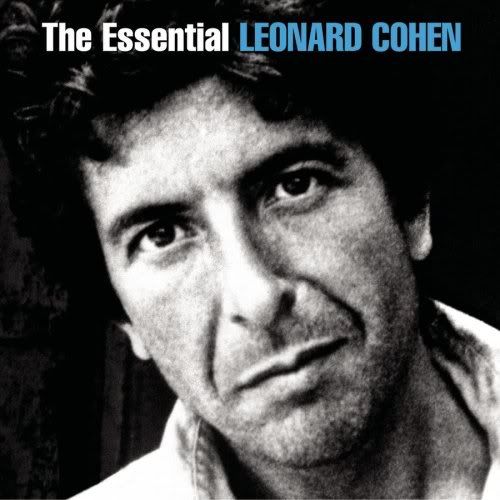
I have a friend, a professional musician (actually he’s a drummer, but I leave the jokes to you) who is (and this will be no surprise really) passionate about his music. I told him I had bought the Essential Leonard Cohen double CD. He said, ‘If you can find a dud track on that album, I’ll bash your face in.’ Luckily for my face, I found no dud track. (And yes, we’re both old enough to remember what an ‘album’ is.)

I was also lucky enough to see Cohen live on his latest tour. It was one of the greatest nights I have spent in a theatre. I have never seen a performer so free of ego. When Cohen gave the focus to the musicians or singers, he did not just step back but disappeared into the shadows. He genuflected to the audience and to his fellow musicians frequently, and seemed genuinely touched by the love that flowed from the crowd. When he played the simple one-fingered piano solo from ‘Tower of Song’ the crowd went nuts. His response: ‘You’re too kind.’ He is I think truly humble, in the correct sense of the word, one who knows his place in the world and the universe. In his 70s and after an almost three hour show, he literally skipped on for his encore.

I finished reading Anthony Reynolds’ 2010 biography Leonard Cohen: A remarkable life one Sunday morning and spent the afternoon listening to his music, performed by him and by Jennifer Warnes, KD Lang, Joe Cocker, Aaron Neville, John Cale, Nick Cave and the Klezmer Conservatory Band, among others. It was an afternoon well spent, and testament to the quality of this biography that it sent me back to the music. Had I Cohen’s poetry or novels to hand, I might well have gone there as well.

Cohen’s career began as a poet and novelist before he turned to music in the 60s, had almost petered out in the 80s but then came back with astonishing music. His fellow musicians have always respected his writing, with many cover versions done from his first album onwards.  Starting from the early 90s, his song ‘Halleluja’, almost overlooked on release, was everywhere. When his manager stole most of his money earlier this decade, he came back with a tour that is still going, cementing his place not as a nostalgia act but a musician and writer for our times.

He has always been ready to work in partnership with other composers, singers and musicians, who speak highly of him. The only person who seems to have a grievance is the Steven Marchat, the son and partner of Cohen’s manager Marty Marchat. They had a falling out over money and, it seems, Cohen’s reluctance to talk to Steven about his father. But even he concedes he likes Cohen.

Cohen has been called music to slit your wrists by, but this is an unfair, perhaps lazy, generalisation. His lyrics are much more literate and evocative than your average rock song, direct yet mysterious, and not without humour. His melodies are suited to his limited range so perhaps he is not the most melodic of writers, but songs such as ‘Hey that’s no way to say goodbye’ show he can write pretty melodies within these limitations. He self-deprecatingly referred to his gift of a golden voice, but as he has gotten older his unique (!) voice has gained depth, to the point where he sounds like an Old Testament prophet, if one was going to sing popular songs. It’s music that engages the mind as well as the ears.

It can also touch the soul. Cohen’s lyrics often reflect his spiritual journey. Cohen is a Buddhist monk but also a Jew who still has his traditional Friday night meal with family and friends. He has investigated and explored many of the major religious traditions and some of the more obscure ones. As he says in concert, “I have spent much of my life studying the great philosophies – but cheerfulness kept breaking through”. I think the nearest he comes to a single religious viewpoint in his song ‘Anthem’: There is a crack, a crack, in everything/ That’s how the light gets in.

He also writes with equal openness about sex and food and drink and women – especially women. On his latest album Dear Heather he says ‘Because of a few songs/ Wherein I spoke of their mystery/ Women have been exceptionally kind/ To my old age.’ From Suzanne on his first album to Heather on his last, women have been important figures in his songwriting, and his lyrics exploring this fascinating topic range from the mystic to the earthy, poetic and frank.

Which is why, I think, ‘Halleluja’ has become THE Cohen song. To me, it’s about a great love affair that had the intensity of religious ecstasy, which is now finished but has left the lover in a state of battered gratefulness. The two great themes of Cohen’s work come together in a song fusing the sensual and the spiritual into a coherent whole.

There is a crack in everything. Cohen’s money was stolen by his manager, which has forced him back on the road and back into the studio, which has given hundreds of thousands of fans the chance to see him live, for him to enjoy the love of his audience, and new music for the world. If you want it to put this down to the mysterious movement of God, or just a lucky variation of shit happening, I don’t care. It is a gift. Light got in.


PS Mark Steyn has just written a column this week on 'Dance me to the end of love', placing it within the great American songwriting tradition. It's worth a read.

Thursday, May 5, 2011

"Fools like me" Poetry

 The literary world should take warning– I have started writing poetry again. I’m not entirely sure why as I haven’t written any poetry for some years. Perhaps it is just that I am writing more these days as a result of my blogging and other activities so that part of my brain, or my soul, has reactivated.  Whether I shall publish those poems here, or anywhere else is another matter, but it’s doubtful. Poetry can often just be another way of talking to yourself, so perhaps I am my poetry’s only appropriate audience.

My friend’s mother is a retired English teacher. I was working at a school at one time where the Grade Eight classes (12-13 yr olds) would rotate and so one teacher would teach the one unit to the four or five classes that made up the year, and I was teaching poetry. She said if her school had that system, she would choose the poetry unit. She loved, as I recall her telling me, introducing students to the uses of poetry. She would show them the Memoriam section from the paper to demonstrate how poetry worked: when our emotions go beyond mere words, we resort to poetry. Those columns were full of poems, original and copied, written and placed by people trying to cope with grief. I immediately stole that idea for my own classes. It was also her that introduced me to Yeats – and I never thanked her.

Poetry is a complex beast. In the twentieth century it underwent the same process as some of the plastic arts. Poems went from formal structured affairs to whatever collection of words spilled any which was onto the page that you nominated as a poem. Which, like most changes in life, was a change for better and for worse. Structure did not save us from bad poetry, and more free form poetry does not prevent good poems being written.  But I do admit a preference for more structured poetry. I think the extra rigour involved in following forms tends to produce better poems. Do read Stephen Fry’s (look him up if you don’t know who he is) The Ode less travelled for an informative ‘How-to’ on poetry forms.

Another side-effect of my poetry writing is that I finally got around to reading a book I bought ages ago, How to read a poem: And fall in love with poetry, by Edward Hirsch. It is a wonderful book and reopened my eyes and ears and heart to poetry again; I can put it no other way. Like Dickens, poems - even short ones - demand our full focus. Hirsch, a professor of English, critic and poet himself, takes us through various types of poetry and his passionate response to them. His responses are so detailed and loving it creates a need in his reader to read poems again to try to bring their own response to a similar level. His examples are wide ranging in time and style and most pleasingly for me, languages. Translation is a difficult art, and poetry trickier than most, but it was a pleasure to be introduced to a group of poems, poets and traditions of which I had been unaware.

Hirsch quotes Ezra Pound, “Emotion is what endures.” Certainly the poems that we remember, that come to us in half-remembered fragments in moments unprepared, are the ones that struck a chord in us when we read them. And the best poetry I think still maintains its links to the vocal tradition and responds well to being read aloud.  I am reading Robert Fangles’ translation of the Iliad at the moment and it screams to be read aloud and so at times I do. Not a bad way to practice diction either. And to feel those words and phrases in your mouth is to be part of a tradition, and a joy, that dates back millennia. Of course, the Iliad comes directly from a vocal tradition but Yeats, Frost, Cavafy, Hughes, Dawe, Oodgeroo and Heany all reward reading out loud. And that’s just a sample off the top of my head, there are thousands more.

And the lyric poem, which came from song , can lead back again. Here is Constantine P Cavafy’s The God abandons Antony. Antony thought himself under the protection of the god Bacchus. At midnight before Octavian’s final attack on Alexandria and Antony’s death, a Bacchanalia passed by Antony’s window, which the historian Plutarch saw as Bacchus leaving Antony to his fate. Cavafy’s narrator watches Antony as the procession passes:

When suddenly, at midnight, you hear
an invisible procession going by
with exquisite music, voices,
don’t mourn your luck that’s failing now,
work gone wrong, your plans
all proving deceptive—don’t mourn them uselessly.
As one long prepared, and graced with courage,
say goodbye to her, the Alexandria that is leaving.
Above all, don’t fool yourself, don’t say
it was a dream, your ears deceived you:
don’t degrade yourself with empty hopes like these.
As one long prepared, and graced with courage,
as is right for you who proved worthy of this kind of city,
go firmly to the window
and listen with deep emotion, but not
with the whining, the pleas of a coward;
listen—your final delectation—to the voices,
to the exquisite music of that strange procession,
and say goodbye to her, to the Alexandria you are losing. 

Leonard Cohen, who started life as a poet and whose lyrics are haunting and mysterious yet direct, took this poem and adapted it into a song about the end of a love affair:


A cycle of beauty, a coming together of history, poetry and music, myth, and emotion. Whose heart could this not move?