Showing posts with label Canadian literature. Show all posts

Tuesday, June 21, 2011

"Look at me Leonard." Leonard Cohen

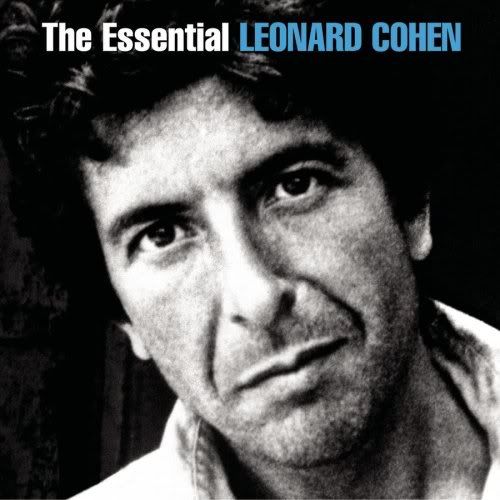
I have a friend, a professional musician (actually he’s a drummer, but I leave the jokes to you) who is (and this will be no surprise really) passionate about his music. I told him I had bought the Essential Leonard Cohen double CD. He said, ‘If you can find a dud track on that album, I’ll bash your face in.’ Luckily for my face, I found no dud track. (And yes, we’re both old enough to remember what an ‘album’ is.)

I was also lucky enough to see Cohen live on his latest tour. It was one of the greatest nights I have spent in a theatre. I have never seen a performer so free of ego. When Cohen gave the focus to the musicians or singers, he did not just step back but disappeared into the shadows. He genuflected to the audience and to his fellow musicians frequently, and seemed genuinely touched by the love that flowed from the crowd. When he played the simple one-fingered piano solo from ‘Tower of Song’ the crowd went nuts. His response: ‘You’re too kind.’ He is I think truly humble, in the correct sense of the word, one who knows his place in the world and the universe. In his 70s and after an almost three hour show, he literally skipped on for his encore.

I finished reading Anthony Reynolds’ 2010 biography Leonard Cohen: A remarkable life one Sunday morning and spent the afternoon listening to his music, performed by him and by Jennifer Warnes, KD Lang, Joe Cocker, Aaron Neville, John Cale, Nick Cave and the Klezmer Conservatory Band, among others. It was an afternoon well spent, and testament to the quality of this biography that it sent me back to the music. Had I Cohen’s poetry or novels to hand, I might well have gone there as well.

Cohen’s career began as a poet and novelist before he turned to music in the 60s, had almost petered out in the 80s but then came back with astonishing music. His fellow musicians have always respected his writing, with many cover versions done from his first album onwards.  Starting from the early 90s, his song ‘Halleluja’, almost overlooked on release, was everywhere. When his manager stole most of his money earlier this decade, he came back with a tour that is still going, cementing his place not as a nostalgia act but a musician and writer for our times.

He has always been ready to work in partnership with other composers, singers and musicians, who speak highly of him. The only person who seems to have a grievance is the Steven Marchat, the son and partner of Cohen’s manager Marty Marchat. They had a falling out over money and, it seems, Cohen’s reluctance to talk to Steven about his father. But even he concedes he likes Cohen.

Cohen has been called music to slit your wrists by, but this is an unfair, perhaps lazy, generalisation. His lyrics are much more literate and evocative than your average rock song, direct yet mysterious, and not without humour. His melodies are suited to his limited range so perhaps he is not the most melodic of writers, but songs such as ‘Hey that’s no way to say goodbye’ show he can write pretty melodies within these limitations. He self-deprecatingly referred to his gift of a golden voice, but as he has gotten older his unique (!) voice has gained depth, to the point where he sounds like an Old Testament prophet, if one was going to sing popular songs. It’s music that engages the mind as well as the ears.

It can also touch the soul. Cohen’s lyrics often reflect his spiritual journey. Cohen is a Buddhist monk but also a Jew who still has his traditional Friday night meal with family and friends. He has investigated and explored many of the major religious traditions and some of the more obscure ones. As he says in concert, “I have spent much of my life studying the great philosophies – but cheerfulness kept breaking through”. I think the nearest he comes to a single religious viewpoint in his song ‘Anthem’: There is a crack, a crack, in everything/ That’s how the light gets in.

He also writes with equal openness about sex and food and drink and women – especially women. On his latest album Dear Heather he says ‘Because of a few songs/ Wherein I spoke of their mystery/ Women have been exceptionally kind/ To my old age.’ From Suzanne on his first album to Heather on his last, women have been important figures in his songwriting, and his lyrics exploring this fascinating topic range from the mystic to the earthy, poetic and frank.

Which is why, I think, ‘Halleluja’ has become THE Cohen song. To me, it’s about a great love affair that had the intensity of religious ecstasy, which is now finished but has left the lover in a state of battered gratefulness. The two great themes of Cohen’s work come together in a song fusing the sensual and the spiritual into a coherent whole.

There is a crack in everything. Cohen’s money was stolen by his manager, which has forced him back on the road and back into the studio, which has given hundreds of thousands of fans the chance to see him live, for him to enjoy the love of his audience, and new music for the world. If you want it to put this down to the mysterious movement of God, or just a lucky variation of shit happening, I don’t care. It is a gift. Light got in.


PS Mark Steyn has just written a column this week on 'Dance me to the end of love', placing it within the great American songwriting tradition. It's worth a read.

Saturday, June 18, 2011

"All this is that." War comics and Margaret Atwood.

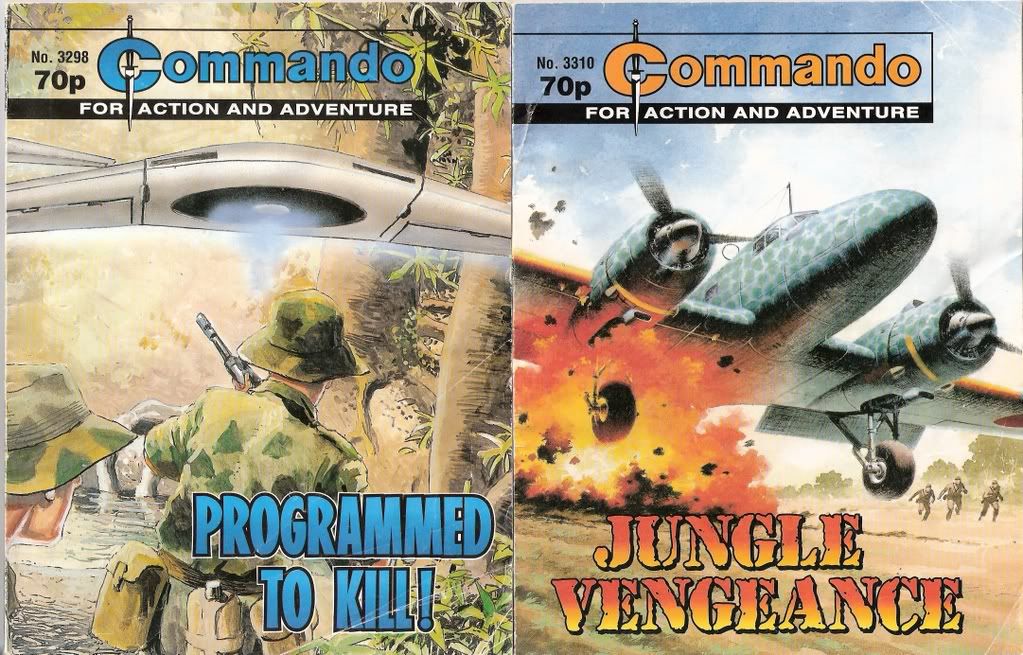
When I was a boy I used to read Commando comics and others of the type. I loved them. As I got older I still read them but I went through an ironic phase, noting the stock characters, (the cowardly private, the good German, the evil Jap, the stuffy officer, the renegade soldier, the younger son looking for redemption and so on and on), unlikely dialogue (‘You may be faster than us Fritz, but we’ll out turn you any day’ thus neatly giving us technical information about the relative performances of the ME109 and the Hurricane in naturalistic dialogue during a dogfight), formulaic plots, and characters that all looked the same, and then finally I stopped reading them altogether.

That said, their level of technical drawing in Commando comics was never less than superb which was a large part of their appeal to boys who made models of airplanes, ships and tanks, and played war in the playground. If the stories were Boys’s Own Adventure types and they never caused us to reflect on the futility of war, a) we were little boys who, quite rightly, hadn’t yet got around to considering the great moral questions and b) they were set in World War Two which is as near to a simple goodies versus baddies war as you’re likely to find.

As comics have gained more respectability as a literary form, Commando Comics have released big albums of their books. Each volume has twelve stories with a nominal theme, (Aussies!, Action! Spies! Etc – the exclamation marks are mandatory) are larger print than their original incarnation, and come with a handy attached bookmark. I’ve worked my way through two volumes now, one just recently and one a year or two ago, and I’m afraid my ironic teenage self was right. While they are aware of their own excesses, (their covers note things such as Europeans always screaming “Aaaauggh!” while Indians and Asians tend towards “Aieee!”) in the end they are poorly told stories (albeit sometimes with a good premise) and cluttered with clichés. On top of that the larger print makes these books unwieldy and subject to breakage. I can’t recommend these books except as an exercise in nostalgia, which, in their defence, is where they seem to be aimed. But nostalgia can be very powerful. I can’t remember if it was a British or German officer, but my brothers and I still giggle when we think of this piece of deathless narration: ‘He went quietly mad.’

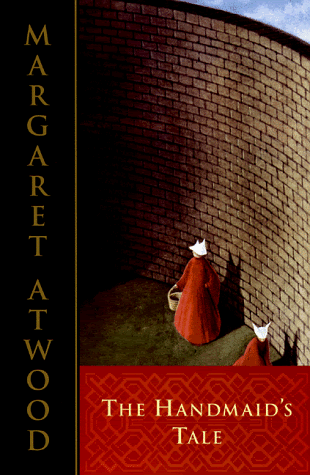
From the ridiculous to the sublime: Margaret Atwood’s The Handmaid’s Tale. This is the second of Atwood’s novels I’ve had the pleasure to read and she has the happy knack, unusual for a literary novelist who has won the Booker Prize among others, of writing page-turners. The Handmaid’s Tale takes place in a dystoptic world of a theocratic patriach totalitarian society in a constant war and suffering from falling fertility rates. The narrator is a Handmaid known only by her patronymic Offred, one of those whose job, and indeed sole purpose now, is to get pregnant to one of the society’s top strata’s male. If they do so, their life is safe; if not they could end up in exile or disappeared.

We hear the story in Offred's voice. We hear the details of her life, the prescribed dress, living conditions, social life,  even the regimented sex. We also get some information on her backstory, her marriage, her daughter, and how all this was stripped away from her with a brutal speed as the world was turned upside down. And the ending is ambiguous without being weak story-telling - a difficult trick to pull off.

Atwood has created a believable world with real affecting characters. Tim Blair, a right-wing Australian columnist, has invented Blair’s Law, “the ongoing process by which the world's multiple idiocies are becoming one giant, useless force". While in this case, it was two extreme groups coming together quite effectively to overthrow democracy.  The Handmaid’s world seems to be a bizarre result of religious fundamentalism fusing with radical feminism to create the society where women are simultaneously held in great esteem and confined to predetermined traditional roles without chance of change or escape except for the worse. The men too are trapped in strict strata.  Perhaps it’s more as Clint Eastwood put it: “If you go far enough to the right, you’ll meet the same idiots coming from the left.” 

It’s a superb novel. Once again I found myself torn between trying to find out what happens, and wanting the novel to last longer. Perhaps it’s not a novel you enjoy, but it stays with you. And it's certainly made its mark culturally, having been adapted both as a film and an opera.  It was Francis Trauffaut who said a masterpiece is something that has already found its definitive form. And so with this, as with other masterworks, it is best encountered in its original form. To be honest, I can only assume this, having seen neither the film nor opera. But I think it's a fairly safe truism that only second-rate novels make better films. Perhaps we have the odd exception (I understand both the play and opera of The Marriage of Figaro hold their place on stage) but go with me on this one. 

Thursday, December 30, 2010

"But let a woman in your life..." The Blind Assasin

A little while ago, there was a Facebook thing (I don’t know what else you call them) asking people to name their fifteen favourite/most influential writers. I posted mine and a female friend (I use friend here in the sense of someone I actually talk to, visit etc rather than a Facebook Friend) observed of mine, “You need to read more female authors.”

All fifteen of mine were male. True, Lee Harper was a writer who popped to mind moments after I posted the list and in the days following I remembered some female writers I had read (e.g. Jane Austen, E. Annie Proulx, Enid Blyton, Ayn Rand (urgh!)) but in all honesty, there are not that many female writers whose work I follow. My friend sent me a list of writers to check out. The name that struck me strongest was Margaret Atwood, an author who is on my list of ‘I really must read … one day’. So the day had arrived and I dutifully (if eventually) took to the library to borrow a Margaret Atwood novel.

The one I chose was The Blind Assassin. I loved the title and the cover, a 1930s advertising portrait of a woman. The book starts with the death of Laura Chase, the author of ‘The Blind Assassin”. Laura’s book is the story of a man and a woman, secret lovers, always on the move. Why they are on the move is a mystery and he tells her science fiction stories that he later writes up for pulp fiction magazines. ‘The Blind Assassin’ has stories within the story that is within The Blind Assassin. Along with excerpts from Laura’s book, we get newspaper accounts of tragedies befalling a family, and the memoirs of Laura’s older sister Iris, writing in modern times. As Atwood’s book continues, all these strands come together in a satisfying and moving way.

I really enjoyed this book. I followed my pattern of reading books I love by devouring early chapters, and lingering over the last few, avoiding reading the book so I would not finish it so quickly. As the book draws to a close, you may find yourself flipping back to the beginning, as I did, looking for what you missed the first time. My description of the book may make is sound difficult, but it is immensely simple and pleasurable to read.

I don’t know why I haven’t read more female authors.  There was a time when there were fewer around but that was sometime ago, and today they are legion. I've never avoided a book because it was written by a woman, and I'm sure there are books I've read of which I cannot recall the sex of the author. I did read a few books by women that re-imagined classic female characters e.g. Rebecca, Morgana le Fay and Medea. All these books turned these diverse characters into the one: a sexually- confident, liberated, very modern woman. It was as if we re-imagined Hamlet, Beowulf or David Copperfield as a sexually confident, liberated and very modern man: unlikely and dull.

Still, the failings of a few authors working in one genre should not have put me off the entire gender. I do have a hard time picking up modern novels by anyone, worried that they will be all technique and no story. And many books do appeal to one sex over another. I discussed my failure to get through Madame Bovary with this same female friend and she said, “I think that’s more of a woman’s book.”

So why I have this curious failing is open to discussion, if you are so inclined. In the meantime, Sophie, I am hooked on Margaret Atwood; The Handmaid’s Tale will be my next one, I think.