Showing posts with label Brian Wilson. Show all posts

Thursday, May 4, 2017

"Will I look back and say that I wish I hadn't done what I did?": Lives of the Beach Boys

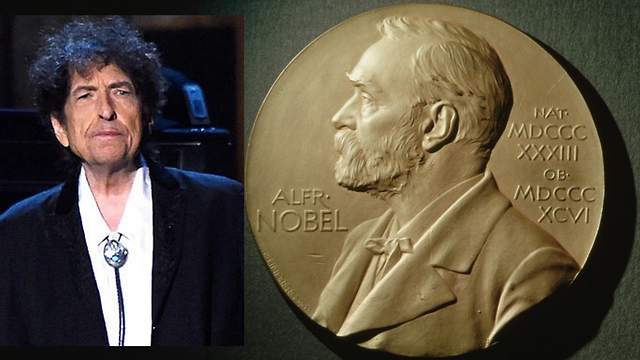
Did you hear? Bob Dylan won the Nobel Prize for Literature, for his lyrics, a decision I’m still not convinced by. I’m not sure how comfortable Bob is with it either, given his reluctance to go and collect the thing. I know a trip to Sweden with a dinner, gold medal and a lot of money sounds horrid but it can’t be that bad.

But I suspect part of his reluctance is part of my discomfort; lyrics aren’t poetry, and don’t operate on their own. They aren’t written to be read or recited but rather sung or listened to. Which isn’t to say a good lyricist isn’t as skilful or artistic wordsmith as any other writer. But for a lyricist words and music, as the old Jo Jo Zep song said, go together. There have been a number of books about music or lyricists that have the words printed but the only way you can really read them is to have the tune in your head as you do so. Otherwise they lose a lot of their life. And while there is no Nobel Prize for music, there’s none for mathematics, art, architecture, engineering, and a whole lot of other human endeavours as well, and it doesn't make them less important.

The interplay between lyric and melody is crucial.  Tim Rice in his autobiography quotes the first verse of his lyric for the tune that became “I don’t know how to love him,” which he maintains would have killed that song dead had it ever been released, despite the melody.  All together now: 

I love the Kansas morning
Kansas dawn comes to greet me
Kansas winds
Shift and sigh
I can see you now, we’re flying high
Kansas love of mine

(It’s a prison song, a man in a jail cell in Maine lamenting his girl back home. Really.) On a more worrying note, George Gershwin’s songs are sung less and less, due largely to his brother Ira’s sometimes twee lyrics, despite the beauty of the melodies. Words and music go together.

Which brings me in a very roundabout way to two autobiographies I have read lately from two of the founding Beach Boys, Mike Love and Brian Wilson, both released in 2016 within weeks of each other. Mike Love is the front man of the band, one of their lyricists, and still goes about with a band called ‘The Beach Boys’, although he is only original one there.
Brian Wilson who wrote, arranged and produced the Beach Boys music, also tours but with ‘The Brian Wilson Band’ as Love has the legal rights to the name. It’s a long story.

The two books couldn’t display a greater contrast. Love’s is chronological, detailed, sometimes to the point of tedium, and I have to say, aimed at scoring and settling points. He feels his part of the Beach Boys’ success has been undervalued both financially and artistically. And to be fair to the man, he’s right. His lyrics on surf and girls was one of the features of their early albums and a big part of their appeal to people who had never seen the beach, leading to their worldwide success. As lead vocalist and front man, he was a dynamic performer. His name was kept off many of the singles for which he was lyricist (by Murray Wilson) and he had to sue to get his rightful recognition and money. Despite his practice and championing of transcendental meditation, he clearly has trouble letting go of years of resentment and anger and it seeps throughout the book.

Wilson’s books is more amorphous, drifting from present to past, in no particular order.  He can go from a description of his current family life to a session of Pet Sounds almost in a sentence. The oldest son of an abusive father, he has famously struggled with mental health and substance abuse issues, and these things affect him still. He finds it difficult to talk about his father Murray, the man who gave him music, who was crucial to the band's early years, but who also beat him and belittled him. His therapist Gene Landy saved his life, but also drugged him, abused him and exploited him. Yet here Wilson is, still writing, still performing but also aware of what his survival has cost. The book can be generalised at times, but at others picks up details and stories that may otherwise have been overlooked. He’s not the most reliable narrator, which he is aware of, but the writing is never confusing, and throughout displays a generosity of spirit that is lacking in Love’s work. 

Love is defensive. Although he is open about his own shortcomings as husband and as a father, as a band member he did no wrong. All those stories you heard about his criticisms of Pet Sounds or SMiLE? “Don’t fuck with the formula”? Never happened. Not one of them. Ever. And so much of the Beach Boys music would never have happened without his magic touch. Just a word, a minor suggestion and near disaster turns into commercial magic. I think he is overplaying his hand. He is also trapped in that idea that good work is commercial work, otherwise it's not good. He's not alone there.

Love’s greatest problem is that he is a classic Alpha male in a situation where he must play second fiddle. While his lyrics work in the main part, that is all they do. They don’t get taken out of the song and quoted, they way Dylan’s do. Or The Beatles. He is a workaday lyricist, successful for sure but no more. Nor as he got older did he ever really attempt to move on from his milieu of beaches and girls. Sometimes it worked - “Do it again”, “Kokomo” - other times it was embarrassing, tending towards creepy - “Hey little tomboy”. Love’s attempt at being political , “Student Demonstration Time”, is likewise painful to listen to, and his song about transcendental mediation oddly jarring. I have read some of his solo work is quite good but I haven’t listened to it.

The greater talent in the band was of course Brian Wilson. His melodies, his harmonies, and his arrangements are some of the greatest in the pop era. What still draws people to the Beach Boys is this music, sometimes in spite of the lyrics. “Don’t Worry Baby” is a stunningly beautiful song - about drag racing. They lyrics here are by Roger Christian, who wrote all the car song lyrics. Other lyricists include Tony Asher (Pet Sounds), Van dyke Parks (SMiLE), himself and other band members. Another big hit "Sloop John B" was a cover of a folk song. As he got older, he pushed himself as a musician, which lead to seeking out new collaborators. Some of his most beautiful work was not commercial but was genuine artistic expression.

In short, Brian Wilson’s successes were not limited to his work with Mike Love. But Mike Love’s success is limited to his work with Brian Wilson, and he resents it.  (Another exception here: "Kokomo" was the Beach Boys’ only number one hit for which Brian Wilson neither wrote or produced.) But at their height of commercial success, Wilson and Love were the core of the Beach Boy's writing. The biggest hit for the band, "Good Vibrations", was a Love lyric to Wilson's music and arrangement. Mike Love has been undervalued for his contribution to the band, and unfairly characterised as the Villain to Wilson' Hero. That said, I think the main difference between these two autobiographies is instructive:  Love admits to Wilson’s talents, while Wilson champions Love’s.

Wednesday, February 11, 2015

Tried to smile, gave it all away? 'Smile' lost and almost found.

There is an excellent series of small books on great or significant albums called 33 1/3.  If you are interested in popular music, you may want to get hold of these. Each album is selected by the author, each with their individual approach and style, reflecting on the album, the artist, and the times they operate in.  With more than one hundred books and counting in the series- from Serge Gainsborough, to Nine Inch Nails, Johnny Cash, Hole, Public Enemy, Flying Burrito Brothers, Black Sabbath and Kanye West - they cover a wide range of style and times. If you feel so moved, you can pitch an album and have a go yourself.

Personally, I have Swordfishtrombones (Tom Waits) ABBA GoldPet Sounds, and Smile (both The Beach Boys) from the series. So far, only the Beach Boys have two albums covered in the catalogue. Even odder, one of those albums doesn't exist. Not really. Which is maybe why it's there.

Smile was the great unfinished album of the 60s. So the story goes, hearing the Beatles' Rubber Soul, Brian Wilson, the composer and producer for the Beach Boys, was inspired to write an album in which every song was good, no filler. The result was Pet Sounds, often held up as one of the great albums. The Beatles' response to that was Sergeant Pepper's Lonely Hearts Club Band, no slouch itself. Wilson went to top that with Smile, a teenage symphony to God, as he termed it. But pressure from his band, himself, his drug-use, his already fragile psyche, and from the industry saw increasingly-eccentric Wilson crack, and put the tapes away, never he said to be used. Wilson himself went into a long period of psychological trauma, from which he emerged periodically only to fall back, until he made a solo comeback, problematic in itself,  in the late 80s. The man back today producing new music, appearing live around the world, is a scarred-survivor.


But some of the songs did come out on other albums; 'Heroes and Villains', 'Barnyard', 'Vegetables', 'Momma Says' 'Wind Chimes', 'Wonderful' and 'Surf's Up', the song that prompted Leonard Bernstein to call Wilson a genius, all made their way onto other releases, some as whole songs, some as fragments. (Van Dyke Parks, Wilson's lyricist for Smile, suggested 'Surf's Up' be put on one album and used as the title instead of the planned Landlocked, and the album should sell a million. He was right.) Wilson's magnum opus, 'Good Vibrations', previously released as a single, was the band's first million seller and was meant to be the album's climax. Why that never happened has been the topic of books, movies, articles and countless discussions and arguments.

The Beach Boys next album instead of Smile was Smiley Smile, which Carl Wilson described as a bunt, rather than a home run. The Beach Boys stumbled ahead of the game here, with an album whose production was simpler and more direct. Dylan and the Beatles were both to offer much simpler albums in its wake. Hopes that Smile would ever see the light of day faded and fans responded with pirated bootleg versions, arguing over which songs would make the album and in which order. My favourite comment of all time, about just about anything on the internet, was one fan who declared, "I don't care what Brian Wilson says, [name of song] was never going to be on Smile!"  If that doesn't sum up the world of internet comments, I don't know what does. 

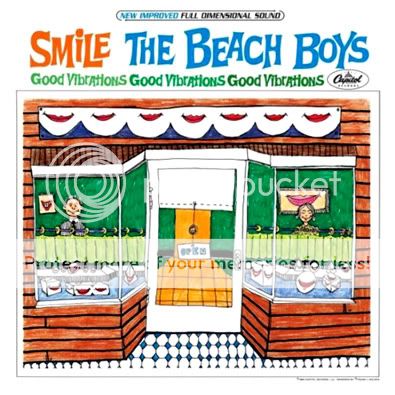
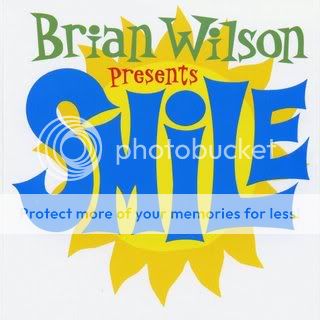
Then in 2004, the unthinkable happened; Brian Wilson toured presenting a live version of Smile, then released a studio album, Brian Wilson presents SMiLE. The arguments started immediately, how much was this the Smile album, really? It was forty years since he had first attempted it, production methods are all so different, didn't he say it should never be released,  the voices were not the Beach Boys, and so on. Indeed, given what had happened to him in the interim, how much was Brian Wilson still Brian Wilson? The album was a critical success, winning a Grammy for Best Rock Instrumental Performance. Then in 2011, the Beach Boys management released The Smile Sessions, doing what the fans had been doing for decades, creating an album from the session tapes. It too was supervised by Wilson but it too is not the Smile album, by definition. In any case, there are now two official versions of an album that doesn't exist.

Being a bit of a Beach Boys tragic, I have both versions in my collection. Wilson's is the better for mine, better finished with a better flow, which only makes sense, as he extensively reworked the material with a band, led by musical director Darian Sahanaja, while Parks reworked the lyrics. The voices are not the Beach Boys, but they're pretty darn good. I can also see why the rest of the band was so worried about it. It is an unusual album, a collection of three suites rather than a traditional pop album. Park's lyrics are poetic, obscure, baroque.  You can hear the influence of Gershwin's Rhapsody in Blue, Wilson attempting to give pop music the same veneer and relationship to classical music as Gershwin did for jazz. The opening number, 'Our Prayer', would not sound out of place next to the 'Humming Chorus' from Madame Butterfly. The album has a ambition and scope that is unmatched in popular music.

In any case, 33 1/3's Smile is an atypical book in the series. Usually, the track by track analysis of the album takes up the bulk of the book. Instead, we have an essay on the Beach Boys and Brian Wilson, the progress of their music and its place in the popular pantheon, as well as an examination of the story and myth of Smile. Only in the last few pages are individual tracks glanced at.  The author Luis Sanchez finds a much more positive story in the tapes from the Smile sessions. Instead of a man falling apart, he hears a man in control of himself, his music and sensitive to the needs of his collaborators. There are other books on the subject that I think are better. As it never actually examines the album itself, it doesn't really fit in with the series. I was disappointed. There is much to discuss with the extraordinary music and lyrics, the differences between the 1966 tapes and the 2004 versions musically, lyrically, as well as the differing track orders proposed by Wilson then and now, but Sanchez does nothing with any of this. It's a missed opportunity.

Why Smile was never finished in 1966 remains a mystery. We can never know what it would have been like, but at least we now have some good educated guesses to go on.

SaveSave