Showing posts with label Humour. Show all posts

Wednesday, February 11, 2015

Tried to smile, gave it all away? 'Smile' lost and almost found.

There is an excellent series of small books on great or significant albums called 33 1/3.  If you are interested in popular music, you may want to get hold of these. Each album is selected by the author, each with their individual approach and style, reflecting on the album, the artist, and the times they operate in.  With more than one hundred books and counting in the series- from Serge Gainsborough, to Nine Inch Nails, Johnny Cash, Hole, Public Enemy, Flying Burrito Brothers, Black Sabbath and Kanye West - they cover a wide range of style and times. If you feel so moved, you can pitch an album and have a go yourself.

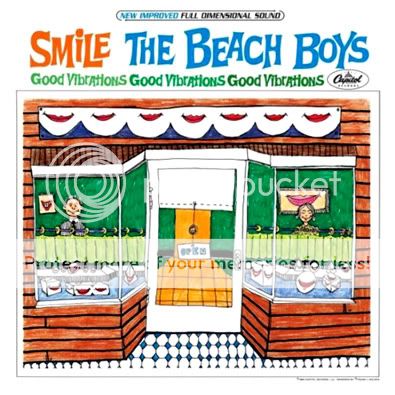
Personally, I have Swordfishtrombones (Tom Waits) ABBA GoldPet Sounds, and Smile (both The Beach Boys) from the series. So far, only the Beach Boys have two albums covered in the catalogue. Even odder, one of those albums doesn't exist. Not really. Which is maybe why it's there.

Smile was the great unfinished album of the 60s. So the story goes, hearing the Beatles' Rubber Soul, Brian Wilson, the composer and producer for the Beach Boys, was inspired to write an album in which every song was good, no filler. The result was Pet Sounds, often held up as one of the great albums. The Beatles' response to that was Sergeant Pepper's Lonely Hearts Club Band, no slouch itself. Wilson went to top that with Smile, a teenage symphony to God, as he termed it. But pressure from his band, himself, his drug-use, his already fragile psyche, and from the industry saw increasingly-eccentric Wilson crack, and put the tapes away, never he said to be used. Wilson himself went into a long period of psychological trauma, from which he emerged periodically only to fall back, until he made a solo comeback, problematic in itself,  in the late 80s. The man back today producing new music, appearing live around the world, is a scarred-survivor.


But some of the songs did come out on other albums; 'Heroes and Villains', 'Barnyard', 'Vegetables', 'Momma Says' 'Wind Chimes', 'Wonderful' and 'Surf's Up', the song that prompted Leonard Bernstein to call Wilson a genius, all made their way onto other releases, some as whole songs, some as fragments. (Van Dyke Parks, Wilson's lyricist for Smile, suggested 'Surf's Up' be put on one album and used as the title instead of the planned Landlocked, and the album should sell a million. He was right.) Wilson's magnum opus, 'Good Vibrations', previously released as a single, was the band's first million seller and was meant to be the album's climax. Why that never happened has been the topic of books, movies, articles and countless discussions and arguments.
The Beach Boys next album instead of Smile was Smiley Smile, which Carl Wilson described as a bunt, rather than a home run. The Beach Boys stumbled ahead of the game here, with an album whose production was simpler and more direct. Dylan and the Beatles were both to offer much simpler albums in its wake. Hopes that Smile would ever see the light of day faded and fans responded with pirated bootleg versions, arguing over which songs would make the album and in which order. My favourite comment of all time, about just about anything on the internet, was one fan who declared, "I don't care what Brian Wilson says, [name of song] was never going to be on Smile!"  If that doesn't sum up the world of internet comments, I don't know what does. 

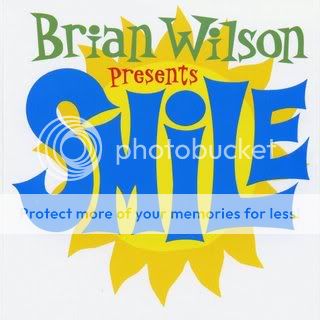
Then in 2004, the unthinkable happened; Brian Wilson toured presenting a live version of Smile, then released a studio album, Brian Wilson presents SMiLE. The arguments started immediately, how much was this the Smile album, really? It was forty years since he had first attempted it, production methods are all so different, didn't he say it should never be released,  the voices were not the Beach Boys, and so on. Indeed, given what had happened to him in the interim, how much was Brian Wilson still Brian Wilson? The album was a critical success, winning a Grammy for Best Rock Instrumental Performance. Then in 2011, the Beach Boys management released The Smile Sessions, doing what the fans had been doing for decades, creating an album from the session tapes. It too was supervised by Wilson but it too is not the Smile album, by definition. In any case, there are now two official versions of an album that doesn't exist.

Being a bit of a Beach Boys tragic, I have both versions in my collection. Wilson's is the better for mine, better finished with a better flow, which only makes sense, as he extensively reworked the material with a band, led by musical director Darian Sahanaja, while Parks reworked the lyrics. The voices are not the Beach Boys, but they're pretty darn good. I can also see why the rest of the band was so worried about it. It is an unusual album, a collection of three suites rather than a traditional pop album. Park's lyrics are poetic, obscure, baroque.  You can hear the influence of Gershwin's Rhapsody in Blue, Wilson attempting to give pop music the same veneer and relationship to classical music as Gershwin did for jazz. The opening number, 'Our Prayer', would not sound out of place next to the 'Humming Chorus' from Madame Butterfly. The album has a ambition and scope that is unmatched in popular music.

In any case, 33 1/3's Smile is an atypical book in the series. Usually, the track by track analysis of the album takes up the bulk of the book. Instead, we have an essay on the Beach Boys and Brian Wilson, the progress of their music and its place in the popular pantheon, as well as an examination of the story and myth of Smile. Only in the last few pages are individual tracks glanced at.  The author Luis Sanchez finds a much more positive story in the tapes from the Smile sessions. Instead of a man falling apart, he hears a man in control of himself, his music and sensitive to the needs of his collaborators. There are other books on the subject that I think are better. As it never actually examines the album itself, it doesn't really fit in with the series. I was disappointed. There is much to discuss with the extraordinary music and lyrics, the differences between the 1966 tapes and the 2004 versions musically, lyrically, as well as the differing track orders proposed by Wilson then and now, but Sanchez does nothing with any of this. It's a missed opportunity.

Why Smile was never finished in 1966 remains a mystery. We can never know what it would have been like, but at least we now have some good educated guesses to go on.

SaveSave

Sunday, May 25, 2014

And his voice may or may not be heard: The intrusive biographers

Byrne's helmet. Compare the description
I've just read Peter Fitzsimon's latest tome, Ned Kelly: The story of Australia's most notorious legend. It's a best seller but I can't think why. While well-researched, it has no new insight into the topic or the people involved. It is written in present tense which according to Fitzsimons gives us the sensation of being there as, apparently, we have never used our imaginations before. If 727 pages of deathless prose like this appeals, by all means read on:

       Undoubtedly the best of the helmets is   the one that has been made for Joe Byrne. In a clever design twist, a curve at the top of his visor reaches down almost to the bottom, covering the exposure of   his nose and leaving his two piercing blue eyes staring out, rather like a bemused koala.

Otherwise, move on. There are many other and better books on Kelly out there.

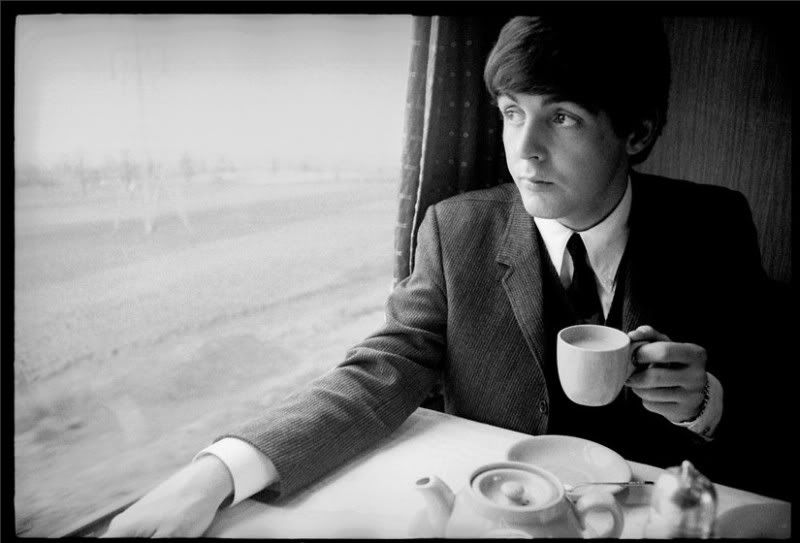
Fab: An intimate life of Paul McCartney  by Howard Sounes is a sometimes sniping tome that again covers well-worn ground without finding anything particularly new.  I'm not sure there is any mystery to Paul McCartney, he's a pretty open book. He has an enviable gift for melody, which even John Lennon acknowledged, even if McCartney's detractors won't. He wrote the most covered song of all time in Yesterday, contributed to some of the greatest songs of modern popular music as part of the most influential rock band of all time, and by all accounts puts on a fantastic live show.

There is a quotation in from David Puttnam that I think does sum up McCartney, comparing him to Ridley Scott 

  [B]oth men of immense, immense, immense talent who on their deathbed are likely to look back on their career with some satisfaction, but with some dissatisfaction, in that I’m not sure that either of them — Ridley and Paul, both very wealthy and everything — I’m not sure either of them has absolutely delivered what was in them. 


Perhaps McCartney's problem was that his songs came too easily, and after Lennon, with rare exception, he never found someone to push him to the heights he was capable of. Mind you, I'd say the same about Lennon, who was a more interesting lyricist, but didn't always avoid the issue of disappearing up his own arse.

On the other hand, would McCartney care? By any definition he's had a successful and happy life, marred with the loss of his first wife and a failed second marriage (which this book dwells on to a distasteful degree) and of course, the loss of the friends of his youth and the partners of his extraordinary early success.  He's lived most of his life in the public eye and with astonishing riches. He's been very generous to his family, his home city and friends. And his children all seem quite happy and down to earth. That's a great success there.

Both these biographies suffer from the current affliction, that is the intrusive biographer, which is quite the trend. When I read a biography, I like to think I have heard the voice of the subject and not the author. Jim Henson: the Biography by Brian Jay Jones, is much closer to the old-fashioned style of biography and is all the better for it. By its end, I felt I had learned much more about Henson, and that, however at a remove, I had spent some time in his company. Which by all accounts was a pretty good place to be. This is an authorised biography but I cannot imagine anyone but the most perverse biographer finding much dirt on Henson. His creativity, his supportiveness, his curiosity, his optimism are all in plain view in his work.  And his influence goes on today. I'm sure I am not the only person in the world who knows his outlook on humour and life is indebted to both Sesame Street and The Muppet Show, as well as so many other projects. And who but perhaps George Lucas would prefer the CGI Yoda to the original puppet performed by Frank Oz?

Some years before his untimely death Henson wrote two letters to his family to be read after his death. (In one letter he said it felt an odd thing to be doing, but would be much more difficult once he had died.)The second ends like this:

Please watch out for each other and love and forgive everybody. It's a good life, enjoy it.


Now that's a man whose voice is worth hearing.

Thursday, August 8, 2013

'Fathers and Sons' Hear me roar: The story of a stay-at-home dad.


Most people don’t like going to the dentist. Me, I’m fine. It’s not a hobby or anything but it’s not a fear I have to conquer either. And this is due to my childhood dentist, Mr Roberston (Later it on it was more chummy and I called him ‘Col’.) He and my father, a GP,  worked in the same building and shared the waiting room. He would make jokes, pretend that the sight of teeth made him sing, and generally made going to the dentist, if not something to be looked forward to, at least something that could be fun.

His son Ben went to school with me.  Apart from the fact our fathers worked in the same building, (so did we, come to think of it) we didn’t have much in common. Ben was a good sportsman and I was not, always a major division in a private boys school, and to the best of my recollection, we didn’t have any of the same classes. So while Ben and I had nothing against each other, we never became good friends either.

I’ve just read Ben’s book Hear me roar: The story of a stay-at-home dad. I probably came at this book from the wrong angle. I’d heard that Col ‘didn’t come out too good’ in this book, so I was reading mainly for that story. But the main thrust is Ben’s experiences when he suspended his journalism career to become the stay-at-home parent, first with one, then two sons, and the effect it has on his life and his marriage. It’s a journey that takes him from the euphoria of new fatherhood through to depression and all stages in between.

He’s also worried about the effect he has on his children. And this is where Col comes in. As a parent, it turns out, my funny childhood dentist was angry, violent, foul-mouthed and deeply unpleasant for his wife and children to live with. When the book begins, he is merely a bad example for Ben to react against as his own children take him to his limits, as children do. But when his estranged father rings him and announces he is dying with cancer, Ben chooses to go visit him, and resume their difficult relationship.

This is the central section of the book and for me the strongest. But as I say, I was reading from the
wrong angle. Those who are parents might connect as strongly or more so with the stories of the challenges and satisfactions of raising children. I found all that entertaining, written with journalistic clarity and humour. But it was Ben’s relationship with his father, and how it plays on his mind, that held me.

This is no ‘Daddy Dearest’. Ben forces himself to remember the good times, when his father was the father he wanted. There is one incident when he is explicity trying to make his son feel as safe and protected as his father made him feel at a similar time. And he knows his father was a good provider and ensured his childen lacked nothing material. But it seems it was like how a friend of mine described having an alcoholic parent – you never knew which parent you were coming home to. I cannot imagine what that was like. The older I get, the luckier I realise I’ve been.

And it made me think. What Ben is talking about is, in the main, a common experience for stay-at-home mothers. I’ve always been sympathetic to parents but obviously I have no idea of the experience. And I begin to get some idea of the vehemence behind my mother’s resentment every time an official form compelled her to say she didn’t have a job.

One of Ben’s mantras as a parent is I’m not going to be like him, which helps him contain his anger and frustration. Studies tell us the most abused children do not become abusers themselves, becaust they cannot imagine doing to others what was done to them. Ben is a good example of that. In the end, I believe, no matter our background, we all choose who we are.

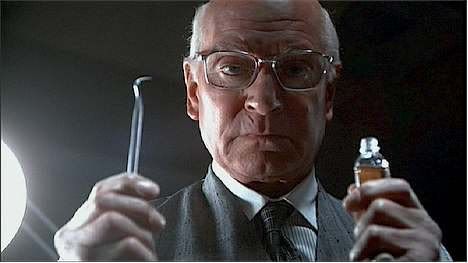
And so it turns out I didn't know my childhood dentist at all well. But I do remember him as a man in a mask. It's heavy-handed imagery I suppose but not at all inaccurate.

Wednesday, March 21, 2012

"Without a hitch." Christopher Hitchens


Don’t read Christopher Hitchens’ essays last thing at night. Not that he’s frightening, it’s that he’s like Maltesers – you can’t stop at just one. I spend some night sitting up in bed, reading Arguably, a 2011 collection of essays and columns covering the breadth of his career.

And it is a breadth of subject as well as years. Reading some of the less-informed commentary on his death, you could be forgiven for thinking he had written one book, God is not great and had only one subject, atheism. Hitchens was able to turn his mind to many topics, cultural, historical, political and yes, religious. His writing is elegant, well-informed, witty, intelligent and compelling. I don’t think he ever wrote purely as a provocateur, but he was never afraid to offend nor did he ever curb his opinion to follow a popular line. He knew what he thought, and more importantly why he thought so, and was able to argue it lucidly and entertainingly.

Of course there are areas where I disagree with him. Oddly one day I met someone who knew I was a Catholic, and because of that, was surprised that I liked Hitchens. It was an example of a new intolerance I see creeping in. Just because I disagree with him on God, doesn’t mean I have to reject him and all his work. It’d be astonishly dull to read a writer with whom I agreed on everything anyway. Why bother?

But I was thinking of another topic. In 2002, Martin Amis (who with Clive James and others used to share a regular boozy Friday lunch with Hitchens) wrote Koba the Dread: Laugher and the Twenty Million, an examination of the reign of Stalin and the odd attitude the left wing has taken towards Communism then and now. He related a story where Hitchens told a story at a speech about his days as a Communist, and got a laugh. Amis wondered if Hitchens had related a story about his days as a Blackshirt, whether he would have got the laugh, or even been a working writer in modern Britain.

To me he raised a fair point: why do we still look at the USSR, with the Great Terror, the gulags, the use of famine as a tool of oprression, the twenty million dead (some sources would say more), as somehow all right, well-intentioned, while Nazi Germany is beyond the pale? Why is left wing extremism somehow not so bad, while right wing extremism is the greatest form of evil ever? To put it another way, why are we not as appalled by Stalin’s Socialism within One Country as we are by Hitler’s National Socialism? After all, to quote the political pundit Clint Eastwood, if you go far enough right you meet the same idiots coming from the left.

Hitchens didn’t believe this was so. He accused Amis of coming late to the information about the terrors of the USSR, and assuming no-one else knew about it either. I think Hitchens has made a similar mistake. He knew about it, and so assumed everyone else must know about it. And it still doesn’t explain the laugh – in fact, if they do all know about the horror of Stalin’s reign, the laugh becomes even more sinister.  But I believe there is an enormous double standard in our attitude towards left-wing totalitarianism and right-wing totalitarianism.

In another column, Hitchens supplies an example of this very phenomenon. He is reviewing the third volume of Victor Klemperer’s diaries. Third? Sure there were only two? Yes, two best-selling volumes about life under Nazi Germany, but a third volume, of life under the Communists in Eastern Berlin, could not get a publisher in the US nor as far as I can tell in Australia. And here it is! A book that tells of life under the Communists cannot get a publisher, even though the author had two best sellers! The interest, the market, is not there. We simply don’t take the terror of Communism with the same gravitas as we do for the terror of Nazism. And why that is, is a question of great interest. Hitchens never makes this connection, and so never turns his considerable mind to it.

But disagreements and argument were the stuff Hitchens thrived on. His work is provocative and entertaining. As a writer and as a man, he was courageous. Everyone is entitled to an opinion. Every one is free to write those opinions and get them published if you can (or blog/twitter them). But it is only if you bring the comparable intellect, knowledge, and integrity that you can be as respected as Christopher Hitchens. I suppose he would have thought me a complete idiot, being religious and all.  But I too am sorry I will never again reading something new he has written.

Wednesday, October 19, 2011

"Tea and sympathy." Alexander McCall Smith


Barbara Cartland wrote 723 books in her lifetime. Can Alexander McCall Smith be far behind? I exaggerate of course, but McCall Smith is a prolific writer. He has five series he is writing concurrently, as well as other stand-alone novels. One series, 44 Scotland St, first appears in print in The Scotsman, before being published as novels. Another is published online in serial form. As far as I can tell, he has written at least sixty fictional works, as well as twelve works on law. So he’s a long way behind Cartland but considering his first work was published in 1978 (and his first novel in 1999), he’s doing okay.

I haven’t read Barbara Cartland’s work, but I have read several of McCall Smith’s. I started reading Espresso Tales, the second in the 44 Scotland St series. This series revolves around residents of the eponymous building, which includes a painter and his dog, a family driven by an ambitious mother, much to the consternation of her 6-year-old son Bertie, a rich but unambitious art dealer, and more, as well as their friends and relations. While the mode of publication is inspired by Dickens’ model of writing his chapters in newspapers, the stories lack any sense of an overarching plot. Instead we follow the doings and misadventures of these people, who are very loveable, knowable and plausible. I was hooked before finishing the novel, and have read all now except the latest. I realised on finishing the second-latest novel, The Importance of Being Seven” these books could keep going forever, if the author so desired. Each short little plot is entertaining, and there are many strands to keep us going.

The other series I have followed is The Sunday Philosophy Club featuring philosopher-amateur detective Isabel Dalhousie, who solves problems both real and esoteric. Each of these novels are self-contained, while there are continuing arcs involving her, her niece, her partner Jamie and so on. In The Importance of Being Seven, there is a reference to Isabel’s baby, so both these stories take place in the same Edinburgh.

So I assume it is the same world as the Botswana of Precious Ramotswe, the lady detective of his most successful series The No. 1 Ladies’ Detective Agency. I resisted this series as I was already hooked to two and I didn’t want to embark on a third. I saw the television adaptation of the first novel, and was so charmed I finally read one of them, Miracle at Speedy Motors. I enjoyed it too, but thankfully have not been pulled into the lure of the whole series. This may be pure contrariness on my part.

The key to his appeal is the word I used, charm. These are charming books, the characters are likeable (except the few we are not meant to like) and they have a wonderful warm quality, and feature small communities of people who know and care about each other. Even the difficult and unlikeable characters are viewed by their neighbours with sympathy and an attempt at understanding. I have written elsewhere of our focus on dark and awful subjects. McCall Smith writes humane, gentle, empathetic stories and they sell like hotcakes. His popularity is evidence to me of a world that craves connection and civility. Barbara Cartland appealed to our dreams of true love, McCall Smith to our dreams for humanity. Perhaps they are as idealistic and unrealistic as each other. I hope not, and I hope he keeps writing.

Friday, July 15, 2011

"I'm not dead yet." Neil Gaiman and (kinda) Douglas Adams


Phew! After two world wars and the Holocaust – not to mention one of the angriest men to get on a playing field – I was happy to find lighter reading: two novels of fantasy. Both have enormous popular and critical followings, and both bridge the popular and literary genres. They like killing off characters who sometimes aren’t nearly as dead as they appear to be - sometimes. They have something else in common.

Television and film are not the only areas happy to trade on past glories, remaking classics and relabelling old material and presenting it to us as new. They are all after money and a market and the easiest way to sell something is to sell something the buyer already knows and likes and wants more of. And it’s a lot easier than thinking of something new.

However, literature is not immune from this concept. For a while there, it looked as if we were under attack from the League of Living Dead Writers. Virginia Andrews would not lie down, Alistair McLean kept publishing, and Desmond Bagley apparently took his typewriter to the grave, sending his agents new manuscripts.  Closer inspection of the covers of these would reveal other authors “from an idea by” or “based on the characters of”.  To be honest, I’m not sure how many ideas Virginia Andrews had before she died but they seemed to be awfully similar. And these were all genre writers and one could argue how distinctive they were in the first place. Still, one is tempted to brand all this as somewhat cynical.

Douglas Adams however seems a different case. A beloved writer, almost to the point of cult worship in some cases, he had a distinctive voice and worldview. It would seem almost blasphemous to attempt to write more of his material, yet it was his widow Jane Belsen who let Eoin Colfer do just that. In 2009, he released ...and another thing, the sixth book in the Hitchhiker’s Guide to the Galaxy trilogy.

Adams’ last book Mostly Harmless was in his own estimation a bitter and dark book, written during a bitter and dark period of his life. He killed off everyone of his beloved characters. And he often said he wanted to write a sixth book, but his early death circumvented that. So on the 30th anniversary of the publication of his first novel, Colfer’s addition was published, as a commemoration and celebration. There is no attempt to fool us even briefly that this is Adam’s work. The title and the author’s name are the largest print on the cover by far. The series and Adam’s name appear at the top of the dust jacket. It is Colfer, author of the Artemis Fowl series, writing a story using Douglas’ characters.

This was a big risk for the Belsen and Colfer. If it failed, they would look at best ridiculous, at worst greedy and cynical. Happily, it does not fail. (I’ve no idea how well it sold.) It comes across as a solid Adams book, laugh out loud in parts, but perhaps lacking those moments that Adams could do. Like his hero Lewis Carroll, Adams would include throw-away jokes or stories that would suddenly suggest enormous ideas about life, the universe, and well, everything. But it’s great to be back with Dentarthurdent, Ford Prefect, Zaphod Breeblebox, and Trillian. To add a cherry to the cake, the god Thor appears, but sadly, Marvin the Paranoid Android does not. The book has an open ending with Arthur seeing familiar yellow ship appear in the sky. This is of course where we came in, and I suspect this is where we say goodbye – for the last time.

Neil Gaiman is far from dead – I hope. But he is also a man who likes to recycle and revisit old stories and old characters, his own as well as myth, legend and fairy tale,  and fashion something new from it. His novel Neverwhere is based on the TV series he wrote for the BBC, which was televised in 1996, the same year the book was published. I have not seen the series, but I am assured the book contains much that was cut from the series for time, budget and other considerations.  I often find that stories are best encountered in the format the creator first envisioned for it ie the novel is better than the movie, unless the movie came first in which case the novel is dire. Gaiman seems to have been writing the novel and series concurrently so each is the original version – a situation that seems appropriate to the author.

Neverwhere is story of a man who falls through an act of kindness into London Below, a mysterious world with odd parallels and enormous differences to the city above. There are black friars under Blackfriars, an Earl and a Raven in their respective courts, an angel named Islington, and more. We meet some of these characters, others we only hear of, but it is a world that is magical, frightening, both alluring and forbidding. And our hero, with a dream of being killed by a great beast, may or may not survive to return to his safe life in London Above.

I love Gaiman’s writing, and this book lived up to my expectations. I read it in hours. It doesn’t have the scope of his later novel, American Gods, but has the imaginative dazzle of Gaiman’s best work. It’s also had another life as a graphic novel, adapted by another writer. I preferred the book. None of the pictures from the TV or the comic have lived up to the ones in my head. I guess that’s why we keep returning to words, words, words.

Sunday, May 15, 2011

"Varsity Blues." Lucky Jim

The AV Club’ is a pop culture website which I enjoy. One of its irregular features is ‘Better late than never?’ in which a writer takes on a piece of culture that was hugely popular or acclaimed in its day but which the writer has never experienced till now. Usually they focus on films, but sometimes music or even more rarely novels.  The writer is coming to the work weighed down with expectation and preconceptions or even just the awareness of what they are taking on has the reputation of being ‘great.’

It can be a problem when reading classic literature, and maybe what puts people off: the fear they won’t like the work, and if so, the problem must be with them. On the other hand, finding you like a famous novel can be a relief. I didn’t like Bleak House as much as I hoped I would, though I still found it rewarding to read. On the other hand, Kingsley Amis’ Lucky Jim, with the reputation of one of the funniest novels of the 20th century, was as enjoyable as promised.

The introductory essay (I had one of the new Penguin editions with the old white and orange covers) was off-putting when it said the novel wasn’t as continuously funny as remembered. I stopped reading then and went straight to the text. I have toyed with this idea before and now I recommend it: with Penguin editions (or any with a helpful introductory essay) of books you have not read before, skip the introduction, read the book and come back to the introduction afterwards.

Lucky Jim is James Dixon a junior lecturer in the history department of a provincial university in Britain in the early 50s. He is trying to hold on to his job and work out his romantic life. Working with and against him are his Head of Department Professor Welch, a classic eccentric and vague don, Welch’s wife, their egregious and pretentious son Bertrand, Jim’s neurotic girlfriend Margaret, and other colleagues in the History Department.

This is a funny novel, a combination of situation and character-driven comedy. One of the best laughs I had was from a throw-away phrase, slightly funny in itself, made hilarious as a culmination of a minor subplot. That’s genius comedy writing, not the relentless rhythm of set-up and punchline, but revealing humour you didn’t see coming even while the details were being prepared in front of you. The novel also contains the single best description of a hangover ever committed to paper

Amis’ has been criticised for his female characters. Christine, the object of Jim’s affection is a fairly shallow creation. She did come to life for one scene, when helping Jim cover up his indiscretions after a drunken night at the Welch’s. Jim’s other love interest, Margaret, was a richer character. Perhaps I’ve just known more Margarets than Christines. Worse luck for me.

Amis was counted as one of the Angry Young Men, attacking the suffocating complacency of post-war England, a label he rejected. Lucky Jim is not angry in the way Look back in anger is. Nor, oddly, as dated. Stories about young men desperate for jobs, caught in impossible relationships, yearning for something, and someone better, while battling pretentious artists, hopeless bosses, and a sense of being trapped are always going to resonate. Perhaps Amis wasn’t satisfied with the state of the world, but then what thinking person ever is?  However, I don’t think he was going for a comment on the state of the nation.

And so another classic novel read. Another drop of water from the sea, another grain of sand from the beach, examined. What do we hope to achieve, we readers? What vast mosaic will we one day step back from and finally see?

[PS I realise now I've misinterpreted this novel. But going to uni in the late 80s and early 90s in Australia meant your tedious self-important lecturers were inevitably left-wing. Hence my mistake!]

Monday, May 9, 2011

"That was then, this is now." Peanuts and other comics

Like everything else, books and literature are subject to trends, fads, and changing times. Books can soar up the bestseller lists and by the time you read them, you may wonder why. Future generations will read The Da Vinci Code and wonder about us, you can believe that. Other books become dated by their subject matter and are left behind by historical events and changing social mores.

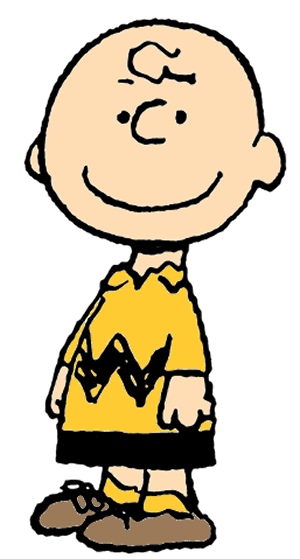
A book that was a bestseller in its day but is now something of a curiosity is The Gospel according to Peanuts, which had sold over ten million copies since it was published in 1965. Booksellers are still selling it. I remember taking it off the shelf at my school but finding too much Gospel and not nearly enough Peanuts. Spotting it in a second-hand bookstore some time ago, I picked it up. My initial reaction was still the same, but I bought it anyway.

It’s not the silly idea that it may first appear. Charles M Schulz, the creator of Peanuts, was a devoted Christian who put Christian messages into his cartoons. This was not a constant in his work, nor particularly heavy-handed, but certainly present. Robert L Short, a Presbyterian theologian, used some of these cartoons to illustrate his book, showing Charlie Brown, Lucy, Linus, Snoopy and the others as avatars for adults grappling with an unfriendly world.

The book is very much of its time. It’s not talking down to its audience at all though, which can often be the mistake of popularisers of any ilk.  One can image Short doing this book as a series of lectures with the cartoons on slides. His aim is to make the message of Christianity accessible and he does this very well. Perhaps he is preaching to the converted but then who doesn’t?

Incidentally, if you are a Peanuts fan, you might want to read Schulz and Peanuts: A Biography by David Michaelis (2007). I found it good, and the creator of Calvin and Hobbes, Bill Watterson, feels the same. Others say it is inaccurate (Michaelis stands by his work) and tries too hard to find explanations in Schulz’ life for his art. I recommend it though.

The other books I read recently that have been left behind by time were two of Herge’s Tintin books, Tintin in the land of the Soviets, and Tintin in the Congo. The Tintin books have all now been published in eight volumes, hardcover books each with up to four stories. This is Volume 1.  I was never a huge fan of Tintin, although he has a big following, though I did read him occasionally. He has never been that popular in the US, which hasn’t stopped Steven Spielberg making a film coming to cinema near you!

Fans of Tintin may not recognize the first of these books, not just because of its relative obscurity. It is the first of Tintin’s adventures and looks very different to its successors. It is in black and white, and the drawing crude, particularly compared to what came after. Tin is a taller, more solid character, although Snowy is already Snowy. None of the other regular cast, Captain Haddock, Thomson and Thompson, appear.  The plotting is also crude. Trapped in a basement cell next to a river, Tinin finds a diving suit in the cell. No, really. It is a piece of anti-Soviet propaganda with Tintin uncovering fake factories and the underground vaults where Lenin and Trotsky and Stalin keep all the food and wealth they are stealing from the people, while the GDU try to capture, kill or convert him. Herge later disavowed the work, saying it was youthful folly.

Folly it may have been, but oddly accurate. Anyone who can spot the moral difference between Soviet Russia and Nazi Germany deserves a Nobel Prize in Hair Splitting – and that would be ill-deserved. Lenin introduced the use of terror as a means of control. The leaders deliberately starved their people.  Enemies of the State disappeared, and were tortured and killed at an impressive rate. I would not recommend this book as an accurate picture of the Soviet State but its broad brushstrokes somehow manage to reveal some detail.

The second book, in colour with Herge’s characteristic precise and detailed art, now has the reputation of being racist. It is. The Congolese are depicted with big red lips and big white eyes, childish and needing the wisdom that Tintin and Belgium can bring them (Had Herge read Heart of Darkness? Not by this stage.) . On the other hand the villains are a duo of white gangster and black witchdoctor– so that’s nice. Tintin also shoots a rhino, an elephant (taking home its tusks in triumph) as well as, hilariously, fifteen antelopes when he thinks he keeps shooting and missing the one.  And this is the version that Herge had adjusted in response to reader reactions.

The book now comes with a disclaimer that it is a product of its time. And so it is. Calls to ban the book are misguided. I would not buy this book for a child but with 21 (or 22 depending on how far you want to go) other stories, I don’t think the child would miss it. And by the time he or she picks it up on his own, they can work it out for themselves, or talk to you about it. That’s the whole point of teaching them to read, isn’t it?

Tuesday, May 3, 2011

"Thursday's Child." Thurday Next's next.


For some reason I have not written about Jasper Fforde’s latest Thursday Next novel, One of our Thursdays is missing. My regular readers must be quite lost for guidance. I apologise to both of them.  I’ve already confessed my love of Fforde’s writing so I will surprise no-one when I say I really enjoyed this one. BookWorld is recreated, there are some fun new characters, and the climax takes place on a riverboat heading upstream to meet a mysterious renegade. Who could not love a book that contains the Mediocre Gatsby and a dangerous mimefield?

In brief: the real Thursday Next is missing and the written Thursday Next has to find her. To explain: the real Thursday Next is the one we read about. The written Thursday Next is the Thursday Next in a series of novels written in the real Thursday Next’s world, based on the real Thursday Next, so she is a similar character, but not real, although both Thursday Nexts can exist in each other’s worlds, can meet, and indeed have worked together before. Neither of them seem aware of us, so I don’t think we exist in their world. Clear?

The Thursday Next world created by Jasper Fforde is a world of books within books and worlds within worlds, sort of fan-fic meets fantasy meets detective meets intellectual meets Douglas Adams meets – oh I could go on and on. Woody Allen had a character travel into a classic novel in The Kugelmass Episode. This was but a paddle on the beach compared to the Pacific Ocean of Thursday Next’s world. If you are new to this series of novels, this is not the place to start! I’ve read every one of these novels and I got confused.  Start with The Eyre Affair and move on from there.

Fforde plays with a lot of ideas and stories within these books, mixed with parody and lit crit. I’m sure many of the references and jokes go over my head or through to the keeper unnoticed. But one idea that struck me forcibly was the nature of the revenge that Aornis Hades, one of Thursday’s many enemies, took on her. She gave her the memory of daughter that doesn’t exist. So she spends a lot of time worried about where her child is, because she never sees her. I’m not a parent but I can’t imagine how hard it would be not knowing where your small child is. A more subtle revenge I cannot imagine.

Thursday Next, despite the fantastic world she lives in, is a very believable character. She dresses for comfort and convenience, spends most of the time with her hair pulled pack into a pony-tail, has too much to do and not enough time to do it. Add to this her intelligence, toughness and love of books – heck I’d like to meet her sometime. If not her, someone quite like her.

Hmmm. I may be in love with Thursday Next. This could be awkward.