Showing posts with label Australia. Show all posts

Saturday, December 2, 2017

Women in the background? Ellen Kelly

For some years now historians have been trying to recover the stories of the forgotten groups of history, groups that have been marginalised by law or society and so have had their stories untold. These groups include women, blacks, native groups, gays and other minorities that for one reason or another have gone under the collective societal radar. These new histories have been invaluable in giving a fuller, richer and truer picture of societies.

One of the problems with this however is the question of material. If people are ignored by society, or taken for granted, or treated as hostile or threatening elements, then the evidence for their lives can be much slimmer, better hidden and can take some ferreting out, or in some cases, assumptions must be made. Which is all part of the process.

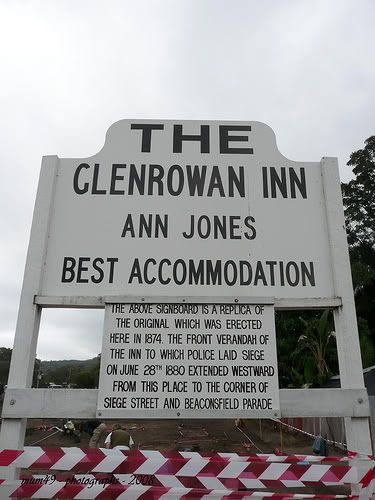
But it was with some surprise I saw Grantlee Keiza’s book Mrs Kelly: The Astonishing story of Ned Kelly’s mother” was such a thick book, over five hundred pages in hardback. I’ve long thought the women in Ned Kelly’s life needed more attention as both the inspiration for, and great supporters of what is known as the Kelly Outbreak. This was a period of two years from 1878 when a policeman named Fitzpatrick tried to arrest Ned and his brother on his own which went terribly pear-shaped for him, to the Stringybark Creek murders, where Kelly and his gang killed three of the policemen who were now searching for them, to Glenrowan, where three of the gang were killed in a day long clash with police, and through to Kelly’s hanging in November 1880.  The recent Australian musical Ned! gave the women more of their due, and here I thought was a book that would do the same. The thickness of the book was encouraging. Mrs Kelly outlived her most famous child by forty years. What had she done in that time?, I had wondered. Here I thought was the book to tell me.

Nope. Mrs Kelly does give a much fuller  story of the early life of Ellen Quinn, whose family were free immigrants from Ireland. We have her relationship with her father and his family, which has ramifications even after her marriage to Red Kelly, an alcoholic ex-convict.  Despite their hard work, they end up at the bottom of the colonial society, and in Gretta, a small town that is a den of thieves; horse thieves mainly. That she and her children ended up criminals to lesser and greater degrees is hardly surprising. After her husband’s death, she takes up with two men in turn, both of whom get her pregnant, and both of whom abandon her. George King at least married her and  lived with her for some years, something Bill Frost didn’t bother with. In all, she had twelve children and the misfortune to outlive all but four of them. 


But once she goes to prison in 1788, in the aftermath of the ‘Fitzpatrick Incident’,  the bulk of the book tells us the story - again - of the Kelly Outbreak. We hear bits of life inside for a woman with six-month old child, but not much. Seems it would be useful and interesting to hear more of life in a women’s prison in the late 19th Century but no. Kieza goes though the Ned Kelly story again without new useful information or insight. Michael Kennedy, one of the policemen murdered by Kelly, by all accounts a decent man, gets a bigger role here, which is refreshing I admit. Keiza seems to take delight in recounting everyone who made a disparaging remark about the Kelly women, especially Kate, famed in her time both as a beauty and a wonderful horserider, and one of the Kelly Gang’s most loyal supporters in word and action. But Keiza finds someone who found her unattractive and quotes him. That’s putting the women to the forefront.


But the worst is that after Ned’s death, the next four decades are disposed of in a little over fifty pages. And it’s not just Ellen Kelly. Ned’s hangman’s story gets wrapped up. Phew! That was keeping me awake. His sisters, his cousins, policemen and members of the judiciary, all within fifty pages. Like  any other book about Ned Kelly, the writer loses a lot of interest once Ned is dead. Which is fine if you’ve called your book Ned Kelly. If you’ve called it Mrs Kelly, it’s unforgivable.

Sunday, May 25, 2014

And his voice may or may not be heard: The intrusive biographers

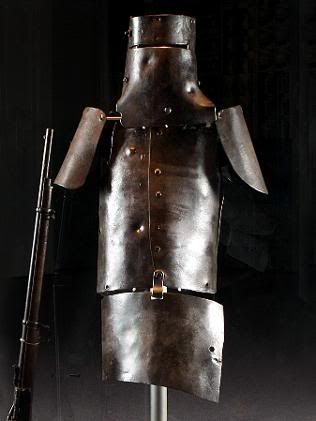
Byrne's helmet. Compare the description
I've just read Peter Fitzsimon's latest tome, Ned Kelly: The story of Australia's most notorious legend. It's a best seller but I can't think why. While well-researched, it has no new insight into the topic or the people involved. It is written in present tense which according to Fitzsimons gives us the sensation of being there as, apparently, we have never used our imaginations before. If 727 pages of deathless prose like this appeals, by all means read on:

       Undoubtedly the best of the helmets is   the one that has been made for Joe Byrne. In a clever design twist, a curve at the top of his visor reaches down almost to the bottom, covering the exposure of   his nose and leaving his two piercing blue eyes staring out, rather like a bemused koala.

Otherwise, move on. There are many other and better books on Kelly out there.

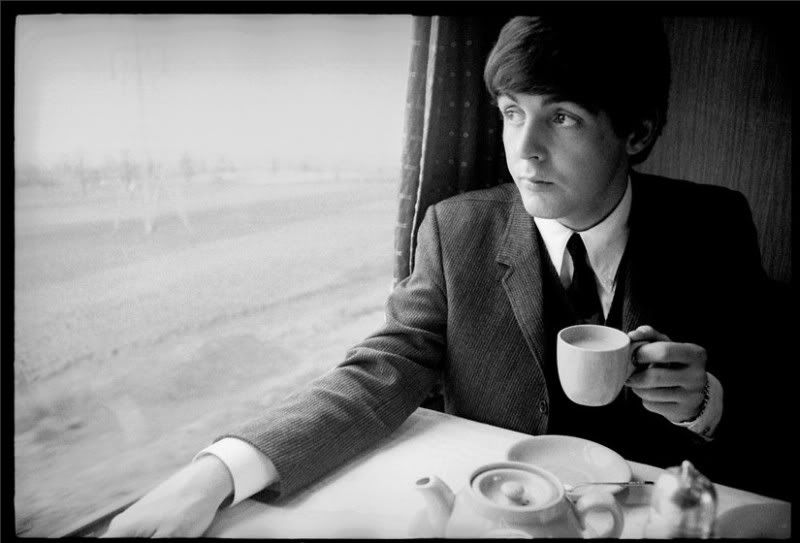
Fab: An intimate life of Paul McCartney  by Howard Sounes is a sometimes sniping tome that again covers well-worn ground without finding anything particularly new.  I'm not sure there is any mystery to Paul McCartney, he's a pretty open book. He has an enviable gift for melody, which even John Lennon acknowledged, even if McCartney's detractors won't. He wrote the most covered song of all time in Yesterday, contributed to some of the greatest songs of modern popular music as part of the most influential rock band of all time, and by all accounts puts on a fantastic live show.

There is a quotation in from David Puttnam that I think does sum up McCartney, comparing him to Ridley Scott 

  [B]oth men of immense, immense, immense talent who on their deathbed are likely to look back on their career with some satisfaction, but with some dissatisfaction, in that I’m not sure that either of them — Ridley and Paul, both very wealthy and everything — I’m not sure either of them has absolutely delivered what was in them. 


Perhaps McCartney's problem was that his songs came too easily, and after Lennon, with rare exception, he never found someone to push him to the heights he was capable of. Mind you, I'd say the same about Lennon, who was a more interesting lyricist, but didn't always avoid the issue of disappearing up his own arse.

On the other hand, would McCartney care? By any definition he's had a successful and happy life, marred with the loss of his first wife and a failed second marriage (which this book dwells on to a distasteful degree) and of course, the loss of the friends of his youth and the partners of his extraordinary early success.  He's lived most of his life in the public eye and with astonishing riches. He's been very generous to his family, his home city and friends. And his children all seem quite happy and down to earth. That's a great success there.

Both these biographies suffer from the current affliction, that is the intrusive biographer, which is quite the trend. When I read a biography, I like to think I have heard the voice of the subject and not the author. Jim Henson: the Biography by Brian Jay Jones, is much closer to the old-fashioned style of biography and is all the better for it. By its end, I felt I had learned much more about Henson, and that, however at a remove, I had spent some time in his company. Which by all accounts was a pretty good place to be. This is an authorised biography but I cannot imagine anyone but the most perverse biographer finding much dirt on Henson. His creativity, his supportiveness, his curiosity, his optimism are all in plain view in his work.  And his influence goes on today. I'm sure I am not the only person in the world who knows his outlook on humour and life is indebted to both Sesame Street and The Muppet Show, as well as so many other projects. And who but perhaps George Lucas would prefer the CGI Yoda to the original puppet performed by Frank Oz?

Some years before his untimely death Henson wrote two letters to his family to be read after his death. (In one letter he said it felt an odd thing to be doing, but would be much more difficult once he had died.)The second ends like this:

Please watch out for each other and love and forgive everybody. It's a good life, enjoy it.


Now that's a man whose voice is worth hearing.

Tuesday, February 25, 2014

"Game as..." Ned Kelly, thief, murderer and hero.


A few months ago, an Ethiopian co-worker asked me, 'What's the thing with Ned Kelly? Wasn't he just a criminal?' I said 'I think it's the armour, have you seen the armour? And he had a Robin Hood thing going which helped.' But in the end, I had to agree, it is odd. For those not in the know, Ned Kelly was a bushranger, a Australian combination of highway man and cattle thief, whose gang eluded the police from 1878-1880 after they killed three police who were sent to capture or kill them.

He is not the first to ask this question. Victorian Police for example hate the Kellys.  Every year in their parade for officers killed in action, they have three riderless horses to represent the three policemen killed by the Kelly Gang. Without a doubt, Kelly was a career criminal and his final plan was to massacre a train full of policemen. If he were alive today, we wouldn't like him much at all.

But he isn't around now and that may be part of the point. Although his career as a criminal had started with some stock theft before Stringybark Creek, he had spent three years in prison for riding a horse that someone else had stolen. The actual thief got three months. His mother was put in jail with little provocation, having been arrested with her three day old arms in her arms. Kelly, and others in the district, had little reason to respect the law.

The relationship between the people and the police is different now than in 1878. Now we have a trained and professional force and if we think we detect them in corruption or other wrongdoing, there are mechanisms for reporting and dealing with such actions. In 1878 we had no such guarantees. Ian Shaw, in his book Glenrowan: The siege that changed a nation, says the Kelly Outbreak, as it was known, was caused in part by bad policing and bad policemen.

The Kelly Outbreak has been the subject of countless history books and novels, plays, two films (one of which claims to be the world's first feature film) and a major Australian mini-series, made on the 100th anniversary of Ned's death. Without a doubt it is one of the major myths of post-colonial Australia. Shaw's book focusses on the final act, the siege of Glenrowan, that started with the murder of an informant, and ended with three outlaws dead, police wounded, civilians wounded and killed, and Ned on his way back to Melbourne for his trial. (He was taken off the train at North Melbourne Station, where I work. That's not important, but I like to know it.)

The great strength of this book is the detail it can give to the siege. You can follow the police commissioner from his table at a Melbourne Club along the train ride from Spencer Street (now Southern Cross Station) to Glenrowan. While most accounts focus naturally on the outlaws and the leaders of the police, Shaw is able to investigate more of the characters around them. And here he finds heroism, stoicism and appalling behaviour. We (famously) have the wounded Ned coming back to try to rescue his friends, and we have a police officer firing deliberately on civilians. We have terrified civilians (and their names, and their relationships) and bravery from all over.

The siege at Glenrowan was designed to be mythic. Kelly saw it as the final act of defiance, an end to police presence in northeast Victoria, and the gang fought in armour, like knights lost in time. Whether he was planning to establish the Republic of North East Victoria, as Ian Jones believes, we'll never know. But as an end to the Outbreak, and the end of the bushranging era, no writer could have come up with anything better. The reporters who had made it to the little town knew they were witnessing the biggest story of their lives.

Perhaps that is part of the reason Kelly lives in our memories, because he set out to. In his statements to police, speeches he gave during his robberies, the Jerilderie letter, and at his trial, he gave himself a role as a man wronged, a family victimised, and painted himself part Robin Hood, part Masked Avenger. And it was not a portrait without some truth. When Ned Kelly walked out of the mist on the last morning of the Kelly Outbreak, clad in armour,  blood streaming from his wounds, calling a challenge to the police, did he know he was entering the history books? My bet is he did.

Thursday, August 8, 2013

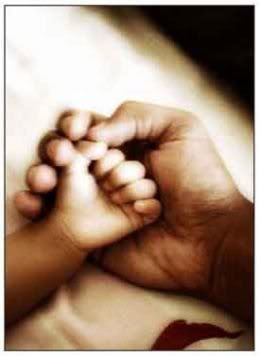
'Fathers and Sons' Hear me roar: The story of a stay-at-home dad.


Most people don’t like going to the dentist. Me, I’m fine. It’s not a hobby or anything but it’s not a fear I have to conquer either. And this is due to my childhood dentist, Mr Roberston (Later it on it was more chummy and I called him ‘Col’.) He and my father, a GP,  worked in the same building and shared the waiting room. He would make jokes, pretend that the sight of teeth made him sing, and generally made going to the dentist, if not something to be looked forward to, at least something that could be fun.

His son Ben went to school with me.  Apart from the fact our fathers worked in the same building, (so did we, come to think of it) we didn’t have much in common. Ben was a good sportsman and I was not, always a major division in a private boys school, and to the best of my recollection, we didn’t have any of the same classes. So while Ben and I had nothing against each other, we never became good friends either.

I’ve just read Ben’s book Hear me roar: The story of a stay-at-home dad. I probably came at this book from the wrong angle. I’d heard that Col ‘didn’t come out too good’ in this book, so I was reading mainly for that story. But the main thrust is Ben’s experiences when he suspended his journalism career to become the stay-at-home parent, first with one, then two sons, and the effect it has on his life and his marriage. It’s a journey that takes him from the euphoria of new fatherhood through to depression and all stages in between.

He’s also worried about the effect he has on his children. And this is where Col comes in. As a parent, it turns out, my funny childhood dentist was angry, violent, foul-mouthed and deeply unpleasant for his wife and children to live with. When the book begins, he is merely a bad example for Ben to react against as his own children take him to his limits, as children do. But when his estranged father rings him and announces he is dying with cancer, Ben chooses to go visit him, and resume their difficult relationship.

This is the central section of the book and for me the strongest. But as I say, I was reading from the
wrong angle. Those who are parents might connect as strongly or more so with the stories of the challenges and satisfactions of raising children. I found all that entertaining, written with journalistic clarity and humour. But it was Ben’s relationship with his father, and how it plays on his mind, that held me.

This is no ‘Daddy Dearest’. Ben forces himself to remember the good times, when his father was the father he wanted. There is one incident when he is explicity trying to make his son feel as safe and protected as his father made him feel at a similar time. And he knows his father was a good provider and ensured his childen lacked nothing material. But it seems it was like how a friend of mine described having an alcoholic parent – you never knew which parent you were coming home to. I cannot imagine what that was like. The older I get, the luckier I realise I’ve been.

And it made me think. What Ben is talking about is, in the main, a common experience for stay-at-home mothers. I’ve always been sympathetic to parents but obviously I have no idea of the experience. And I begin to get some idea of the vehemence behind my mother’s resentment every time an official form compelled her to say she didn’t have a job.

One of Ben’s mantras as a parent is I’m not going to be like him, which helps him contain his anger and frustration. Studies tell us the most abused children do not become abusers themselves, becaust they cannot imagine doing to others what was done to them. Ben is a good example of that. In the end, I believe, no matter our background, we all choose who we are.

And so it turns out I didn't know my childhood dentist at all well. But I do remember him as a man in a mask. It's heavy-handed imagery I suppose but not at all inaccurate.

Sunday, April 28, 2013

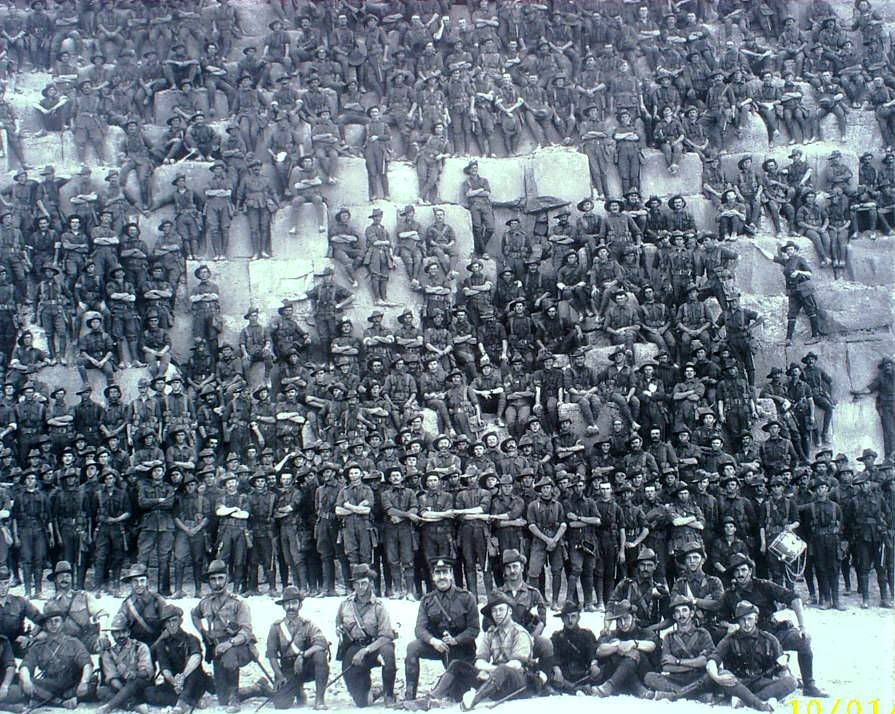
"What are they marching for?" Remembering ANZAC Day


In Australia, we have just marked ANZAC Day, which is our version of Memorial Day. We also mark Armistice Day in November, but ANZAC Day is our big one. It's a public holiday with dawn services, marches featuring veterans, their relatives and descendants and current serving men and women in major cities, special church services, and much drinking as the day goes on.

It is the anniversary of an attack on Turkey on the 25th of April 1915 which ended as a tremendous failure. ANZACs (Australian and New Zealand Army Corps) as well as troops from Great Britain, Ireland, France, India and Canada managed to get ashore in the Dardanelles, but fierce defence from the Turkish troops kept them pinned on the shore, with the furtherest point achieved at Chunuk Bair by New Zealand soldiers. After eight months of bloody fighting all Allied troops withdrew.

Although British troops lost far more men than the ANZACs, for Australia, then just a little over fourteen years old, the campaign was of a far greater significance. For the first time since we became a nation, we sent troops overseas and they acquitted themselves not only well but heroically. The reputation of the Australian army was made in that campaign, with praise coming from British commanders as well as Turkish opponents.

Looked at this light, it's no mystery why ANZAC Day so quickly became such an important day. It was marked the very next year and by 1923 had became a holiday. In the 60s and 70s, with the anti-war protests of Vietnam, and WWI veterans becoming a dying breed, the march and the day was in danger of becoming obsolete. Since the 90s it has enjoyed a resurgence in popularity, and is recognised as a day of solemnity, thanking those that died in the service of their country, and recognising all the victims of war, be they in uniform, at home, or even belonging to the enemy. Still doesn't mean that old soldiers don't like a beer when they get together.

 So being popular, and involving war, the more progressive type has to find fault with it. The ANZAC myth has produced the ANZAC myth myth, which tells us just about every thing you know about ANZAC campaign and the day is wrong, ill-informed, propaganda and glorifying war. Po-faced pundits on television, having neglected to study history, ask in very serious voices provocative questions that only they dare to ask, not realising, had they studied history, those questions have been asked and answered before. History is another subject people don't feel the need to study to pronounce on it.

The reputation of the ANZAC soldier has been exaggerated, they say, blaming C E W Bean, the official war historian. But Bean's work is impeccably documented and the praise that came from ally and enemy real enough. What about the soldiers that ran, that turned away from the enemy? They are in there too, and in the large print. But the vast majority of soldiers fought well, so if the emphasis of our memorial is on them, we are only going with numbers. Maybe they did join for a lark, to get away from small towns and be with their friends. But when they were confronted with the reality of war, they met the challenge.

Like in many other areas of life, there seems to be an idea that focussing on the negative, the worst of people, the darkness is somehow more courageous, more real, than focussing on the positive. But we're kidding ourselves. There is a thing called the Parochialism of the Present, the belief that what is now is the best that has been. The ANZACs  challenge that idea to say the least. They provide an example of bravery and self-sacrifice that we, in our comfortable, rich, well-protected lives have never been called on to match. I pray God we never will be. But there is that thought, in our darker hours, that maybe we couldn't. And it's much easier to denigrate the example than to think that we won't match it. In the end, if all you know of Gallipoli and the Dardanelles is the ANZAC legend, where troops were ashore in an ill-
conceived plan badly carried out, fought bravely, suffered, earned the respect of their allies and their enemies before evacuating in a well-planned, well-performed operation, you've actually got a pretty good idea of what happened.

ANZAC Day marks the day when Australia went from a political idea constructed from votes and legislation to a nation on the world stage, and we use this day to remember all those who suffered in war then and since. If you want to pooh-pooh this day, go ahead. We live in a free country. 

PS: This entry was inspired in part by John Hirst's Sense and nonsense in Australian history, a collection of his essays from a career studying Australian history. It's worth checking out!

Monday, May 16, 2011

"... and I'll cry if I want to." Barry Cassidy on the 2010 election

Australia, it has been said, is the lucky country. Donald Horne meant lucky in the sense we had got where we are more by good luck than good management. Perhaps he is right but I am not entering that argument. However we got here, Australia, broadly speaking, is in a good place.  When people get sick of governments, we get rid of them with a vote that the government initiates. We don’t have battles, airstrikes, suicide bombings, hunger strikes or any of the more extreme methods other countries have had to use to get rid of their governments. Our leaders don’t have private armies, nor do we lie awake at night dreading the knock on the door, hoping the footsteps continue up the stairs to our neighbour and not to us. We have a working democracy, rule of law, and freedom of worship, assembly and speech (up to a point). We have faults of course, but we also have the means and the will to fix them. Cecil Rhodes once said that to be an Englishman was to have won in the lottery of life. In the broad scheme of the modern world, being an Australian is something similar. And our weather is better.

People complain that Australian politics are dull. Thank God. Interesting politics are like the interesting times of the Chinese curse. That said, I think the complaint inaccurate. Readers of this blog will already know that I am neither disinterested or uninterested in politics. Nor do I claim not to be partisan. I’m a liberal conservative – or a conservative liberal. Or something else. I do think anyone who can describe their politics, or those with whom they disagree, in the one label – left-wing, right-wing, conservative, liberal or whatever – suffers from lack of imagination. Such labels are often handy  but rarely accurate. I cannot think of anyone offhand whose views do not range across what we call the political spectrum; different issues, different circumstances, different times call for different responses. This is not hypocrisy but honesty and open-mindedness. Still they are useful shorthand, I must admit. And demonstrate below.

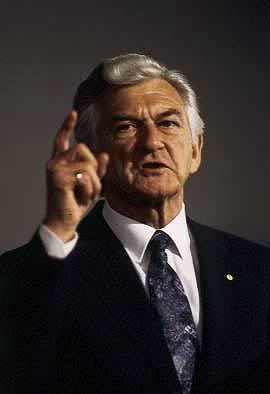
All this is a preamble to my response to Barrie Cassidy’s The Party Thieves: The real story of the 2010 election. Cassidy is best known these days as the host of Insiders, the nearest the ABC gets to a balanced look at politics. That the balance is usually represented by two left-leaning journos and one right-leaning journo gives you a fair idea of the ABC’s usual tilt at the concept. Cassidy however keeps a fairly tight grip on the tiller. Once Labor PM Bob Hawke’s Press Secretary, he is in interviews as keen to put the curly questions to Labor politicians as he is to Coalition politicians. Nor does he listen to noisier elements of the audience who demand this or that journalist never be allowed on the show again, usually starting their demand with “I’m all for freedom of speech, but…” (Just a tip: if you do use that phrase, you aint.) We need more journalists of Cassidy’s quality.

If you are at all interested in Australian politics, you should read this book. It is a good demonstration of Cassidy's virtues. As well as balanced, this book is eminently readable. The writing is clear and simple, while being entertaining and interesting. He writes the way he speaks, which is often the mark of a journalist (see Jeremy Clarkson’s work for the same effect.) He has real insight into politics and journalism, bringing years of experience in both fields to bear. And he is able to see the faults and strengths that both side of politics brought to the 2010 election.

Significantly, he doesn’t get to the 2010 election until halfway through the book. The first half is taken up with the story of the party thieves of the title: Malcolm Turnbull and Kevin Rudd. Cassidy sees both their ascensions to leadership as stealing the party from the rightful owners and both their downfalls had similar causes. Both stopped listening to the party and demanded their own way at all times. The big difference is, Liberals Party members still seem to like Turnbull and there may be a day when he becomes leader again. Meanwhile no matter how much Kevin Rudd woos the voters and flies about the world, he is so loathed by his party he has as much chance of being leader of the Labor Party as I do. The character of Kevin Rudd is, as Joseph Conrad said of the history of conquest of the world, not a pretty thing to look into too much.

Then of course there is the election itself, which no one party won, and finally Gillard managed to form government by gaining (or buying, depending on your view) the support of the Greens and a sufficient number of independents. In light of the election campaign and the consequent government we have, it is hard to disagree with Bob Hawke’s assessment that the Australian people generally get it right at elections, and 2010 was no exception. No-one deserved to win and no-one did. I was tickled to find some of Cassidy’s ideas of what went wrong and what went right occasionaly chimed with my own, while often finding correctives and illumination and information in areas of which I was unaware or misinformed or plain ignorant. Cassidy’s analysis is clearly-stated and well-argued.

It is also hard to argue with his conclusion that we as a people are hungry for a government that will do things because they are the right or best thing to do, not because a focus group liked it. The Hawke-Keating and Howard governments were of this type, which is why they both enjoyed long runs.  I tend to agree with Henry David Thoreau – a government is best that governs least. But in the end they must govern, not try to keep on the right side of popularity polls at all times.

Sunday, January 30, 2011

"Let us rejoice." Australia Day

Australia Day has come and gone with all the traditional festivities: calls to change the flag, calls for a republic, and the insistence that the only thing that has happened in the last 222 years in Australia was the dispossession of the Aborigines.  For some reason, some people seem to think Australia Day is a day to concentrate on all that they don’t like about Australia. One friend on Facebook went so far as to ask ‘Remind me what we are celebrating again?’

I suppose I could have suggested a unified country with a strong liberal democracy with universal suffrage, freedom of speech, association, and belief, a country that has fought for freedom and not just our own, that was at the forefront of suffrage for women, that has given the world two world-class sopranos, as well as writers, artists, philosophers, sportspeople, actors, and scientists in numbers well above statistical probability and much more, but it seemed like too much work –  in itself something of an quintessentially Australian attitude. Which is not to suggest there are not many and urgent issues we need to deal with as a country, but other writers have gone into detail about that. As I said on my own Facebook status, my country right or wrong; when right to be kept right, when wrong to be put right.

I was thinking of calling this blog “For what it is worth” or “I could be wrong but…”, so here goes: to be frank I don’t see the need for a Republic.  Our government works very well, with stability that is the envy of many other countries around the world. People argue we need to make the gesture of Republicanism, to prove we have matured. I don’t have a lot of time for gestures: they’re easy to make and don’t achieve anything. And setting out to prove you’re mature seems self-defeating.

Mind you when I was given the chance to vote for an Australian head of state, I voted ‘yes’. Which seems contradictory, but if the question is put to me, I have to answer. And if we do go for a Republic, I would like to see a system where the President is appointed by a majority of 2/3 of the combined Houses of Parliament. There are those who argue that having the people vote directly for the President will take the politics out of it. How a popular vote removes politics is a mystery to me. On what basis are to make our vote? Hairstyle? Gymnastic ability? Poetry readings? No, the President will be a figurehead, and so should be appointed by the Parliament of the Day, the 2/3 majority avoiding the spectre of the party hack appointment.

The flag: again, I don’t sense a real need for change. In the latest debate one of the most interesting voices belonged to a number of immigrants, who said the flag was the symbol of their dream to come to Australia (this country with nothing to celebrate) and to change it would be to destroy that which sustained that dream for so long. And what would we change it to?  No design is going to please everybody and no design except the current one has such history attached to it. However, one day, and not too far in the future, I think the Union Flag will disappear from the corner. In symbolic terms, the blue field still represents the British heritage of much of the population, our language and institutions, so that will not be lost. Maybe the Aboriginal flag could go there instead? Or perhaps we replace the whole thing with the Eureka Flag instead, which belongs to all of us, not just the Union movement.

As to changing Australia Day from 26 January, I’m not sure what day we can choose where the Aboriginals were not dispossessed during European colonisation. It seems to me that changing the day to another could lead to a forgetting – surely no-one wants that. However, the argument for change is not unreasonable, and could lead to some people finally shutting up. The most positive date I can think of is perhaps the day of the 1967 Referendum,  so 27 May might be the go. Not that the referendum was the end of the story. There is still a long road ahead of us.

I dislike the term ‘Invasion Day’. It's a very understandable term, considering the armed conflicts that followed between settlers and the natives. All to often though, tt seems a very clumsy and obvious code for  white fellahs to say‘I think the right way about Australian history – do you?’ For me, the word ‘invasion’ is too narrow, and implies a purely military purpose to the British colonisation of Australia that just simply didn’t exist. Read Inga Clendinnen’s excellent book about the early years of colonisation, 'Dancing with Strangers'. One of the first interactions between the British and the Australians was a dance party. Many of the problems that occurred between the two groups was not due to malevolence on either side, but to the gulf of misunderstanding that separated them. They had little if any common ground from which they could begin to truly understand each other, despite efforts on both sides.  As someone smarter than me once said, never attribute to malice that which can be explained by ignorance. No, if you want a term that includes the taking of land from indigenous population, the use of land as a dumping ground for prisoners, the establishment of farms and government buildings, which leads to private ownership of land, an expansion of the original settlement, with clumsy if well meant interaction with the indigenous, the inadvertent spread of disease, as well as the many armed and malicious attacks on those people, leading to the breakdown of their society, the effects of which we are still grappling with, why not use the word we already have – colonisation?

A new friend of mine, daughter of a Greek father and Aborginal mother (she calls herself a Wogerigine) spent Australia Day at a festival called ‘Share the Spirit', celebrating Survival Day. This is a much better term: it focuses on what the Aboriginals have done and are doing and is a true celebration of their culture that we are all invited to join. Australia is heading in the right direction. We can all celebrate that.

Sunday, January 2, 2011

"I'll be back." David Marr on Kevin Rudd

The downfall of Kevin Rudd was as fast as it was unexpected. Though we all knew he and his government were in trouble, no-one, or very few, saw that he would be challenged successfully and having led Labor to one election victory, he would not allowed to attempt to lead them to a second. Wikileaks has shown us that the US Government saw this coming before the press in Canberra did. Right-wing commentators such as Andrew Bolt predicted a challenge to his leadership weeks before, predictions dismissed by left-wing commentators as ludicrous.

I quote David Marr from his essay, Power trip: The political journey of Kevin Rudd, part of the Quarterly Essay series:

When his approval rating began to dip sharply in the polls early this year [2010], commentators  wondered if he might be the first prime minister since Scullin back in the Depression to lose power after only a single term. There was speculation that he was in a very delicate position: essentially friendless in the party and ripe for decapitation by Julia Gillard before the looming elections. This is rubbish. For one thing it underestimates the debts owed by the party to only the third man in sixty years to bring Labor from Opposition to government. But such talk does point to the strange patterns of the man’s political career.

Even after the leadership wrangle was done and Rudd was dusted, left-wing journos on ABC’s excellent Insiders tried to argue that those who predicted the spill were making it up and that there was a spill was entirely co-incidental, and that it was a sudden in real-life as it appeared in the media. When you stuff up, just admit you stuffed up and move on. Such are the vagaries of politics and predictions. Andrew Bolt, for that matter, predicted that Wayne Swann would not be Treasurer after the election, due to his handling of the mining tax. And so it goes.

I was never a fan of Rudd. I thought his prime ministership would be like having the country run by Sir Humphrey without the laughs, and I wasn't entirely wrong. On the other hand, I think Labor panicked in getting rid of him, or perhaps there were other forces at work. Certainly, after such a political bombshell, Labor have done little to get their government "back on track".

Meanwhile, David Marr’s essay is good reading. It is sympathetic to Rudd without being sycophantic. The criticisms of him as an automaton, obsessed with micromanagement and astonishly poor people skills are balanced with his qualities of hard work, depth of knowledge and determination. Marr’s conclusion that Rudd is driven by anger is well-argued. From my inexpert, ill-informed position, it seems to me that vanity is his strongest drive and Alexander Downer agrees with me. Both agree on his drive for power though - maybe that is the key. In any case, Marr’s essay is a good primer on the life and beliefs of Kevin Rudd, finding those strange patterns throughout his career that account for his rise and perhaps his fall. Though down, Rudd is by no means out. Like all good robots, he could reassemble himself and come back at us in the sequel.