Showing posts with label Sherlock Holmes. Show all posts

Monday, March 7, 2011

"Print the legend." John Mortimer/ Gyles Brandreth's Oscar Wilde


One of my comfort reads is the Rumpole series by John Mortimer, and it is also one of my favourite TV serials. They are all available on DVD these days, from the more sombre original one-off television play to the seven more humorous series that followed. Mortimer kept writing stories beyond the TV adaptations, almost to the end of his life. Though vastly entertaining, they are far from flawless. The same could be said of their creator. I have just finished reading John Mortimer: The devil’s advocate, an unauthorised biography by Graham Lord. Lord is a biographer and writer with an impressive track record but I was worried by both the fact it was an unauthorised bio and the tone of the opening chapter: it seemed I had a hatchet job on my hands.

Biographies are tricky things, especially for the recent dead or the still alive. While unauthorised bios can indeed be hatchet jobs, authorised ones can be hagiographies, and it is difficult to judge which gives us the more accurate picture of their subject. As time goes by a more subjective view can often be obtained, but there are still those people that will always be controversial.

However, this book was not the book I feared it would be. It is a harsh judgement on Mortimer, at times waspish or bitchy, but it is also gives plenty of space to Mortimer’s achievements and those who have a more positive view of him. Part of Lord’s anger comes as a result of Mortimer first approving the book, providing two extended interviews, and then withdrawing his approval and trying to prevent anyone talking to the writer; censorship from the champion of free speech. It also has the air of a rejected lover; Lord believed in Mortimer’s popular image as an intelligent, cuddly, liberal, witty raconteur but discovered a darker side; immature, snobbish, selfish, mean and hypocritical. In the end I found the picture convincing – all these things are true. We are nothing if not contradictory creatures. If Mortimer was a flawed lawyer, flawed writer, and a flawed man, what is he but what we all are?

And certainly his assessment of his writing tallied with my own. Mortimer’s work, in novels, plays and stories, is wildly uneven. Even the Rumpole stories provide clear evidence of being rush jobs with little revision or care. I was so relieved when towards the end of his life Mortimer finally wrote the story of Rumpole’s first triumph, the Penge Bunglalow Murders, that the novel showed the writer and his character at their considerable best. That said, like Sherlock Holmes, we read the Rumpole stories because the characters are so compelling, even when the stories may not be.
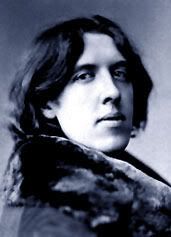
I’ve also had a pleasurable few hours reading Gyles Brandreth’s Oscar Wilde and the dead man’s smile. This is one of a series that Brandreth has written featuring Oscar Wilde as detective. Brandeth draws on his knowledge of Wilde’s life and character, and evident love of Sherlock Holmes, to create a book that is fun and entertaining.  Wilde was a friend of Conan Doyle, who features in the novel, and Brandeth suggests here that Mycroft Holmes, Sherlock’s older, smarter and larger brother, was based on Wilde. It is the sort of theory for which there is no proof but if it isn’t true, should be, and historical fantasy fiction such as this is the perfect place to air it. Perhaps this is not a book for the ages, but it is one I thoroughly enjoyed.

Thursday, November 18, 2010

"I saw no-one." Sherlock Holmes

“That is what you may expect to see when I follow you.”

  Sherlock Holmes is back in the popular culture, with the Guy Ritchie film and its upcoming sequel, as well as the 2010 updating TV series “Sherlock”, written by Stephen Moffat (which was oddly much more faithful to the books than the Ritchie film.) For me and thousands, even millions, of others, Sherlock Holmes never entirely goes away. The stories are one of my comfort reads, and recently I reread the second collection of short stories, The Memoirs of Sherlock Holmes.

The above quotation is from “The adventure of the Devil’s Foot,” which is not in this collection. But “Silver Blaze” is, which contains perhaps one of the most famous interchanges in all the stories:

     "Is there any other point to which you would wish to draw my attention?"

     
"To the curious incident of the dog in the night-time."

     
"The dog did nothing in the night-time."

     
"That was the curious incident," remarked Sherlock Holmes.

Holmes as ever is cryptic, confident, stylish and memorable.

I first came across Sherlock Holmes as a child in an old book at home, an edition aimed at children. The stories were edited to be shorter and decorated with coloured illustrations throughout. Reading one of the stories that was in both that book and The Memoirs, ‘The Naval Treaty’, I was surprised how strongly I 
could recall those pictures. Indeed, I remembered the solution from remembering the illustrations. I can also still see the picture of Holmes and Moriarty falling together into the Reichenbach Falls in ‘The Final Solution’, and feel the sadness I felt on reading that story for the first time. This was a good lesson for me. As an adult, children’s editions often strike me as condescending. But as a child, this was a powerful gateway into one of the great characters of all time.

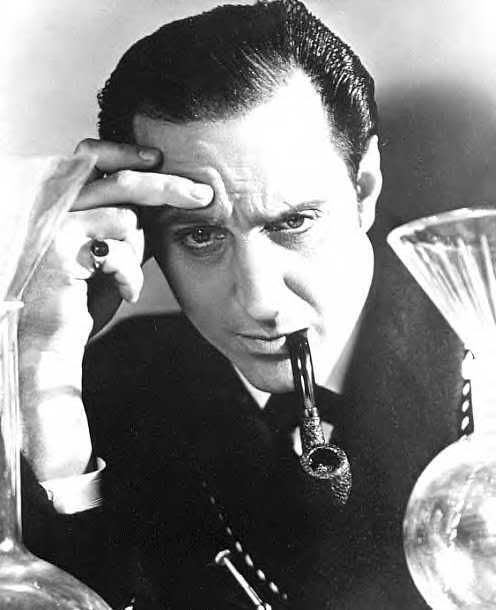
For Sherlock Holmes, and his faithful friend and chronicler Dr Watson, are two of the great characters of all time.  Holmes has entered into the popular culture to such a great extent that his name has become part of a catch-phrase: “No shit, Sherlock.” People who have not read the books or even seen the movies and TV series know who he is. The deer-stalker hat, pipe and cape are instantly recognizable. (The look was created by illustrator Sydney Paget, and soon adopted by Conan Doyle.) Recent reports of the discovery of dog-sized rats in East Timor brought back memories all over the world of Watson’s reference to the “giant rat of Sumatra, a story for which the world is not yet prepared”. Almost from the moment of his creation, Holmes was destined to step out of fiction and be part of our world.

Arthur Conan Doyle found Holmes such a burden on his time he tried to kill him off in ‘The Final Solution’, so that he could devote his time to his real writing. Popular opinion forced Doyle to bring Holmes back ten years later in The Hound of the Baskervilles and then more short stories, much to Doyle’s chagrin. As far as Doyle was concerned, the Sherlock Homes stories were potboilers written purely for money, while his great work would be his novels of medieval adventure. Those other books are of interest only to the specialist now, while these stories that he would toss off in a day are republished and adapted year after year; another reminder of the power of popular culture.

Doyle’s carelessness in his writing manifested in his lack of attention to details; Watson’s war wound wanders all around his body (Moffat cleverly made this wound a psychological one in ‘Sherlock’), the state of Watson’s marriage and practice are things of mystery, and topics that Holmes knows nothing or everything about is a fluid list. Keen fans, very keen fans, like to play the ‘Great Game’, and try to fit all the facts from the stories into some sort of coherent life for the Great Detective.

The stories themselves are of variable quality, particularly as the series went on. From such heights as ‘The Speckled Band’, we reach the tedium of ‘The Lion’s Mane’. But what keeps us reading these is the character of Holmes himself, and his supporting cast, John Watson, the infinitely patient Mrs Hudson, the even more brilliant and odd Mycroft Holmes. Characters who appear in one story can also resonate: Irene Adler, “who for Holmes would always be the woman’, and of course Professor Moriarty himself, ‘The Napoleon of Crime’. Conan Doyle’s ear for memorable dialogue and phrases is excellent.

And the Holmes method of reading a man from the state of his clothes never gets tired. This is from ‘The Adventure of the Stockbroker's Clerk’:

 "I perceive that you have been unwell lately. Summer colds are always a little trying."
"I was confined to the house by a severe chill for three days last week. I thought, however, that I had cast off every trace of it."
"So you have. You look remarkably robust."
"How, then, did you know of it?"
"My dear fellow, you know my methods."
"You deduced it, then?"
"Certainly."
"And from what?"
"From your slippers."
I glanced down at the new patent-leathers which I was wearing. "How on earth --" I began, but Holmes answered my question before it was asked.
"Your slippers are new," he said. "You could not have had them more than a few weeks. The soles which you are at this moment presenting to me are slightly scorched. For a moment I thought they might have got wet and been burned in the drying. But near the instep there is a small circular wafer of paper with the shopman's hieroglyphics upon it. Damp would of course have removed this. You had, then, been sitting with your feet outstretched to the fire, which a man would hardly do even in so wet a June as this if he were in his full health."
Like all Holmes's reasoning the thing seemed simplicity itself when it was once explained. He read the thought upon my features, and his smile had a tinge of bitterness.
"I am afraid that I rather give myself away when I explain." said he. "Results without causes are much more impressive."

Holmes hates explaining himself, because the hearer almost invariably says, “It’s all so simple.” Perhaps that is the lure of Sherlock Holmes, a man with a brilliant mind whose methods seem simple but the effective use of which always remains tantalizingly out of reach for the rest of us.